
二十一 Northward bound
Art Hotel, Narita
The Art Hotel was a pleasant place to stay for my stopover. Writing about it now, more than a week later, I can remember little about my arrival in Japan. I do recall that the shuttle took quite some time to arrive—other buses came and went, as did the people in the lines. Single women, young couples, businessmen, families. Eventually it appeared out of the darkness, and my memory of the 25-minute drive is a blur of streetlights reflecting off wet pavements, and rain dripping down the window.
Amiria had recommended the Art Hotel for two reasons. First off, it has an onsen—in this case, a natural hot spring named the Narita Hot Spring Biyu, which is fed by water from about 1,000 metres underground. Second, it has a decent buffet breakfast. So, as soon as I was in my room, and given that it was already late, I quickly stripped off my travel clothes, donned the yukata, and headed straight to the onsen. The fee of 700 yen was a small price to pay for this luxury. Just being able to immerse myself in the steaming water was enough to extinguish the physical manifestations of my weariness.
Although I hadn’t eaten anything since several hours earlier on my ANA flight, I was beyond feeling hungry. I’d packed a couple of palmiers from the lounge at Pudong Airport, and still had a small corn snack from my Air New Zealand flight. This seemed enough. Later, I tracked down a vending machine (these are usually scattered around the Japanese hotels) and purchased a small bottle of green tea. I had a few yen from my last trip, more than enough for a 180-yen bottle, but made a mental note to withdraw some cash from an ATM at the airport the next day.
Back in my room, I lay out some clothes for the morning, checked my messages, and set my alarm for early enough to take time over breakfast and that was about all. I only vaguely remember eating the palmiers and corn snacks–I must have climbed into bed fairly soon after that.
The room was too hot and I couldn’t open a window, but I set the heating for the lowest it would go, 20C, and soon fell fast asleep.
The buffet breakfast
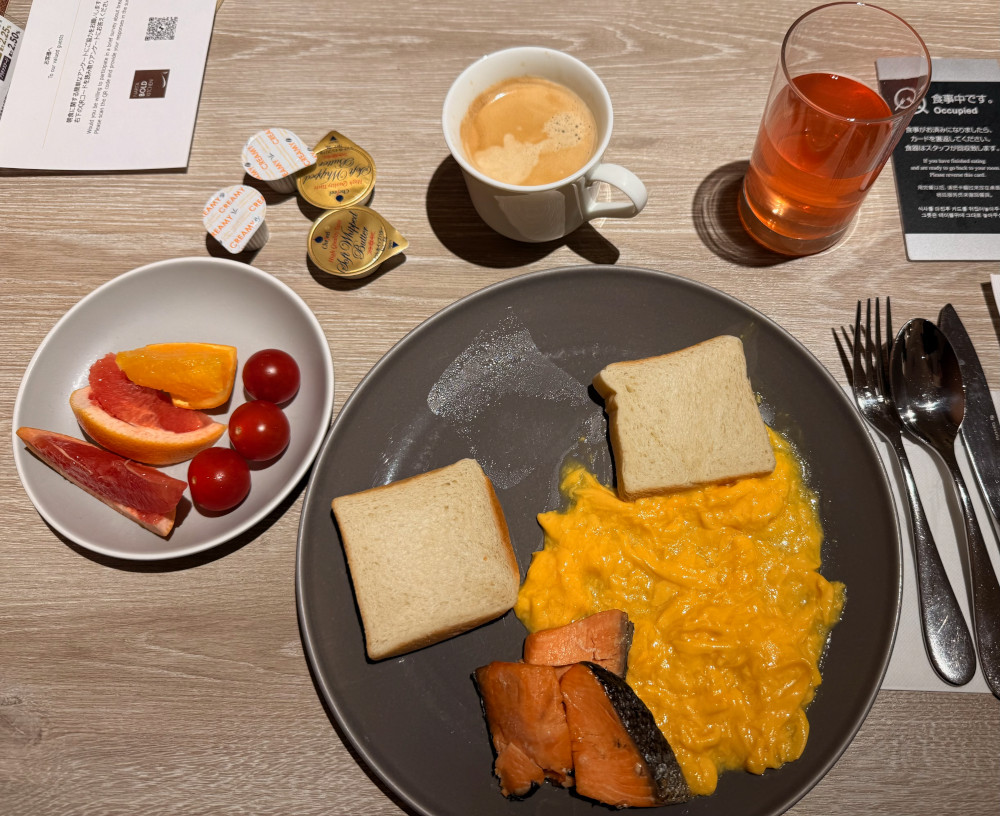
Amiria was correct–the buffet was excellent, with many differing dishes–the majority featuring traditional Japanese breakfast options. Of course, there were too many choices. I always have trouble choosing food when the selection is unlimited–it’s so easy to serve too much of a specific item. I’m rarely hungry for the first couple of hours after I wake up, and I still haven’t learned the Scandinavian way of taking tiny portions at a time, but I did my best. I started with eggs, toast and salmon, but then wished I’d avoided the scrambled eggs, as the Japanese version is only just cooked, and very runny.
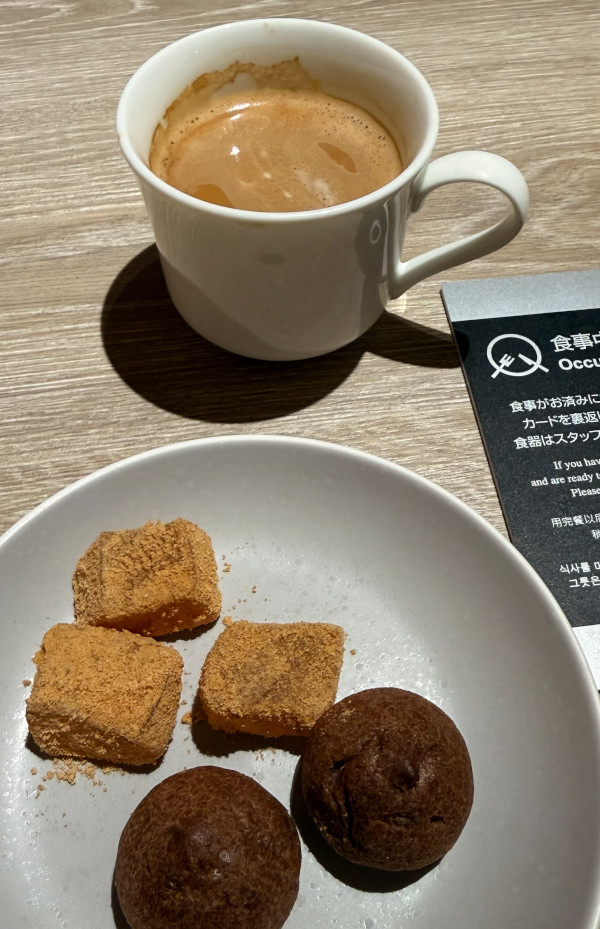
For my second round I was able to squeeze in some warabi mochi (which I love) and a couple of mini chocolate cream puffs (which I probably didn’t need), but they went well with the coffee.
At the time I really felt like I’d over-eaten, but looking at my photos now, it doesn’t seem like much at all.
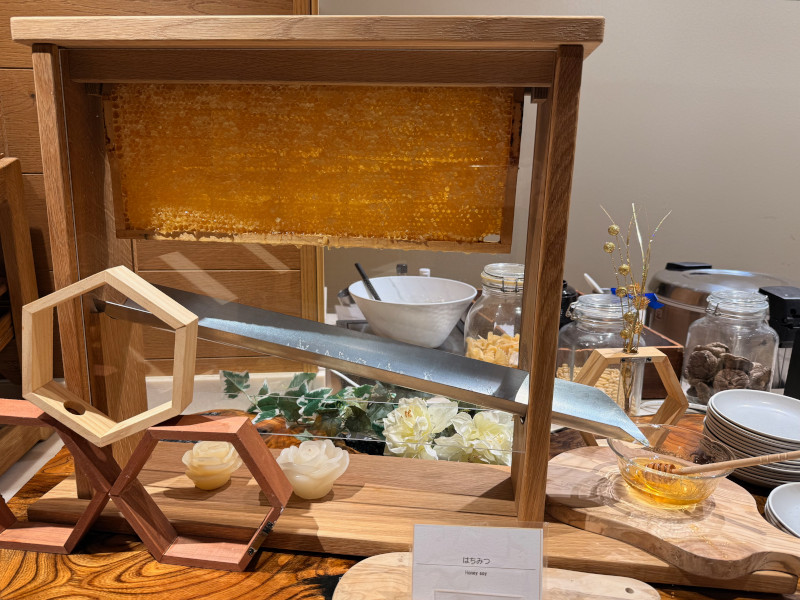
There was a counter (well-frequented by the younger set) where you could make your own mini pancakes and decorate them with fruit syrups and cream. Runny honey was dispensed via a wooden contraption featuring a frame of honeycomb suspended over a chute that collected the drips and fed them into a glass dish with a wooden honey dipper. Fancy!
And I hadn’t realised until later on when I looked at some promotional posters in the lift, that I could have ordered from a range of freshly cooked items, including, French Toast.
Art Hotel to Terminal 3
After breakfast I took the 9.30 am hotel shuttle to Narita Terminal 2, found a trolley, and walked to Terminal 3 to connect with my Jetstar flight to Asahikawa. It was too early to drop off my huge suitcase, so for 30 minutes, I wandered around the airport still pushing the trolley. In that time, I found an ATM and withdrew some Japanese yen. This year I’m trialling WISE for all my Japanese transactions and it’s been working really well.
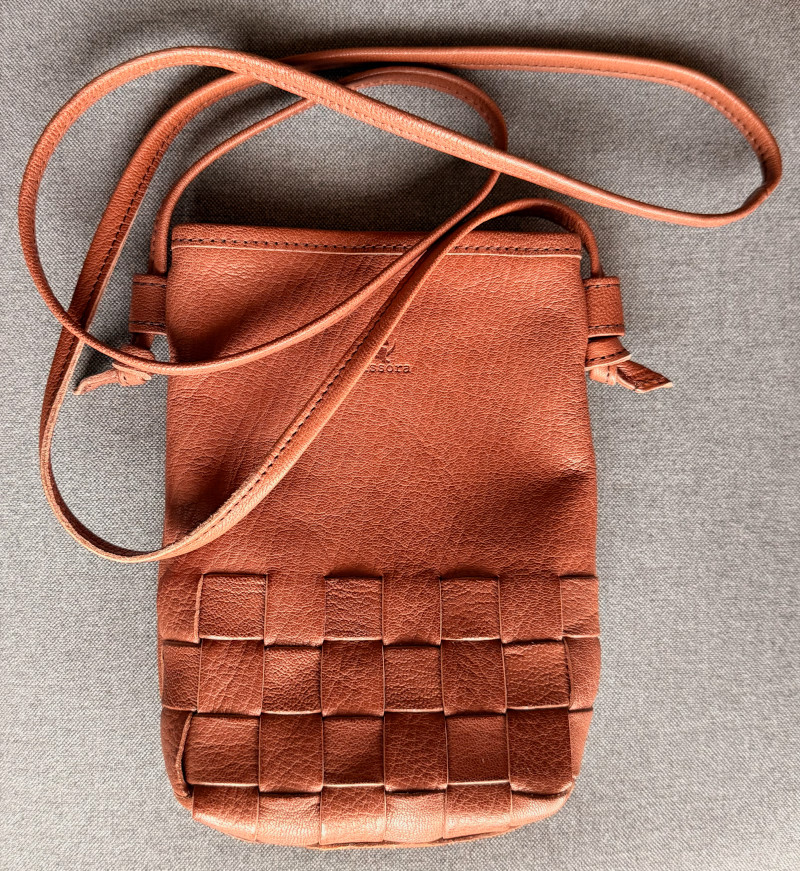
A little later, after I’d disposed of my luggage, I just had my computer backpack and the small bag I wear over my shoulder when I’m travelling, with my passport and wallet inside. This was starting to fall apart—not just at the seams, but the lining was separating from the zip, so I decided to browse some of the shops. I saw a cute little Kissora brand bag that was just the right size. Should I purchase it, or shouldn’t I? My current falling-apart bag was inexpensive, but then it hadn’t lasted me very long… I decided to purchase the bag and I’m glad that I did. I’m very happy with it.
The final leg of my trip and memories of the past
My flight to Asahikawa boarded at 1150 and it was time to go through security to the boarding gate. While I sat and waited, I remembered other earlier times that I’d taken these same steps–the direct flights from Narita to Asahikawa are a huge improvement. Before Jetstar flew this route, I would use the Airport Limousine Bus service to travel the 75-80 km from Narita to Haneda (the domestic airport), and fly to Asahikawa from there. This was an additional expense of around 3,500 yen, and could take up to 90 minutes, depending on traffic.
In 2017, on my very first trip to Japan, my Air New Zealand flight had ended at Sapporo’s New Chitose airport, after which I took the Kamui, north. The train trip is very enjoyable after all the flying, but the first time, the whole process was overwhelming and I’m sure I only managed it due to Amiria’s very clear instructions. I can’t believe that was nine years ago! It’s so much easier now, but I suppose this is to do with familiarity, as much as anything else. What was once strange and new, now seems very predictable and normal.
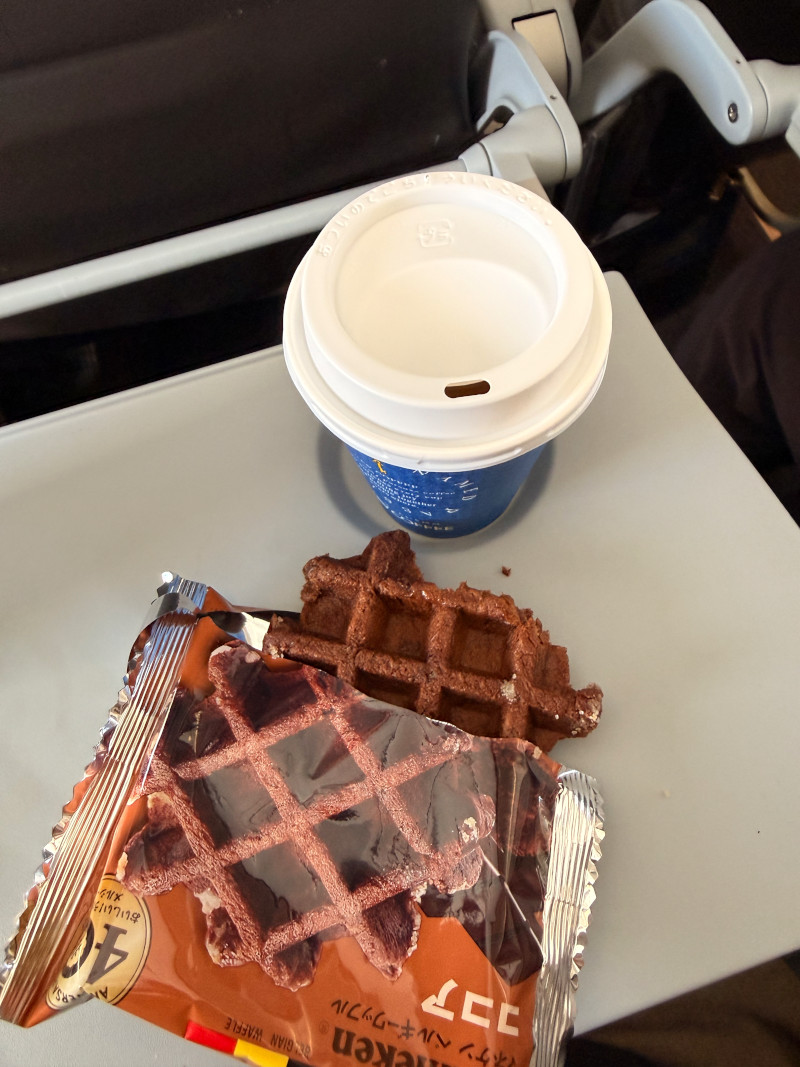
I usually spend a little more on the Jetstar ticket for a flexible fare, and a 25kg luggage allowance–just to cover unexpected happenings, or the purchasing of too many items to bring back to New Zealand with me. With this fare, I am entitled to a ‘meal voucher’, which is actually only valued at 500 yen, but it means that I can choose a snack and a drink from an onboard laminated menu.
As I studied the menu, I memorised my order in Japanese, and said as slowly and carefully as I could, “Miruku kōhī to kokoa waffuru onegaishimasu”.
“ミルクコーヒーとココアワッフルお願いします。”
I was relieved when the flight attendant understood what I meant!



 Heni Irihapeti's Blog