Tag Archives: New Zealand

Poutu-te-rangi / March

edge
Dry maize rustles musically in the breeze

From Sweltering Summer to Temperate Autumn

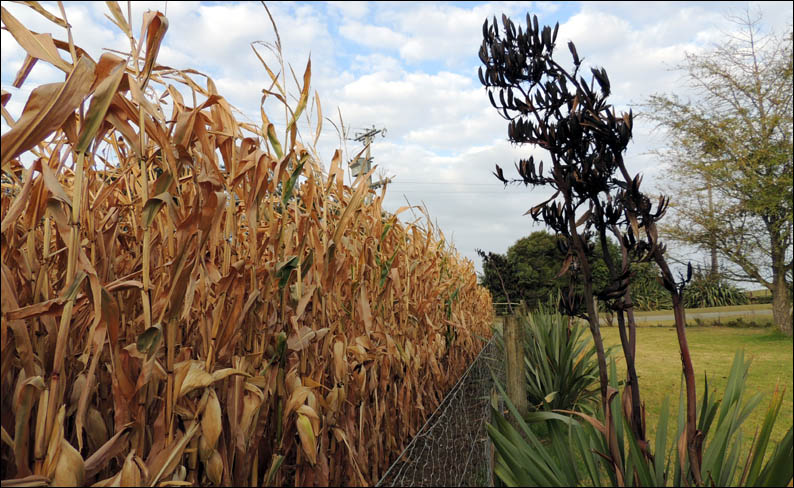
The maize along the fenceline is ready for harvest. It’s a visual reminder that summer is over. The days are slow to lighten and early to darken, and the grass is thick with dew when I make my way to the barn in the early morning. The gravel road is dry and whenever a large truck rattles by, great dusty clouds drift across to settle on our solar panels.

It’s been several weeks since I’ve written about South Head. Or about anything, for that matter. It’s been difficult to knuckle down to writing after taking time off over the Christmas/New Year period.

While it’s been a very long and hot summer, we’ve also had a decent amount of rain, which of course has meant that everything has just kept on growing. We’ve created enough gardens here to keep us busy every daytime hour, and for the first time I’ve been wondering if it’s too much. What with the dead-heading, the trimming, the watering, the sowing, the harvesting… not to mention the tying, the squashing (caterpillars), the sampling, the digging and the weeding, always the weeding. (It’s making me exhausted all over again, writing about it.)

alpaca
Kumeu A & P Show: curious alpaca & disinterested rooster

So… we’ve mostly been home over the weekends slaving away in an attempt to keep everything under control, with a couple of diversionary breaks visiting the local A & P Shows – I like to check out the poultry while Ben looks longingly at the tractors. 🙂


 Bounty from the Garden

preserves
A selection of home preserves, from left to right: Beetroot; ‘Look Alike’ Lemon Curd; Spicy Tomato Sauce; Zucchini Pickle; Greek Tomato Paste

Since I last blogged we’ve harvested a parade of fresh produce, including grapes, lettuces, carrots, rhubarb, cannellino beans, sweet basil, garlic, cucumbers, peas, beans (green, yellow, purple), main crop potatoes (Agria), beetroot, silver beet, shallots, buttercup squash, tomatoes, butternut pumpkins and LOTS of of zucchini.

produce.jpg
A selection of produce, from left to right: white table grapes; cannellino beans; Rhubarb Tarte Tartin

To use up the rhubarb and zucchini I’ve made several Rhubarb Tarte Tartin and a few jars of Lemon Curd Look-Alike, as well as some zucchini pickle. But the neat thing about this year is that we haven’t had too much of one particular vegetable. Everything we’ve grown we’ve either eaten fresh, or I’ve cooked up, preserved, frozen or baked into something.

Tomatoes and Zucchinis
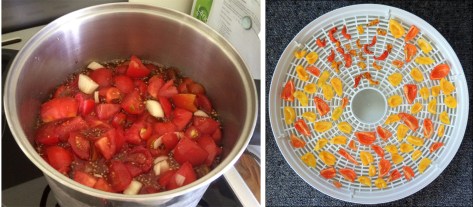
toms and peppers
Left to right: tomatoes & onions ready to be cooked for Tomato Relish; red and yellow habanero slices, arranged for drying

The tomatoes have been great, but I picked the last one yesterday and I know I’ll miss having them on hand at meal times. I’m glad that I preserved a good amount this season (Spicy Tomato Sauce, Tomato Relish, Greek Tomato Paste) and that I also froze about a dozen packs of frozen skinless tomato flesh for use during the cooler months.

Recipes

One of the easiest salads to throw together involves mixing chopped tomatoes with a handful of fresh basil (made into a paste), a generous squirt of extra virgin olive oil and finely sliced or diced zucchini or cucumber. I read somewhere that raw zucchini helps you feel ‘more full’ than some of our other salad vegetables, and it’s lovely and light when sliced thinly.

I love cooked zucchini, too. It’s such a versatile vegetable. My favourite quick recipe involves slicing the zucchinis thickly, then sautéing them in a small amount of olive oil along with crushed garlic and sage leaves. The sage leaves turn crispy and add a delightfully fragrant ‘crunch’ to the dish.

Habanero

peppers
3 stages of habanero peppers – fresh to dry

Our habanero chiles are ripening as I type, so I’m picking them each day, drying them, then nuking them in a small food processor. We’ll use the chile powder all through the year to jazz up our meals. One of my favourite uses is to sprinkle a liberal amount into cheese toasted sandwiches. Yum!! (It’s very hot, though – not for the chile uninitiated.)

I’ve also raised a pink variety of habanero this year. It’s currently at the flowering stage, so, no fruit, but I can’t wait to see what they look like!

Pears

pears
Autumn pears & the finished product

March in New Zealand is the month for pears and melons. Our old pear tree has produced a good amount of sound fruit this year and yesterday I bottled a small sample in a light syrup. Not sure why I haven’t processed our pears this way before – I usually freeze them for desserts – but I do like to see the finished product in our pantry. And it’s so easy to preserve them using the water-bath method.

I didn’t remember until after I’d finished that you’re supposed to pack the fruit tightly into the jars to avoid having them float to the top of the syrup… oh well… next time!

Melons
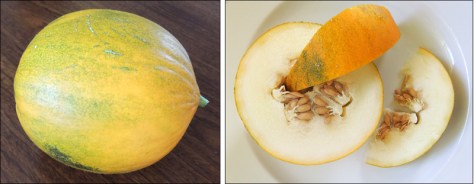
melons
Melon, ‘Collective Farm Woman’ (Cucumis melo)

I sowed seeds for a different melon this year, Collective Farm Woman. It’s a small Ukrainian melon from the Black Sea area, about the size of a honeydew, with pale flesh, the flavour delicately sweet and slightly evocative of bananas.


 Bantams!

bantams
Our new bantam hens (left) and Charlie

We picked up a trio of Bantams at the recent Helensville A & P Show. They’ve settled in well and having Charlie (the rooster) crow loudly at 5.15 am hasn’t been too much of a shock.

When we first let the bantams join the rest of the flock, they kept to themselves, but they’re now walking around alongside the others. They choose to sleep outside  – the rooster up high in a branch of one of the feijoa trees, and the two girls on the fence below. Not sure if they’ll ever voluntarily join the hens in the barn. Perhaps we’ll have to manually move them there in Winter when it gets cold at night.

That reminds me… feijoas! They’re growing plump on the trees. And just now I can see two fat kereru perched up on the yellow guava, eating the first of the golden yellow fruit. The kereru started visiting again a couple of weeks back – I guess our garden is part of their seasonal food cycle, too.



sunrise
Autumn: Looking across The Kaipara at dawn


Tales from Upper Hutt in the 1970s

Quinn's Post Tavern, Upper Hutt. c. 1975.
Quinn’s Post Hotel, Upper Hutt, c. 1975. Negatives of the Evening Post newspaper. Ref: 1/4-022569-F. Alexander Turnbull Library, Wellington, New Zealand. http://natlib.govt.nz/records/22424141

It’s been a busy week as far as having stories published is concerned. Of course, I’m delighted, but there is the problem that I need to knuckle down and write some more, get them sent off, etc. I don’t want to run out of any momentum I may have generated.

My latest offering has been published online by Crab Fat Magazine and you can read it here.

Moonshine Road

As I explained in my blog on June 25 of this year, Moonshine Road is a fictional story.

It concerns one particular night in the winter of… shall we say 1976? And thinking back, it would have probably been around June/July.

Outside it was clear and frosty, while inside the Quinn’s Post Tavern, music was pumping.

The scene was set for romance. What could go wrong?

Micro Madness

Blue

blue2

June 22nd is National Flash Fiction Day NZ.

The piece of flash fiction I submitted for consideration didn’t make the cut, but that’s how it goes with writing. The actual task of working towards something and fine-tuning your work, is an ongoing process, and it’s one that I do enjoy, even though I don’t have high expectations.

And when you do have a story accepted, no matter how small, it’s as exciting as winning a lottery.

This year, as part of the lead-up to National Flash Fiction, there has been a parallel celebration of micro fiction. Writers were asked to submit works of 100 words or less, and one story has been featured each day since June 1st.

Today my micro story, Blue is featured.

Members of my family will recognise that part of the story is drawn from my father’s experience as a child. That’s what I tend to do… write about things that have happened to me, or that I know about from friends or family.

If you are interested in hearing more about Micro Madness, National Radio’s Standing Room Only programme featured the following interview, yesterday at 1.00 pm.

Link to Micro Madness interview.

Plum and Habanero Jam

Fiery Plum and Habanero Jam

We've picked just about the last of our plums today.
We’ve picked just about the last of our plums today.

We’ve had so many plums this season, despite the wind that destroyed so many in mid-December.  I’ve been making ‘Plum Everything’, including having started a batch of plum wine.  But I think there is nothing nicer than a Plum Jam, as it’s so versatile.

This year I decided to invent a spicy version – and it’s turned out extremely well.

For the spicy component I used Habanero that I’d grown last season and had frozen, as our current plant is too small to produce any fruit yet.  It’s been a slow season in the garden due to the inclement weather in December.

Four of our home-grown Habanero chilis
Four of our home-grown Habanero chilies

Habanero is my absolute favourite chili pepper.  It has such an amazing flavour – very fragrant and fruity, as well as the excellent kick it provides (it rates as 100,000 to 350,000 on the Scoville Scale).

This jam is not for the faint-hearted, but it’s definitely worth making.  It can be added to sauces or used as a condiment just as it is, or (of course) spread on your toast as a rich and spicy jam.

Our lovely yellow-fleshed, red-skinned plums.

Ingredients

  • About 5.5 kilos (around 12 lbs) red-skinned plums, stones removed
  • 3 – 4.5 cups white sugar
  • 4 whole Habanero, seeds removed

Method

Chop the plums up roughly and put them in a large preserving pan.  Sprinkle the sugar on top and let them sit like this for an hour or so, stirring from time to time to help the sugar dissolve.

Second boiling of the sauce.

Bring this slowly to the boil, stirring at frequent intervals to prevent anything sticking to the base of the pan.  Once boiling steadily, maintain the boil for about 10 minutes then turn off the heat and allow to cool to room temperature.

Repeat the above process 3 times (or more if you would like a thicker jam).  The main thing to remember is that you have to stir frequently, especially while you are waiting for the fruit to come to the boil, to avoid the fruit sticking to the bottom of the pan and scorching.

If this does happen, don’t panic… transfer the jam to another container without scraping any of the ‘caught’ jam from the bottom of the pan.  Wash the pan then carry on with the process.  You can stop and start with this recipe easily.

A dollop of spicy jam.

This batch produced about 3 litres of wonderfully rich jam.  Actually, I could just eat it directly from the spoon, rather than add it to anything else. 🙂

Notes

Red Plums versus Yellow Plums
Some of the jars of jam.  You can see the lovely dark colour it becomes, from even using yellow-fleshed plums...
Some of the jars of jam. You can see the lovely dark colour it has developed.

You could use yellow-skinned plums for this recipe, or even greengages, but the red-skinned plums give the jam the most wonderfully rich colour, even using yellow-fleshed plums as I have.

Sugar

I began with 3.5 cups of sugar and then tested the flavour part way through the cooking.  It was then that I decided to add an additional .5 of a cup.  It’s a matter of personal taste and also, the sugar level in the plums themselves.  Also, I like to cut down added sugar where I can, so I tend to start out with a bit less in a recipe such as this, and then add more if I need to.

The above recipe has been adapted from a recipe I found on the Natasha’s Kitchen site.

Windy!

The south-easterly is howling through the maize in the field adjacent to our land.

South-Easterly

We were away from South Head from Saturday morning until Sunday early evening, and while we were gone, a very strong south-easterly wind developed.  The prevailing wind for our area is supposed to be a southerly, but in actual fact, a straight southerly doesn’t really  affect our property due to the fact that there is a convenient rise in the land that protects us.  We do sometimes get a nor-easterly.  While this is annoying, we’ve put things in place to protect our vulnerable plants – sturdy stakes and protective shelter material… that kind of thing.  But this south-easterly is coming in from an angle we haven’t experienced before.

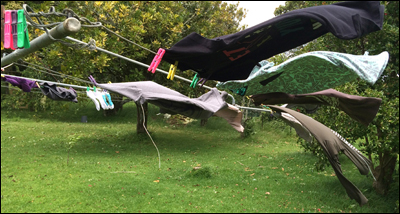
The wind is doing its best to separate the washing from the line!

When I hung out the washing earlier I had to use twice as many pegs per garment.  It reminded me of trying to wrestle with cloth nappies in Lyall Bay, Wellington, back in the 70s.

Plums

This doesn't really show the extent of the plum loss - they are spread over a wide area of ground
This doesn’t really show the extent of the plum loss – they are scattered over a wide area of ground

I was too exhausted last night to look at the garden, but the first intimation I had that all was not well was when Ben reported that nearly all the fruit had been blown off from my favourite plum tree.  This is the plum tree in what we now term our ‘native’ area – it’s an old tree that has less plums than the one growing closer to the vege garden.  But the plums are larger and have a deep red flesh.

I love them and have been looking forward to eating them.

Fallen plums
Fallen plums

When I went out earlier this morning to take stock, I felt like crying.

And I do still have a heavy heart, but I suppose there is no point in shedding tears over lost fruit.  At least we aren’t dependent on our fruit or our crops for our livelihood.

The second plum tree - mostly unaffected by the wind
The second plum tree – mostly unaffected by the wind

Fortunately, the other plum tree is situated out of the worst of the wind.  It’s still laden with fruit.

Local Birds

The wind has has had an impact on the birds that have chosen to make their homes here, as well.  I’m sure they were just as unprepared for the wind’s unusual direction.

We’ve found quite a few parts of nests on the ground, and the sparrows are busy with recycling; flying down to collect the broken nest parts from the ground and carrying them back up to their respective nesting sites.

A tiny nest lined with hair of some kind.

Ben found the above nest below the macadamia tree, although it’s so light that it could have blown from anywhere.

It’s quite a bit smaller than any I’ve seen on the ground before.  The diameter of the inner bowl is approximately 4.5 to 5 cm and it’s lined with silvery grey hair of some kind.  I pulled a couple of strands out and it’s too coarse to be human or from a cat.  And I think too long to be from a dog… I’m wondering if it’s horse hair or something like that.  I really have no idea.

It’s a beautiful little nest, though, with moss and lichen woven in to the outside.

Possibly a blackbird's or a thrush's nest.
Possibly a blackbird’s or a thrush’s nest.

The above nest is much more loosely-woven than the smaller one.  It’s also quite a bit larger – around 9 to 10 cm across the bowl of the nest.  We’re pretty sure it belonged to either a blackbird or a song thrush.  We could only see the tail of the bird sticking up when it was sitting on, it as it was just out of eye sight.

The nest had been built in quite a small, spindly broad-leaf, and right from the start was partly tipping out, so it’s not surprising that it was dislodged by the wind.  This  nest is constructed almost entirely from grasses, with a tiny bit of lichen visible… and it seems to be lined with fine mud.

Three Blackbird eggs

Our resident Blackbird couple are raising their third batch of eggs this season.  The female is currently sitting on three eggs – I had first observed her back on the nest on 09 December, which surprised me.  Raising young seemed to be a never-ending process for her and  I wasn’t sure if was because something had happened to her previous babies or whether she would keep on raising new broods if time allowed.

With her second batch I had noted the following: –

  • 19 November: 2 whole eggs, 2 hatched
  • 20 November: 4 hatched
  • 02 December: 4 chicks, well feathered and alert
  • 03 December: Nest empty

It seems amazing to me that it only took 13 days to go from hatching to flight.

I found an excellent page which provided me with the answers on the Tiritiri Matangi site.  It seems that Blackbirds do raise 2 – 3 broods per year, and that the chicks fledge at 13 – 15 days.  The other interesting fact I read is that a Blackbird’s possible lifespan is 15 years.

Garden Diary

It's going to be a bumper season for passionfruit.
It’s going to be a bumper season for passion fruit.

The garden has been flourishing, and as usual, I’ve been struggling to keep on top of things.  There has been more rain in November & December in comparison with the past couple of years, which is a good thing.  We’ve only had to water the vegetable garden once, and that very evening it rained, so …

The tomatoes are coming along nicely.

We’re been well-served by our vegetables and have been eating asparagus, beetroot, silver beet, green beans, peas, lettuces, rocket, new potatoes and Florence fennel.  Probably some other things as well but it’s hard to keep up.

Sweet Peas

My favourite early Summer flower.

I can’t finish today’s entry without putting in a plug for Sweet Peas.  I was very disappointed with the strike rate for the seeds I sowed in winter.  I had used up a whole packet but only a handful of seeds germinated.

Well… the ones that did sprout, combined with a few self-sown plants, have provided a wonderful display once again.   I’m sure the extra rain has helped, too.
I love these flowers and every other day have picked enough to fill two vases.  Even as I sit here writing I can smell their sweet and spicy scent from across the room.

Pantsers versus Planners

Driving home at dusk.
Driving home at dusk.  The waters of the Kaipara eerily luminous in the distance.  Rows of maize stretching out to the right.  Patches of dark Mānuka fringing the road.  The glow of the headlights on dusty gravel… I almost feel I could write something decent.

Water Baby

My daughter Immi approaches writing quite differently from me.  Apparently I’m a ‘Pantser‘ and this is quite true.  When I start a story I really don’t have much of an idea of where it’s going to end up.

I said I’d post a link when my short story, Water Baby, was published, so here it is…

Fiction on the Web, UK

Inspiration comes in flashes.  And is very elusive.  I might feel a surge of something when glimpsing a certain scene, but I haven’t worked out how to hold on to it.


Thoughts on Writing

marjoram

Keeping on track

When you make the decision to take writing seriously, you are faced with the ‘grind’ of trying to write each day, and then not knowing if you are on the right track with your stories.

There is also the matter of personal confidence.  Creating anything involves giving up a part of yourself.  Whether you are a visual artist, an actor, a singer, a songwriter, or a practitioner of creativity of any kind… once you put a piece of yourself out there, or even express the desire to do so, then you are placing yourself in a position where people can (and will) comment on your offerings.

This is scary.  You have to move beyond self-doubt and the fear that whatever you do ‘won’t be good enough’.  You have to be able to say to yourself, ‘So what if it isn’t?’, and get on with it.

asparagus_line

A mote of dust in a sandstorm

The internet has completely changed things for this hopeful author.  Where once I might have slaved alone for years over a book or a collection of short stories, I now have the opportunity to take some time-out.  I can respond to the challenges provided by the numerous sites that accept one-off pieces of work – from Drabbles, through Flash Fiction to the more familiar styles of writing.  All the while, still scribbling away at my longer projects.

Even so, I do this with the knowledge that there are immeasurable numbers of people out there working at the same thing.  It’s a world-wide market and I am just one tiny speck, one individual writer tapping away at the keyboard, trying to draw out my thoughts and weave them into something cohesive that I can express with a degree of eloquence.  I suppose the aim is to find my own original voice, amongst all the others.

It’s both exciting and depressing.  But the urge to write is strong.

asparagus_line

Sharing a piece of yourself

Back in July I wrote a short story, ‘Water Baby’, for a project entitled ‘Strange Little Girls’.  Water Baby was unsuccessful for that market so I submitted it to a few other places and heard last week that it’s been accepted for an online publication.

This felt really good.  But I also experienced a secondary feeling that I was struggling to identify.  I’ve come to the conclusion that it was an infinitesimal feeling of loss.

Until a piece of writing is published, it’s all your own.  Then it’s out in that big, wide world, hopefully to be read by someone.  (That’s what you do it for, right?)

It will be dissected by some.  Dismissed by others.  Read and enjoyed by a few?  Maybe… I’d like to hope so.  But you’ve effectively given it up to the masses.  Your baby has grown up and left home.

And because it’s the age of the internet, feedback will be pretty damn quick.

asparagus_line

(Water Baby will be published on 16 November and once it’s up, I’ll post a note about it.)

PS.  I know the ‘baby leaving home’ bit is corny, but that’s what it feels like. 🙂

This and That

View to the north as the sun was setting last night.

Pumpkins and Squash

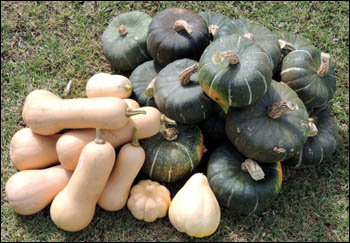
We harvested most of our squash during the past week.  It was a very good crop and I’m pleased with the varieties we chose to raise from seed this year.

Squash 'Butternut Chieftain' and 'Burgess Buttercup'
Squash ‘Butternut Chieftain’ and ‘Burgess Buttercup’, with ‘Thelma Saunders Sweet Potato’ in the foreground.

Even though I’ve tended to grow the larger pumpkins in the past, the beauty of the smaller varieties is that you can cut into one and don’t end up with a huge vegetable to eat or process in a short amount of time.

The butternut and buttercup squashes are ideal for a family of two.

Pumpkin Pie

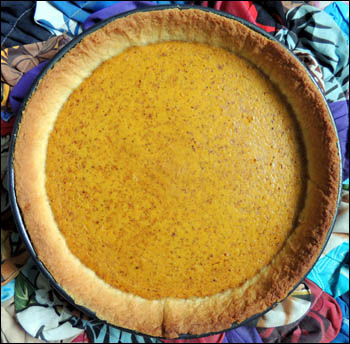
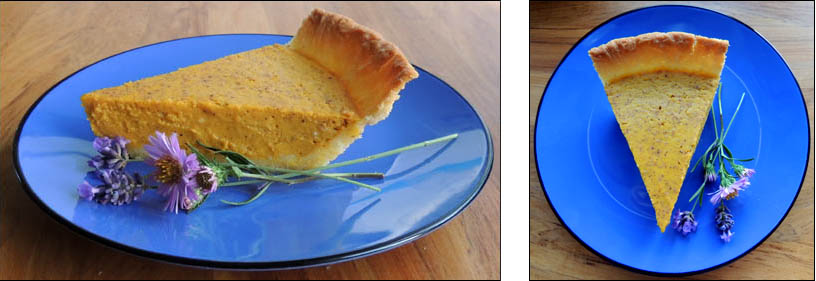
Pumpkin pie, straight from the oven.
Freshly-baked Pumpkin pie.

Keeping with the theme, I baked a pumpkin pie on Sunday, using some frozen mashed pumpkin from last year’s crop.  This was from a Crown pumpkin – a large variety with smooth, pale grey skin and sweet orange flesh.  Despite being frozen for all this time, the puree tasted very good.

A healthy serving of pumpkin pie.

The filling is comprised of  pureed pumpkin, evaporated milk, eggs, ground ginger, ground allspice and caster sugar.  The base is formed using sweet shortcrust pasty, which I baked blind before adding the filling.  The pie is topped with freshly-grated nutmeg.

I’m interested in experimenting with tofu to see if I can make a vegan version.

Rum Pot

Pears are falling daily from the old pear tree.

You may recall that back at the beginning of January, I started a Rum Pot using strawberries, plums and some cape gooseberries.  With the pears ripening and dropping each day, I decided to add some in.

The fruit that has been macerating in the rum and sugar for the past couple of months, smelt extremely enticing.  I couldn’t resist tasting some of the liquor – it was very heady and almost spicy, reminding me of Christmas.  So, now the rum pots have pieces of pear in them as well!

A view of the fruit macerating in the rum pot.
A view of the fruit macerating in the rum pots.

The next fruit to ripen should be our feijoa.  I must admit that I’m not exactly sure how well the feijoa will enhance the mix, but we’ll see!  As much as I love fresh feijoa, they do sometimes have something of a chalky texture.

Brassica

On Wednesday (05 March)  I sowed seeds of the following Brassica – Broccoli ‘Premium Green’, Cabbage ‘Scarlet O’Hara’ and Cauliflower ‘All the Year Round’.  Brassica don’t seem to do so well in our hot, dry summers, but we have had good results during Winter and Spring.

I’m hoping that these will be ready to plant out in a month or so’s time.  The broccoli and cauliflower have sprouted already (5 days).

Swan Plants

Swan plant seed head, and monarch butterfly on flowers

The ‘swans’ on our swan plants (Asclepias physocarpa) are bursting with fluffy seeds.  We appear have the full cycle happening at once – tiny caterpillars, fat caterpillars, cocoons, adult butterflies, mating butterflies, flowers and seed pods.

The grass in some areas of the garden is carpeted with the ‘down’ from the seeds.  I suspect we may have something of a swan plant problem in 2014/2015.  But at the moment I can’t see that we’d ever have too much of them.  I love having the butterflies always present in the garden.

Swan Plant Beetle

beetle in seed-head and bursting swan pod.
Close up of swan plant beetle, and view of bursting seed pod.

When I was photographing the seed pods and their bursting seeds, I noticed a small insect inside.  I have since identified this as Arocatus rusticus, a native of Australia that has become established in New Zealand.

Despite the foliage and sap of the swan plant being toxic to plant-eating creatures, it seems that Arocatus rusticus has evolved the ability to overcome the toxin and store it in its own body.  You can’t really tell from my photo, but the insect is orange/red and brown in colour.  This is to warn off predators as the toxins stored in its body has made it toxic, too.

Molly and the Hens

Lottie does like to boss the Orpingtons around, though.
Lottie does like to boss the Orpingtons around.

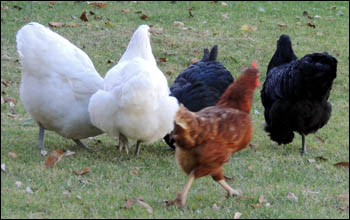
The four new Orpington hens have settled well alongside our three Red Shavers.  Lottie is the boss of all seven, and every so often has to assert her dominance, usually by pushing in on a choice item of food, or by chasing one of the stragglers.  They all choose to sleep in the same hen house nowadays, often trying to squeeze onto the same perch!

Francesca, Pearl, Fatima and Hannah (the four Orpingtons) mostly stick together and if Lottie isn’t around, Leila and Lulu will often be found nearby.  Their favourite spot on these hot Autumn days is to sleep and dust bathe under the shade of the Feijoa trees.

Hannah and Fatima
Hannah and Fatima

When the Black Orpingtons were little, they looked so cute running around.  From a distance they looked like they were wearing burqa – hence the name Fatima.  We named the other Black Orpington, Hannah, to maintain balance.

The Red Shavers are very naughty.  Lottie has taken to ‘disappearing’ in the mornings and not returning until sometime in the afternoon.  One day I spotted her hurrying across the road and into the trees on the other side.  We think that perhaps the house down the road may have something interesting to attract her – a rooster, maybe, but we’re not sure.  I’ve taken to not letting the hens out until after 10.00 am or so, to be sure they have laid all their eggs before one of them heads off further afield.

Yesterday Leila caught a small field-mouse which must have strayed from the maize field.  Poor wee thing – all three red hens set upon it – it didn’t have a chance.

Molly often watches the hens from a secluded spot.

Molly and the hens have developed a ‘kind’ of respect for each other.  But to me it seems like the only advantage Molly has, is that she is allowed inside the house and the hens aren’t.  Sometimes they look through the living room window at Molly, looking out.

I’ve seen them peck at her if she comes too close to them, but I’m sure she could defend herself if she had to.  When I go into the hen’s enclosed area in the morning to collect their eggs, Molly always accompanies me.  She has a good look around their area when they aren’t there.  I find this amusing.

Tangy Vegan Curry

Vegan curry with Basmati rice and roti
Tangy Vegan curry with Basmati rice and Roti

Serves 4

This curry could be adapted to use any combination of vegetables, but to my personal taste, is enhanced if potato is included.

We had a surplus of zucchini and had to dispose of some tomato plants that weren’t surviving very well in the heat and dryness of our front porch – hence the green tomatoes.   Ripe, red tomatoes would do just as well, as would using tofu in the mix.

The mix of vegetables in the curry is about 1/3 potatoes, 1/3 zucchini and 1/3 green tomatoes.

I served this curry with white Basmati rice and freshly-made Roti.

Ingredients

  • Potatoes (a good floury variety)
  • Green tomatoes
  • Zucchini (starchy Costata Romanesco is ideal)
  • 1 medium onion (finely sliced)
  • Sunflower oil
  • Freshly crushed garlic (2 or 3 cloves)
  • Fresh chili to taste (I prefer Habanero)
  • 1 tablespoon black mustard seeds
  • 1 teaspoon coriander seeds
  • 1 teaspoon ground cumin
  • 1/4 teaspoon ground turmeric
  • 1/2 teaspoon salt
  • Freshly ground black pepper
  • Lemon juice (1/2 large or 1 smallish lemon)

Preparation

Chilli, spices, garlic and onion

Habanero chilli, spices and crushed garlic

Finely chop the chilli, measure the spices, crush the garlic and slice the onion evenly, ahead of time.  This will enable the curry to be cooked quickly, which is important if you wish to retain the best features of the ingredients.

Potatoes

Sauteed potatoes
Sauteed potatoes

Peel and dice about 3 medium sized potatoes and sauté them in  a little oil until they are cooked through and have started to develop a crispy golden coating.  Remove these from the pan and set aside.

Zucchini

Sautéed zucchini
Sautéed zucchini

Do the same with the zucchinis.  Slice them into chunky pieces and sauté them in a little hot oil until they are ‘just’ beginning to cook through and have developed a golden colouring.  Set these aside, also.

Green Tomatoes

Roughly chopped green tomatoes

Peel and roughly chop the green tomatoes.  They can be irregular in size as long as they aren’t too thick – they will soon soften once they are added to the curry.

Method

Wipe out the pan, add a couple of tablespoons of oil and raise the heat.  When it is good and hot, add about a tablespoon of black mustard seeds and heat them until they start to pop.  Then add the turmeric, cumin, coriander seeds, chilli, ginger and lemon juice to the pan and cook for 1 minute.

Turn the heat down to less than half way and add the sliced onion.  Gently cook this until it turns transparent, but don’t over-cook it – you want to still be able to see the slices in the curry.  About half way through this cooking process, stir in the crushed garlic so that it has the chance to cook through.

Add the vegetables to the onion and spices and stir through

When the onion is ready, add the potato, zucchini and green tomato.  Stir these through carefully, mixing them in with the spices and onion but taking care to keep the pieces intact.  Cover the pan with a tight-fitting lid and turn the heat down to low.

Gently cook until the tomatoes have softened, and the zucchini and potatoes are well-heated, stirring from time to time.  This should take no more than 20 minutes.

When the curry is cooked through, check for seasoning and serve.

End of February

Garden Update

The maize in the paddock next door is dry

It seems ages since I’ve posted anything.  February has been so busy and now that it’s almost over, I can’t think where the days went to.  The sun is rising noticeably later and setting noticeably earlier.  The temperature range is still in the high 20s to low 30s Celsius, but there is the ‘smell’ of Autumn in the air. It has been extremely humid, and almost unbearable for sleeping at night.  During the hottest parts of the day I still stay inside where it’s shady and much cooler.

The maize in the paddock next door has dried to a pale golden colour and rattles in the wind.  The days are loud with the clicking of cicadas, and the nights with the more musical chirping of black field crickets.

Much has been happening in the garden, including our banana flowering for the first time, tomatoes, tomatoes and more tomatoes, and a very good crop of garlic.  It’s been extremely dry, and sadly, I fear that some of the newer small shrubs may have been lost – many are looking very dry and shriveled up and it’s just about impossible to water them as the earth has become so dry and hard.  Large cracks are spreading in some places, and there are many patches where the grass has completely dried off.  The pumpkins and squashes are dying back and we’ve given up on our zucchinis.  There have been just too many of them.

In the vegetable garden, our best crops at the moment are basil, peas, silver beet, the last tomatoes, beetroot and chilli peppers.  We have a new batch of scarlet runners that look pretty healthy and the passion fruit are dropping from the vine.  I am always amazed at how lushly basil grows, even when it’s so dry.

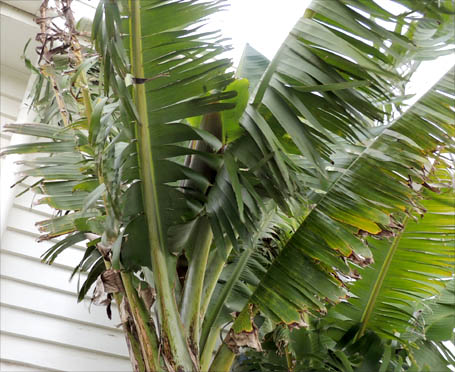
Banana ‘Mons Mari’

Banana with first sign of flower spike.

The most exciting development has been our banana ‘Mons Mari‘ flowering for the very first time.  I observed the very first spike of purple (which was the beginning of the flower stalk) on Monday 03 February.

This plant has been in our garden since April 2011 – I realise now that we didn’t plant it in a very good place – it’s exposed to the wind from the North and is also in very poor soil.

The flower stalk appears out of the centre once the plant is fully grown, hanging down as the flower develops.  The male flower develops at the end of the flower stalk creating a bell, with the female flowers spiralling around the stem.

The bananas just keep on forming!

Nevertheless, it has produced an amazing flower stalk of small bananas with more still forming.  We counted 170 the last time we checked – and remarkably this is only 3 weeks or so since the flower first appeared.

Tomatoes

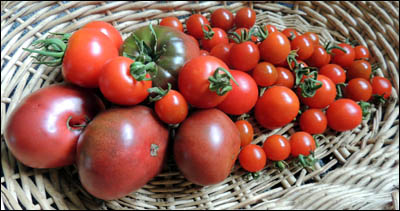
A selection of tomatoes from the garden

We’ve had so many tomatoes that I couldn’t keep up with picking them.  The most successful have been the heirloom varieties, ‘Cherokee Purple‘, ‘Black Krim‘ and ‘Black from Tula‘, and the cherry tomato, ‘Suncherry’.

The latter have been dropping to the ground like berries and to be honest, we haven’t kept up with them.  I also grew ‘Bloody Butcher‘ and this was a very nice, smaller tomato, but nothing really beats the taste of the big beauties.  Some of the tomatoes were tunneled into by caterpillars, but not too badly.  And this year all have ripened, so I won’t be making any Green Tomato Chutney.

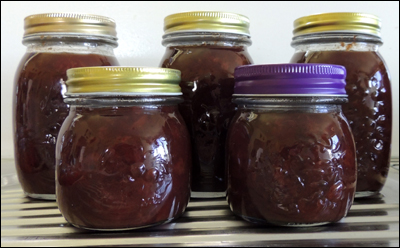
Left to Right: Spicy tomato sauces, Greek tomato paste, Tomato sauce
Left to Right: Spicy tomato sauce, Greek tomato paste, Tomato sauce

I’ve ended up turning just about all the excess tomatoes (and there have been kilos of them!) into tomato concentrate and tomato sauces.  I’m really pleased with a couple of recipes, so will post these in the near future.

This year is the first time I’ve tired making  tomato concentrate.  I tried two recipes – a plain one and a Greek version.  The taste of both, compared with the tomato paste you can purchase commercially, is far superior.  Sweet, tangy, fragrant and rich with the flavour of tomatoes that have been ripening in the sun.

Garlic

Garden bulbs hanging on the fence to ripen

I’ve grown garlic for three years now at South Head and this is the best crop I’ve harvested.  There are more than 30 bulbs, a few of which I’ve left in the ground to mature a little longer.

I’ve read that garlic grows to its own conditions, which means that each year, if you use cloves from your own crop, the results will be better.  I love it that I can grow enough garlic to last an entire year.  We were literally turning the last of our 2013 garlic cloves into paste on the same day as we lifted the first bulb for 2014.