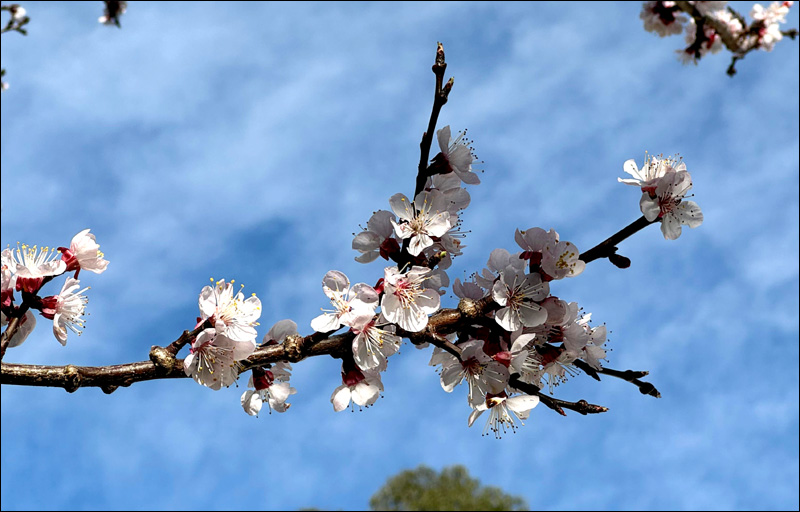
In August, our apricot tree was in full bloom. It was so pretty but we had no idea what was in store!
The buds became tiny little fuzzy green fruit, and the fruit grew and grew and grew… Until…
The golden fruit of prunus armeniaca ‘Sundrop’ ripening on the tree, 01 December 2024.
We inherited the apricot tree in the garden of our new home. The previous owners kept many of the plant tags, and so we know that our tree is Prunus armeniaca ‘Sundrop‘, and it soon became covered in fruit.
We were a bit lazy about thinning the little green ovals… well, very lazy as we didn’t thin any. I was regretting this fact as the fruit began to ripen. There were bunches of 5-8 fruit all jammed together, and I was worried that they wouldn’t develop properly, or that they might be inferior, but I needn’t have worried.
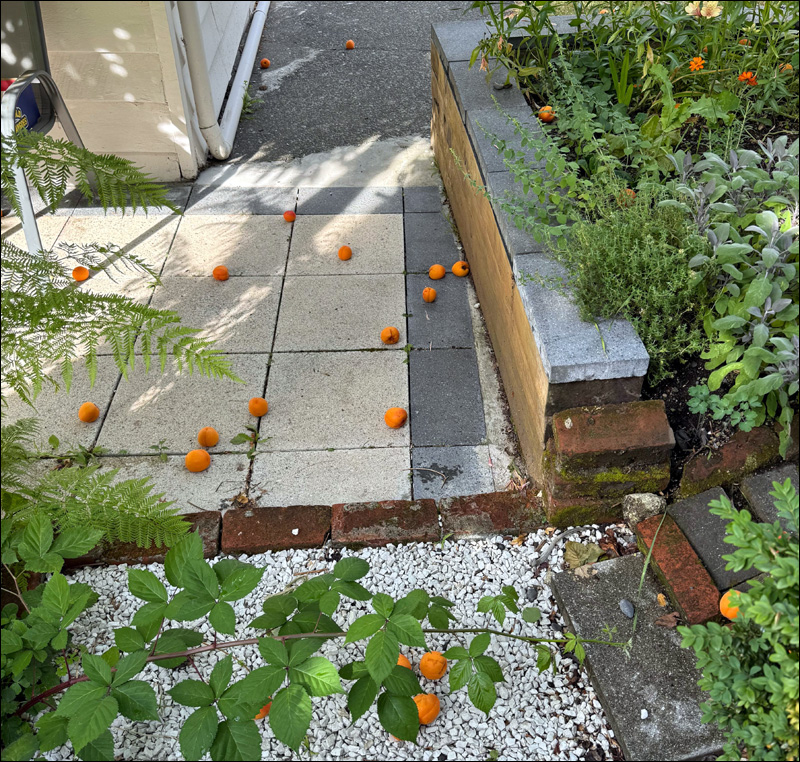
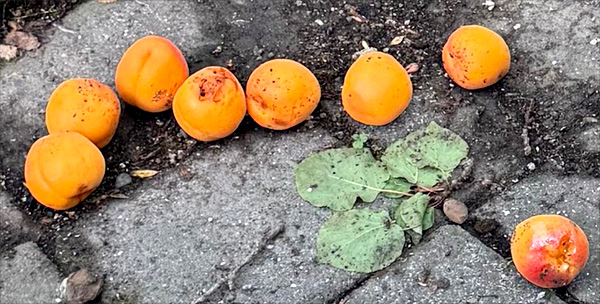
Apricots started falling. Some mornings we picked up 60+ in one sweep.
One moment they were on the point of ripening, and the next thing we knew, they began to fall on the ground and kept dropping for two full weeks. It was even worse when it was breezy, or on the one day that it rained. Interestingly, they weren’t pecked by birds at all, and there obviously aren’t any possums in the neighbourhood. That’s a first!
Each day we struggled to get the apricots off the ground as quickly as possible.
So, during the very hot weather at the beginning of the month, each day, we were collecting, sorting, cutting and… of course… eating.
They turned out to be the sweetest, juiciest apricots I’d ever eaten, which surprised me. I’d always thought that the best New Zealand apricots came from Roxburgh.
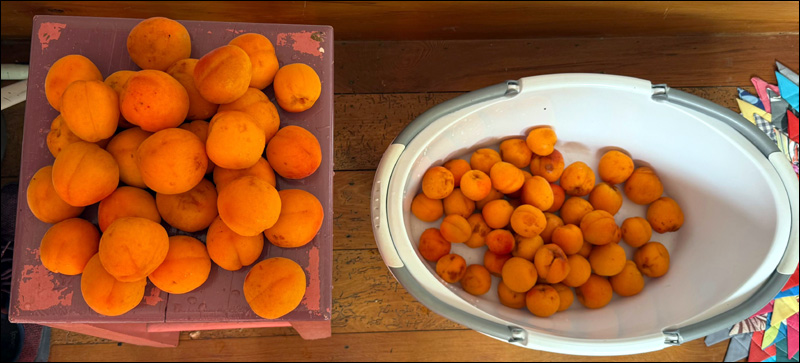
Apricots ready for sorting, cutting and dipping.
I decided the sort them into ‘eating’, ‘freezing’, ‘stewing’, ‘infusing’ and ‘drying’. I had a system for using as much of the apricots as I could. Some I had to dip in water and lemon juice (those intended for drying), some I merely cut into small pieces for freezing (these I’ll use for jam or fresh sauces). Our compost heap became filled with sloshy pieces of apricots and hundreds of apricot stones.
Apricot Sauce
Apricot sauce: bubbling away and after bottling.
The really ripe ones that were still in good shape, I tossed immediately into a large pot for sauce. It was made in the usual way with malt vinegar, chopped apple, tomatoes, onions, some spices, some sugar and salt… and of course, apricots.
Dried Apricots
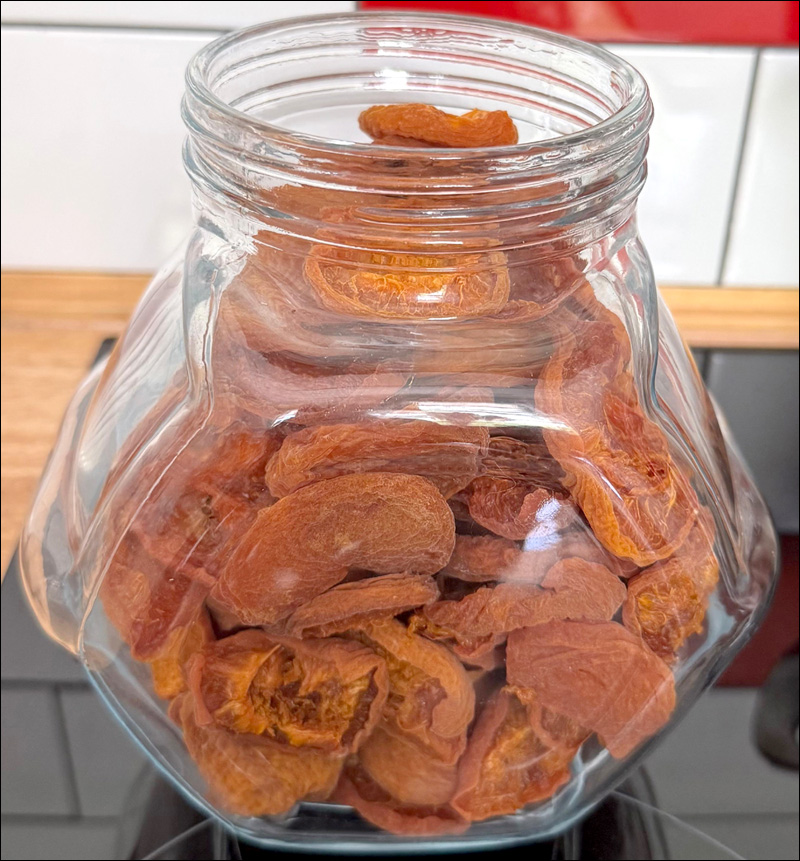
Dried apricots.
The soundest ones, the ones that looked perfect, I halved, and dried in our Excaliber dehydrator. This was the most time-consuming of all the processes, due to the juiciness and plumpness of the fruit, but we ended up with around 1300 grams of the dried apricots.
Apricot Liqueur
Apricots in brandy
Apricot Liqueur
Other sound, ripe and juicy apricots, we tossed into a huge jar with a litre of brandy and a couple of cinnamon sticks. Hopefully it’ll end up as Apricot Liqueur in a few weeks. Fingers crossed.
Free for All
By the end of the first week we started to give away as many as we could. To neighbours, to friends and family. Some people turned them down, “We don’t eat apricots”. But we still had more.
By the time we’d processed the last sound apricot, I was beginning to feel that I never wished to see an apricot again.
But that was a week ago, and I’ve already forgiven them.
Golden apricots
drop to the ground with a thud.
Ant gangs mobilise.
Snow cloaking trees on the side of the road. On the bus from Asahikawa Airport to the Railway Station.
I’m back in Asahikawa (Yay!), and it feels really good. This is my eighth trip to Japan, and I’m not sure if I’ll make this trip again due to various external factors, so I intend to make the most of this visit.
Napier to Asahikawa
To get to Japan, I first took an afternoon flight from Napier. I had a front seat and was wedged in beside the guy in the above photo. I couldn’t resist capturing the view.
Flying between Napier and Auckland.
After flying in from Auckland to Narita Airport, Tokyo, I was able to take a direct flight to Asahikawa, rather than first having to transfer to Haneda Airport. This was thanks to a new route opened up by Jetstar Japan. Narita and Haneda airports are quite a distance apart and to travel from one to the other usually requires a couple of train trips, or catching the Limousine Bus. Having the option of a direct flight from Narita was too tempting to ignore. I was a little worried, however, about my timings. If my Air New Zealand flight ran late, and if Passport Control and Customs at Narita were especially busy, then I would be cutting it fine to get to Terminal 3 in time for my Jetstar flight. As it turned out, I had plenty of time as we arrived early, and the airport wasn’t busy.
The first view of the southern edge of Hokkaido, from the window of my plane.
The flight to Asahikawa took just under two hours and was uneventful. I had purchased a premium booking with a ‘meal’, luggage of up to 30 kg (way more than I needed), and the option to change flights at short notice. The ‘meal’ turned out to be a hot drink and a piece of apple-filled pastry in a celophane wrapper. If I had to rate it, I’d say it was ‘just okay’, but I didn’t really mind, I was just pleased to have connected successfully. The skies were clear and I was afforded a clear view of the spectacular mountainous scenery, especially as we drew closer to Asahikawa.
View of the mountainous terrain as we flew closer to Asahikawa.
Items that are hard to find at home
My main purpose for visiting Japan is to catch up with my daughter, her husband, and my two grandchildren. But I while I’m here I also intend to purchase some bits and pieces that I’ve come across on previous visits, and that I’ve wished I’d purchased at the time.
Mini vacuum cleaner – it’s only 6 cm in diameter!
Japan does particularly well at producing useful items that you didn’t know you wanted until you saw them. I’ve spent a great deal of time in New Zealand looking for exactly the right kitchen or bathroom item, to no avail, and often when I do find a suitable product, it’s either ‘not quite right’, or its seriously over-priced.
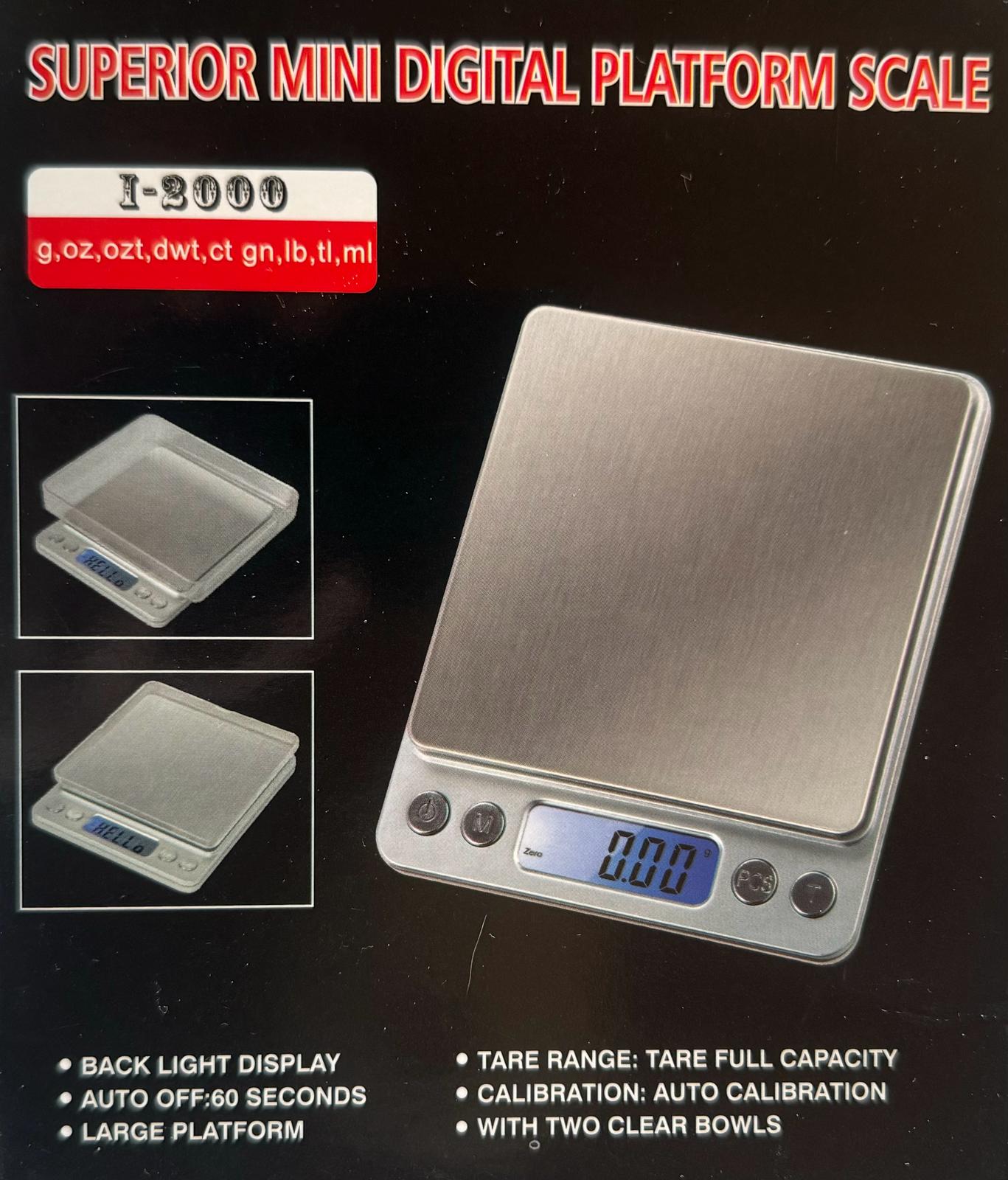
Tiny scales, approx 13 x 11 cm
If you were to look at my list, you’d see a bunch of trivial items: a very small digital kitchen scales (you’ll think I’m weird, but sometimes I’d like to know how much hot chips I’m eating, or just how heavy a date scone is); a cute little mini vacuum cleaner to clean up crumbs (or other small debris) off a table; a second super light-weight feather quilt for those summer nights in New Zealand that are too hot to be covered with anything, but when you just want ‘something’–I purchased one last year and it was perfect; a set or two of versatile shelving and/or containers that can either be stuck, or screwed to tiles or a wall, or attached to a magnetic surface.
These 100% cotton kitchen towels are not only beautifully made, they are very functional.
I always look for products that have been made in Japan, but many everyday items, while of Japanese design, are produced elsewhere, most commonly in China, or Korea. Japan produces its own premium items, of course, and for the visitor, these are definitely worth purchasing when you can, due to their superior quality and thoughtful design. Linen, paper products, writing materials, ceramic items, knives, glassware, cakes and candies, technological wares… the list goes on and on.
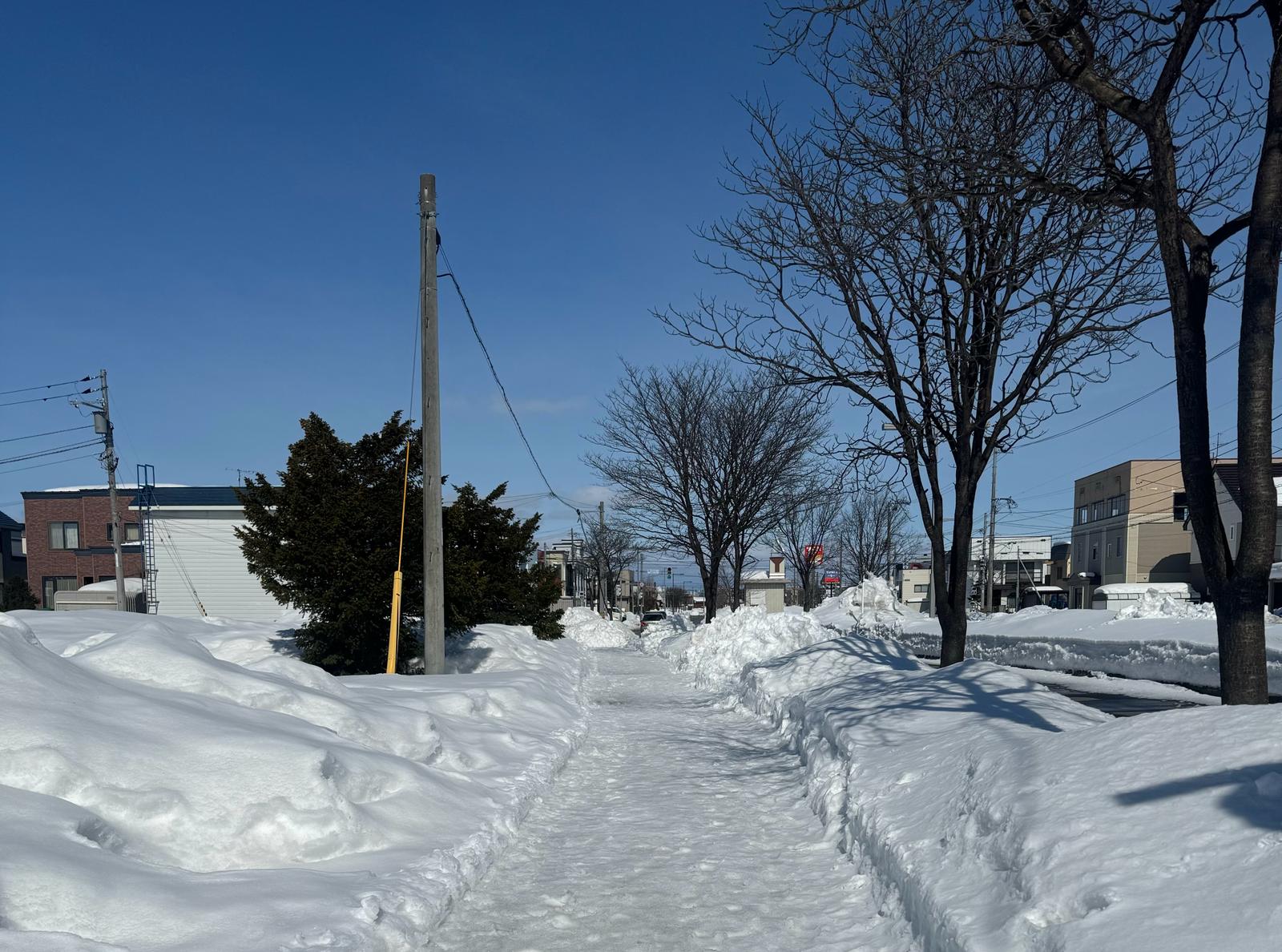
Snowy roads and pathways
Returning home after dinner at Jiji and Baba’s.
There’s a lot of snow lying around in Asahikawa compared with the last couple of years that I’ve visited. And it’s colder, according to the weather app. I’m glad. I would feel short-changed if there was no snow. It’s very beautiful, even with the heaps of snow discoloured by the muck on the sides of the road. I can ignore those and just focus on the pure white mountains piled up everywhere else.
Running in the snow. The banked up snow will reveal a flat, grass playing field, when melted.
I know that the snow will disappear quickly, with every day that climbs above zero degrees, but so far, the gardens are completely dormant, the plants still sleeping under their white blankets. Out of curiosity I visited the garden section of DCM Homac, a hardware / DIY chain, to see what they were selling, but as far as outside plants were concerned, all I saw were trees—flowering cherries, dogwoods and magnolias. No perennials yet. And not much else, either.
As I grow older, my body has begun to display issues associated with the wear and tear of a lifetime. I currently have a problem with my right knee (synovial chondromatosis); it isn’t such a big deal, but it does mean that my knee becomes quite painful when walking, or more so if I have to walk up or down stairs, or up or downhill, and this will affect how much I can get out and about. If you’ve followed my blogs in the past, you’ll be aware that I usually like to take long walks—this time I fear my walks will be much shorter, but I’m determined to get out as much as I can. I’m seriously looking forward to the first signs of Spring.
Spring, donuts and nostaglia
A few days ago it was Vernal Equinox Day 春分の日(Shunbun no Hi), a public holiday to mark the end of Winter and the beginning of Spring. This day was originally an event relating to the Shinto religion, but after WWII, and in line with Japan’s post-war constitution, it was repackaged to separate religion and state, becoming a public holiday in 1948. The main thing I noticed were the kids off school, and more people out and about.
Sakura ‘half bloom’ donut – a delicately flavoured delight.
Yesterday I went out to look for a birthday present and ended up visiting Mister Donut for lunch. I prefer not to eat too many sweet cakes, so chose a ホットドッグ (hottodoggu) to go with my Sakudo blooming donut (Yes, really healthy!) Japan loves seasonal themes when it comes to popular food, and sakura is the flavour for Spring. I couldn’t resist the donut as I was curious about the flavour. I wasn’t disappointed; it was lightly sweet with a delicate floral quality. Perhaps it did taste like the fragrance of sakura. I certainly remember as a child, the sweet smell of the snowy white blossom on our Mt Fuji cherry(Prunus serrultat ‘Shirotae’).
While I was munching away, Michael Jackson’s 1972 song, ‘Ben’, started playing in the background. I used to love that song. What a flashback! I would have been 15, and I still know the words off by heart. It reminded me of riding my bike with my neighbour Lynette, listening to pop songs and being the age where my whole life stretched out ahead of me.
Walking home last Wednesday.The same path, yesterday (4 days later). The snow isn’t in any hurry to melt.
South Head to Napier
Once I’m back in New Zealand, I will no longer be writing from South Head. In February, we made the move to Napier, in the Hawke’s Bay. So, I’ll be writing about quite different things and posting photographs of quite different scenery.
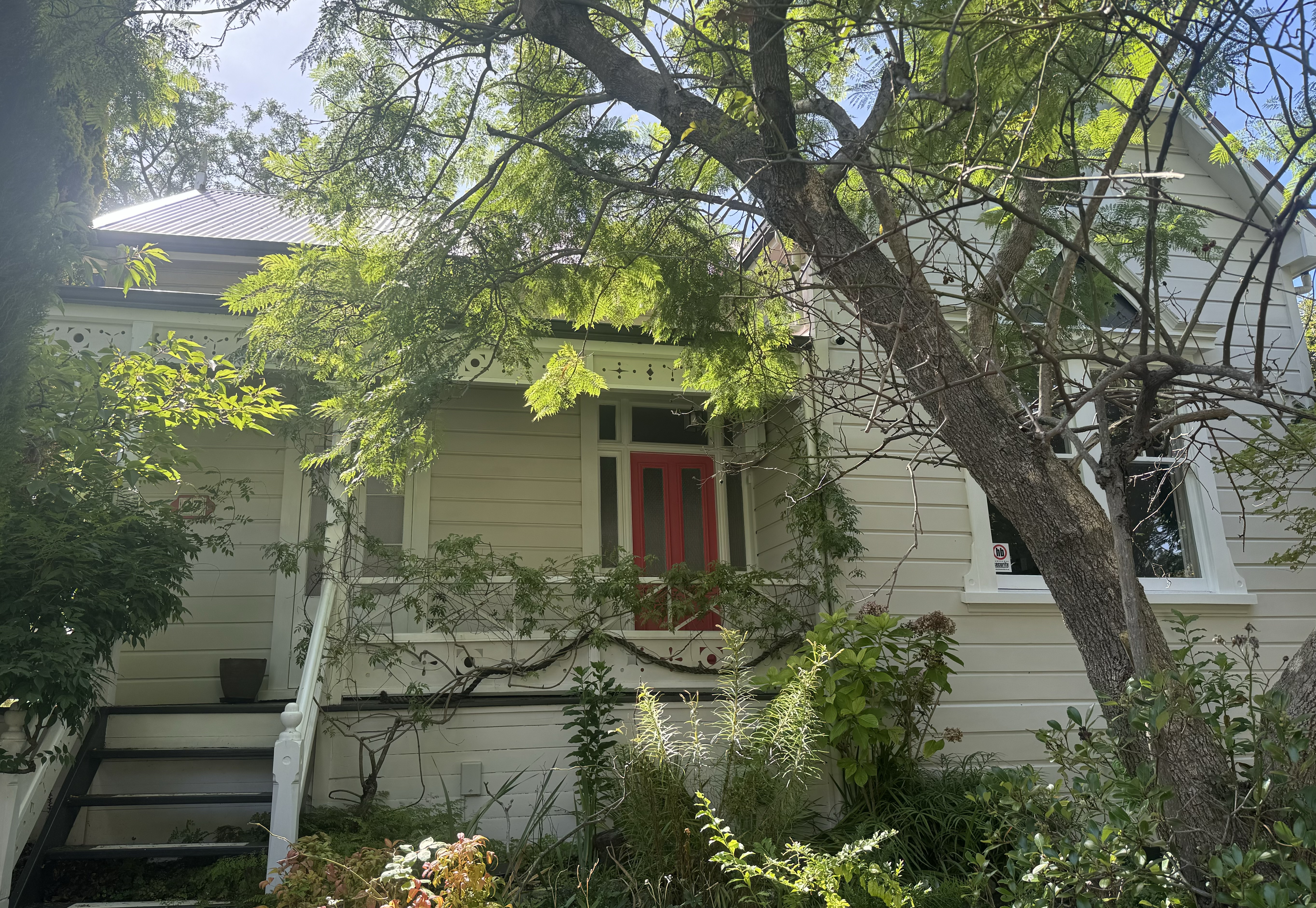
One of the reasons for the move was the amount of physical work on our South Head property. We have been finding it difficult to keep up. Our new house is a charming cottage, built in 1875. It is fashioned entirely from kauri(Agathis australis) a golden timber, native to New Zealand. The property has a much smaller land area and a much more manageable garden. We should also experience a few frosts, so I’ll be able to grow flowers that couldn’t cope with the heat of up north.
A completely different way of life. City dwelling versus country.
The joys of air travel
There’s not much privacy when you’re squashed into a small seat beside a larger person.











 Heni Irihapeti's Blog