Tag Archives: Hokkaido

JAPAN DIARY

十九 Overnight Trip to Otaru – Part 3
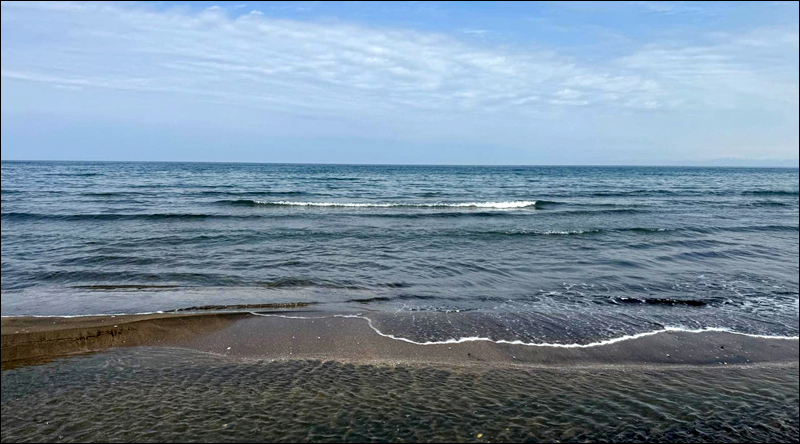
Zenibako Beach, looking out to the north-west. Not so different from a North Island west coast beach.

All good things must come to an end, and so it was with our mini break to Otaru. We’d hoped to be back in Asahikawa by early afternoon, April 04, but had also planned to initially drive back along the coastline so that I could finally walk along a real Japanese beach, and dip my toes in the sea.

Breakfast at Hotel Sonia

We set our alarms for 7.00 am and once we were up and dressed, we met up outside our rooms and headed downstairs for the buffet breakfast. The dining room was moderately busy, with a scattering of Japanese and Chinese travellers, and one other foreign couple–a woman and a man. The former of the two was in the line beside me and was complaining loudly to her companion about the choice of oatmeal. Or apparent lack thereof. Her accent was North American.

A selection of breakfast items

Breakfast was arranged buffet style around the edge of the dining room. The food selection was comprehensive, although there weren’t many items  that I felt able to eat so early in the morning.

When I looked at my choices, they were unexpectedly colourful, in shades of yellow, orange and pink–a couple of crumbed ebi, a slice of tamagoyaki, a small croissant, a slice of cooked salmon, some diced raw salmon, a dollop of mashed tuna, scrambled egg, and a couple of strips of bacon (just in case you can’t tell from the photo!).

I’d somehow managed to avoid anything green, but I did collect some slices of melon and a few grapes after I’d done my best with the main course. The scrambled eggs were difficult to eat as they were very runny. Usually they’re a safe choice no matter where I’ve been.

Alongside Ishikari Bay

Our plan for the morning was to travel up the coast to Zenibako, about 25 km from Otaru, situated at the bottom of Ishikari Bay. Amiria had previously been there in summer, and told me it was a popular resort area.

On the last stages of our journey to Otaru the previous day, there had been a clear view of the bay and despite the distance I’d noticed a very large and solitary terracotta-coloured building dominating one area of the coastline. I was super curious about what it might be and hoped the mystery would be solved when we headed that way.

Hotel Luna Coast

Hotel Luna Coast – a ‘love’ hotel

Zenibako is a coastal settlement with a long stretch of beach, and when we arrived we could not miss the edifice I’d been seeking. It turned out to be the Hotel Luna Coast an ‘adults only’ love hotel (rabu hoteru). It was standing there all by itself, surrounded only by small dwellings. Amiria mentioned that this wasn’t particularly unusual–she said that in Japan there are often tall hotel buildings in coastal areas, but to me it looked completely  incongruous. At just on 10.00 a.m., there was no sign of life. Perhaps the hotel was closed for the off season.

Zenibaku Yacht Harbor, adjacent to a stream that ran down to the water’s edge.

There were no car parks in the area, so we had to drive onto the gravelly edge of the road near to a small stream that ran down to the water’s edge. We hoped it would be okay to leave the car there. It wasn’t that we thought that it would be broken into or stolen (this would never happen in Japan), but we didn’t really wish to  engage in conversation with a local to explain what we were doing.

Bounty from the sea

An Anpanman, trapped in debris adjacent to a stream running into Otane Beach. Photo courtesy of Amiria Paterson.

On our walk down past the stream, Amiria spotted an Anpanman almost completely buried in the flotsam and jetsam that had accumulated on the bank. The sight was a bit sad–someone’s once-loved toy (possibly?), discarded and forgotten.
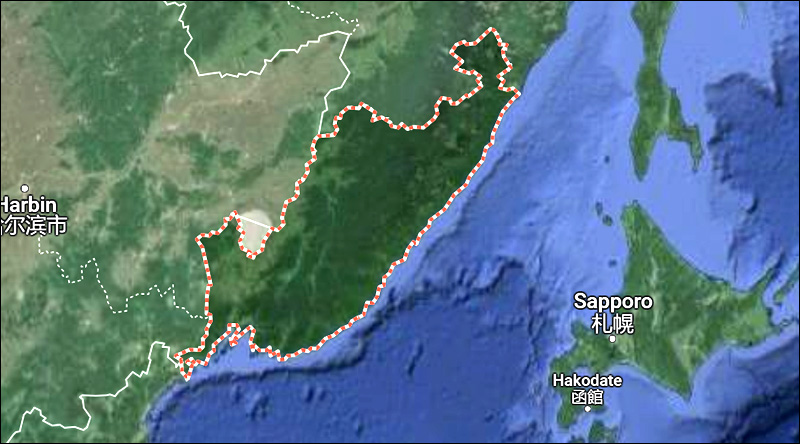
Directly across the Sea of Japan from Hokkaido, is the Russian federal state of Primorsky Krai.

It was a blustery grey-gold-blue kind of day, with the dry grasses, the sand, the sea and the sky all displaying versions of the same colour palette. I looked out across the water and realised that directly across from where we were standing (north-west), was Russia, approximately 600 km across the Sea of Japan. Specifically, Primorsky Krai, a ‘federal subject of Russia’, in the Russian Far East. It was hard to get my head around the fact that it was about as close as Auckland would be from Wellington.

It’s disapponting that trash from the Sea of Japan ends up on a stretch of coastline in such an isolated area, and I was depressed by the state of the foreshore. The grey sand was littered with rubbish, from the tiniest of multi-coloured scraps, to plastic bags of all shapes and sizes, to larger plastic drink bottles, to orange and yellow net floats. I didn’t have the heart to take many photos of the human detritus, so have left this to the imagination.

‘Girl holding Japanese glass net float with mussels on top it’, circa 1950. OSU Special Collections & Archives : Commons, No restrictions, via Wikimedia Commons

I was, however, interested to read that before the transition to plastic or aluminium, Japanese net floats were fashioned from glass and were predominantly green, due to the use of recycled sake bottles.  Clear green globes washed up on the beach would be a far more attractive sight.

Everywhere we looked, rubbish had accumulated on the surface of the beach.

Curious, I inspected a few of the larger plastic items and discovered that those that did have any identifiable writing on them, were all Japanese. I’m not sure whether this fact made me feel better or worse. I’d assumed that the trash had washed up from a range of sources, not just from Japan.

We wandered along the water’s edge for about 30 minutes, searching for interesting shells, or seashore flora and fauna to photograph, but were unrewarded. There wasn’t much else to see or do, and with the wind whisking our hair into our faces and finding its way under the cuffs of our jackets and pants, we were getting cold, so we headed back to the car.
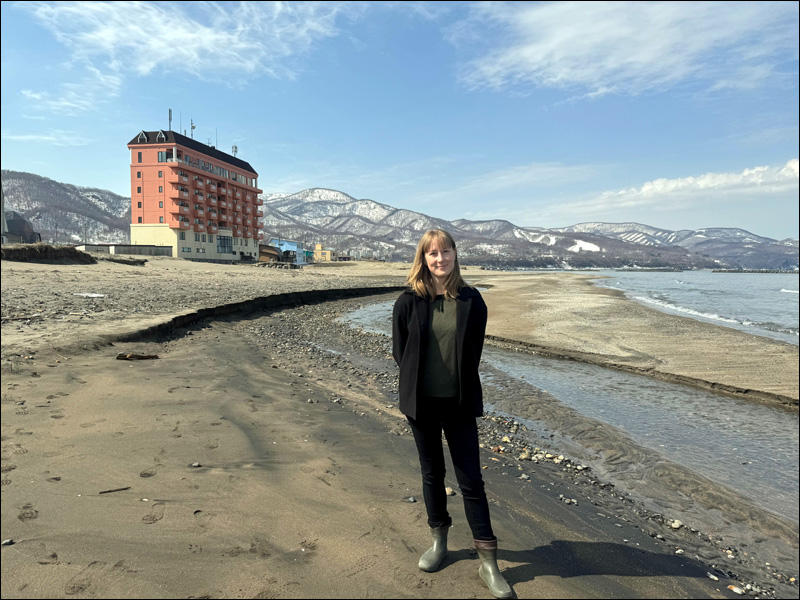
Amiria on Zenibako Beach, with Hotel Luna Coast looming behind her.

I looked back once, to impress upon my memory the overall feel of the place, with the knowledge that it was unlikely that I’d ever stand on that particular shore again. I tried to absorb everything. The feel of the air, the briny smell of the wind, the sharpness of the winter sunlight, the infrequent squawks of the seagulls soaring and diving in the sky overhead.

I’m left with the impression of a vast sweep of barren coastline, curving away in both directions. From the nub of land to the south-east (where Otaru is situated), along and up to the north along Ishikari Bay to Cape Ofuyu. It was April, and in Japanese terms, especially further south, it would clearly be Spring, as that month marks the peak of the Sakura season. Far to the north in Hokkaido, however, it would be another few weeks before the first buds of the cherry blossom began to open.

I decided that although Aotearoa has its own empty swathes of coastline, and although our west coast beaches often have grey or even black sand,  the wintry view from Zenibako beach was quite different from one from home.  Also the fact that the view from Zenibako beach was dominated by the strange apparition that was the hotel. I couldn’t imagine seeing something similar in New Zealand.

In Hokkaido, once Spring truly starts, everything happens in a really short space of time. I’ve observed this many times in Asahikawa. One minute it’s freezing and the next, it’s too warm. The trees sprout buds and new leaves, the rice paddies turn a brilliant green, new growth pushes through the soil to replace the dry grasses, and wild flowers at the edge of the beaches begin to flourish. The Ishikari Bay coastline was merely in a state of waiting for Summer to arrive.

Back to Asahikawa

The tunnels thorugh the hills that separate Asahikawa from the

We didn’t waste time on our way back to Asahikawa, only stopping once on the way for a toilet stop, and to pick up some snacks and a drink. At just after midday, I was glad to see the familiar tunnels that indicated we would soon be back in Asahikawa.


On Zenibako Beach

Plastic scraps dispel
memories of green glass spheres.
Grey pebbles rattle.

Jane Percival – 08/08/24


Next Japan Diary: Karaoke in Sangenjaya – a memory from 2023


JAPAN DIARY

十八 Overnight Trip to Otaru – Part 2

We crossed the canal on our way to Minatomachi, to explore the warehouse area.

After checking into Hotel Sonia, there was time to head over to the Minatomachi district, for a nosey along the back street that ran parallel to the main canal. The street itself is lined with brick and stone warehouses that date back to the Taishō Era (1912-1926). The sun was beginning to set, which added unexpected shadows to what were already very interesting looking buildings.

Brick buildings, a brewery and an abandoned railroad

The road was lined with interesting brick and stone warehouse buildings.

There were still dirty piles of snow everywhere, but I was glad that they’d melted enough for us to see the buildings’ features. A lot of the structures looked abandoned, but it was hard to know for sure. Certainly the rusted doors in the photo above looked like they hadn’t been dragged open in some time.

Otaru Soko No. 1 Brewery

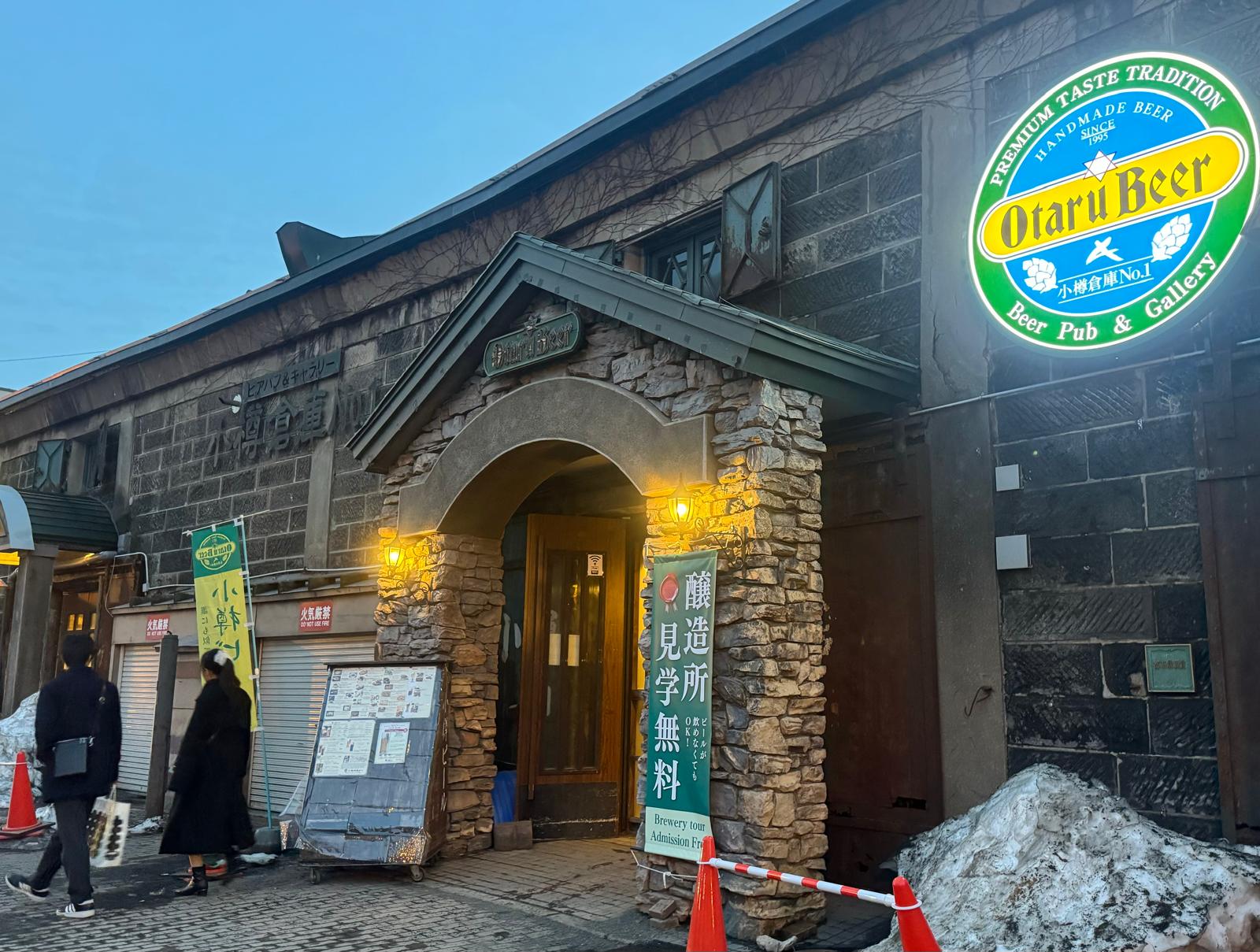
It was getting quite chilly with the sun going down, and after walking a little way we were drawn to a brightly lit doorway we could see ahead of us. It was the entrance to Otaru Beer’s Soko No. 1 Brewery, and we decided to check out the interior. It looked warm and inviting.

Left: Me, uncharacteristically drinking a beer. Admittedly, it *was* flavoured with woodruff; Right: a magnificent copper mash kettle, centrepiece of the bar area.

The establishment was in the style of a German beer hall, with the seating arranged around a huge copper mash kettle. I’m not usually a drinker of ale, but I was tempted to try the Woodruff flavoured Weiss beer. I really enjoyed it!

We could easily have stayed much longer than our one drink, but we had to move on as we had a dinner booking for 6.30 pm.

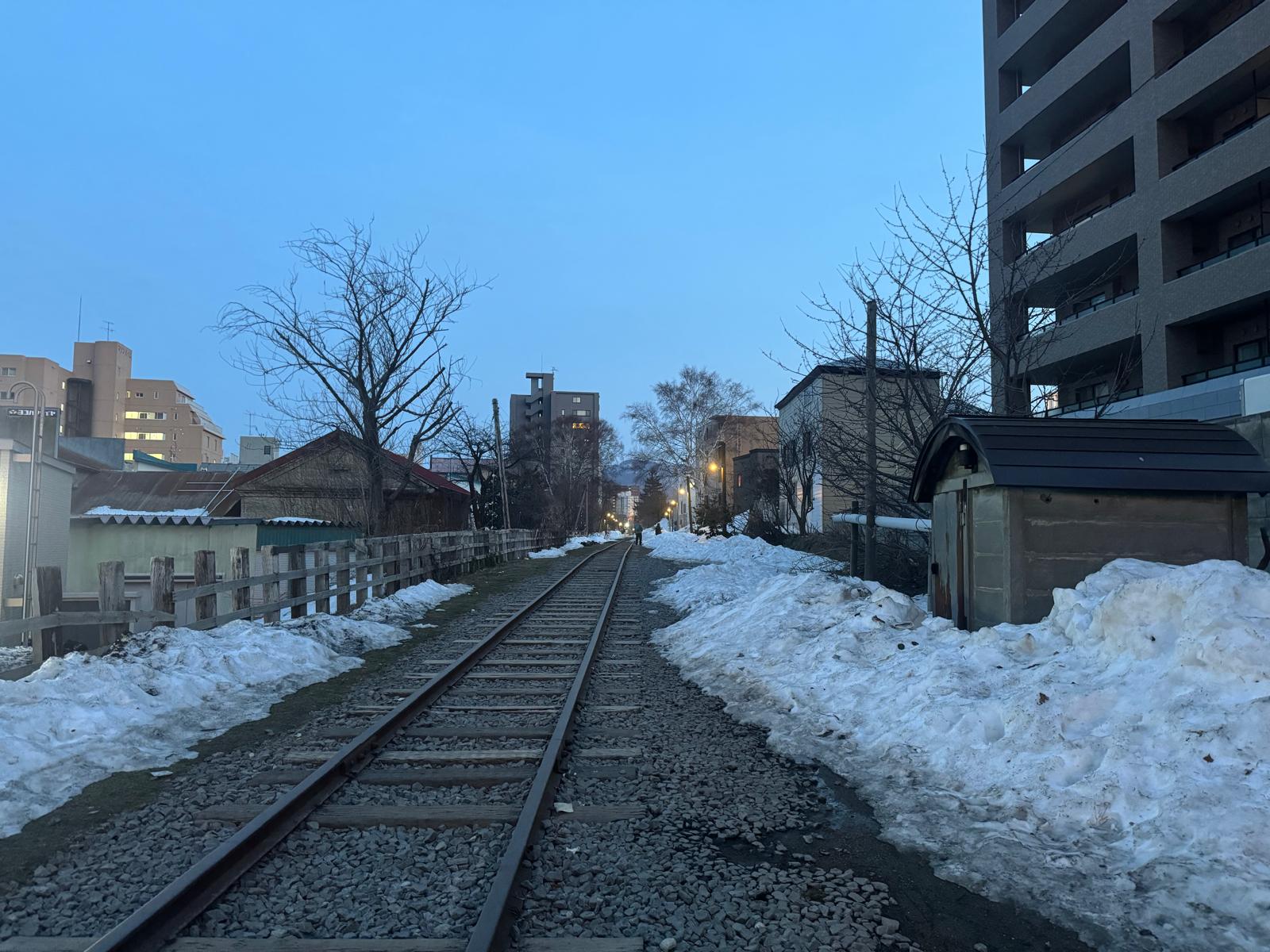
A section of the Temiya Line, at dusk (6.20 pm).

We took a shortcut along the Temiya Line, a narrow gauge former railroad that linked Minami-Otaru and Temiya Stations. At one time, the trains carried both freight and passengers, but the line closed in 1985, and sections of track, such as those we walked along, have been preserved.

Koji in Otaru

We arrivced at Koji restaurant, 2-13-17 Inaho, Otaru, just after 6.30 pm.

When we entered Koji restaurant, we were told that it was fully booked–I guess they thought we were casual visitors, not expecting that a couple of gaijin would have booked ahead. And it was difficult to believe that it was fully booked as we didn’t see any other patrons while we were there–in fact another group (Japanese this time) was turned away.

I’d heard that restaurants in Japan are suffering from people booking and then just not turning up, and we hoped that this wasn’t the case on this occasion, as the service was lovely, and the food, very good. There was additional seating upstairs, so perhaps it was filled with very quiet customers and they’d arrived and crept up the stairs without us noticing them.

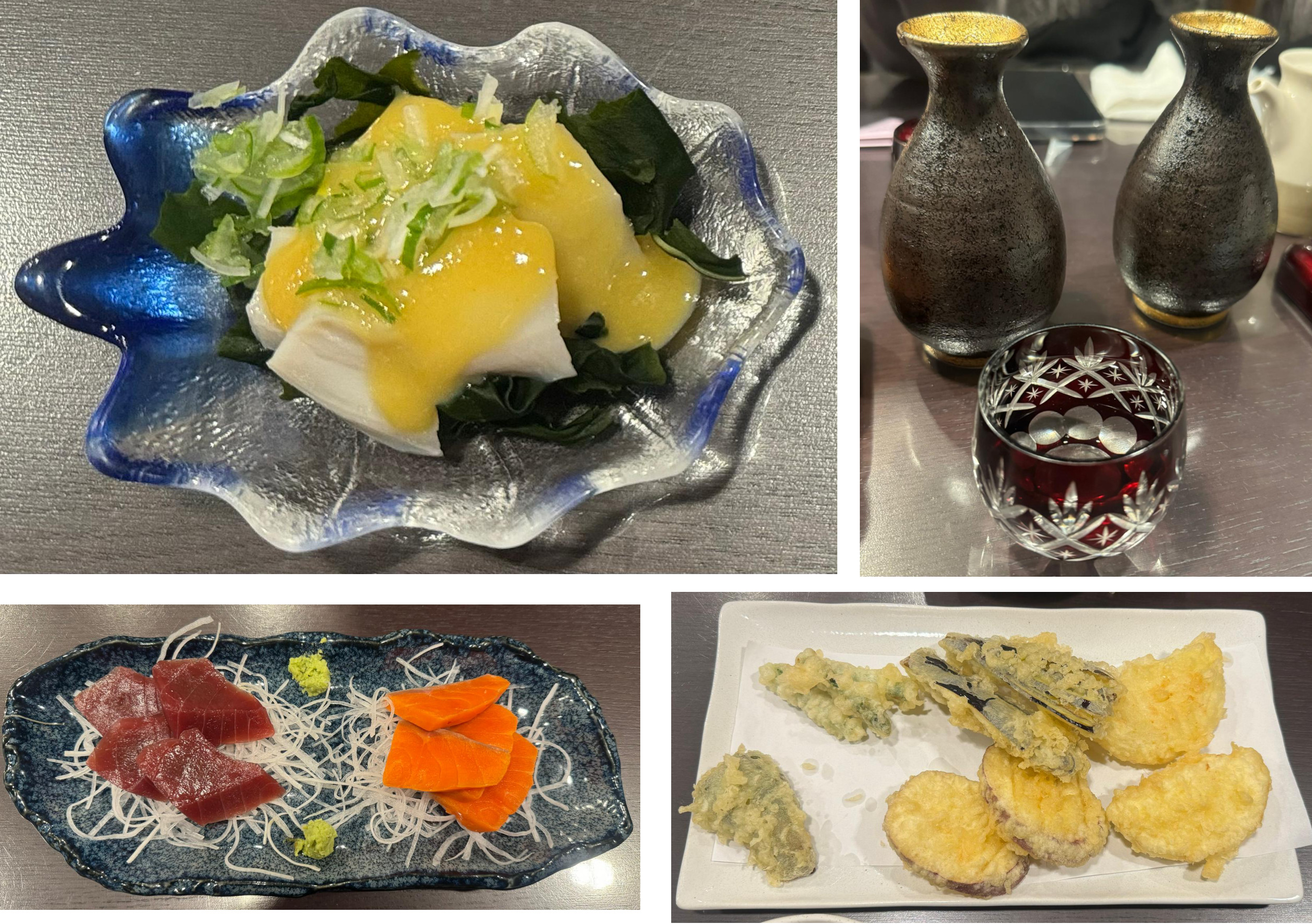
Raw fish, Nihonshu, Tuna and Salmon Sashimi, Tempura vegetables.

Amiria and I ordered a selection of small dishes, some of which we shared. The food came out at regular intervals and of course, we complemented our meal with Nihonshu (日本酒).

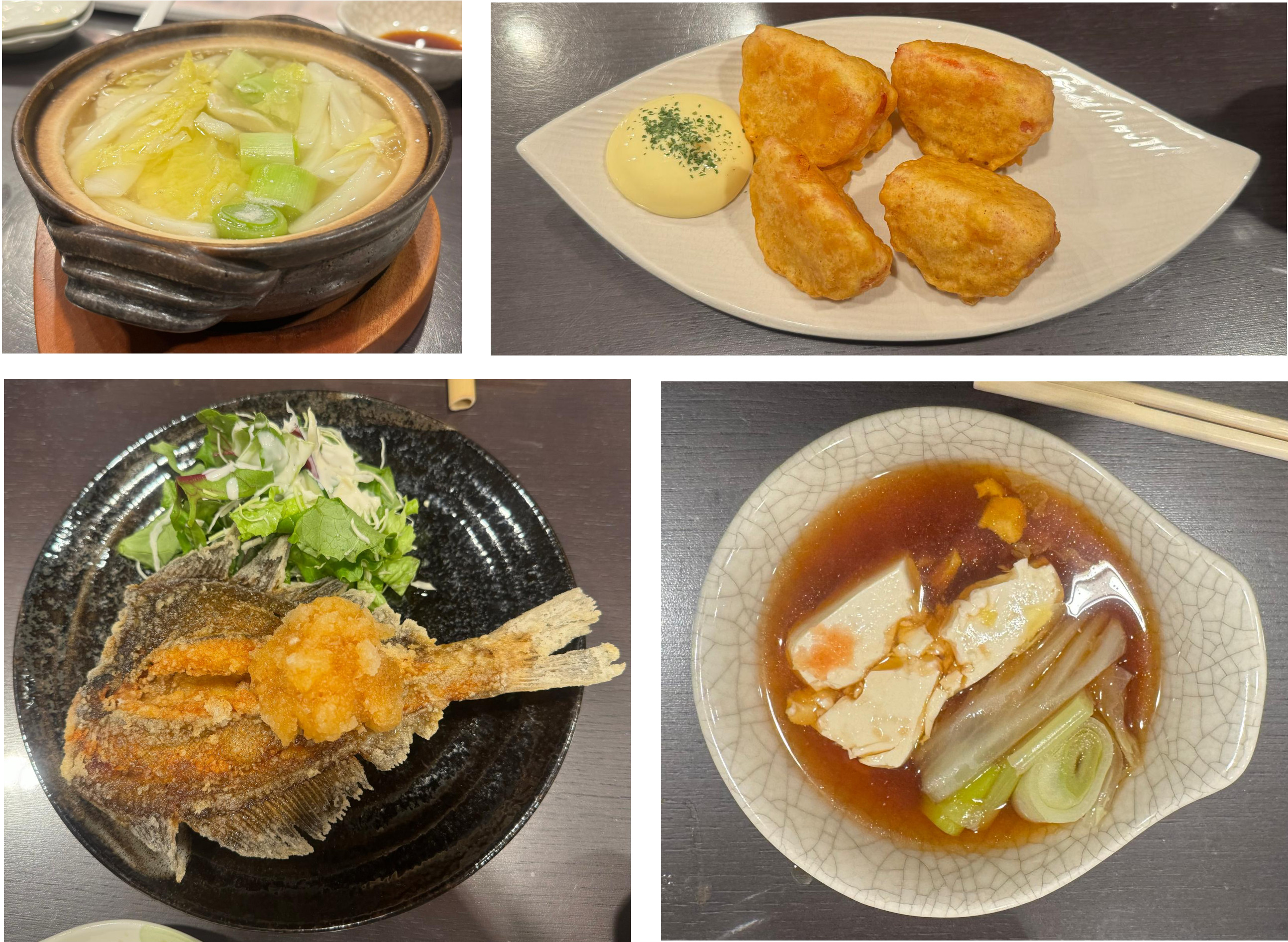
A bubbling bowl of Yudōfu (Tofu Hot Pot), Tasty Tempura Tomato, Karei no karaage, and a serving of the Yudōfu.

It would be a difficult call as to which dish I liked the most, as they were all so different.

In search of parfait

After we’d finished our meal, and despite being full almost to bursting, (speaking for myself, of course) we weren’t quite ready to go back to the hotel, so we wandered off in search of that truly quintessential Japanese dessert, the Parfait.

The back streets were brightly lit. Amiria standing by a wall of posters.

Although the evening was really quiet, people-wise, the small streets were illuminated festively. Amiria had carried out the requisite research and had a possible destination in mind, so we set off in that direction. I had no idea where we were headed, but she’s never let me down.

Left: Our first sight of Polepole Parfait Bar, viewed down an alley; Right: The entrance was cute and welcoming.

At 8.30 pm, it was still early by ‘going out’ standards, but it was completely dark by the time we arrived at our destination, the Polepole Parfait Bar. It turned out to be a tiny bar, and like many of its type in Japan, was most likely an add-on to the owner’s own home.

When we tentatively pushed open the door, we were met with a small strip of bar-style seating, and a couple of equally small tables that could seat a couple of people at most. The two of us had to squeeze in under a sloping roof–for once I was glad that I’m only 151 or so cm (yes, I’ve shrunk!).

Bliss in a tall glass – a Matcha Parfait with all the trimmings.

Of course, I had absolutely no choice, I *had* to order Polepole’s version of a Matcha parfait. And this one didn’t disappoint me one little bit.

Walking the backstreets

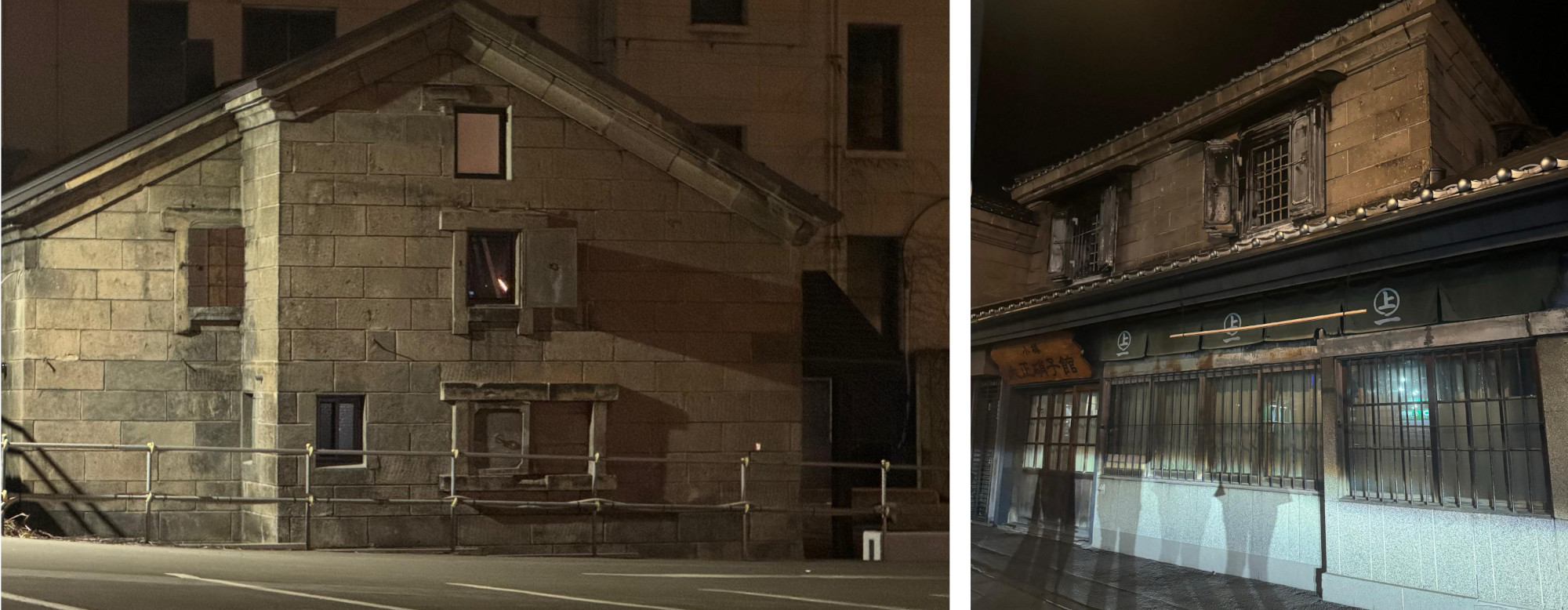
There were many derelict buildings, looking spooky in the streetlights.

After our desserts we made our way back to the hotel, with the aim of looking at the canal one last time, on the way. It was barely 5 degrees Celsius so we walked briskly. Many of the old buildings are lit up at night and I know that a large number are historically significant, but in the semi-darkness we couldn’t really tell which ones were which. It didn’t feel unsafe–that’s the thing about Japan, you can walk just about anywhere at any time of day or night, without fears of being set upon, but the buildings appeared strange to me, and a little eerie–perhaps because there were no other people around, and because many were clearly derelict, with boarded up doorways, and gaping shutters. I was glad when we turned a corner and saw the canal area ahead of us.

The beauty of the canal at night

This is a view taken from opposite the same building, one view looking to the right, and the other, to the left.

It was a calm night and the canal was like a vast mirror, reflecting in perfect detail, everything that was displayed along its edge. I took many photos, and even as I write, I’m finding it difficult to decide on which to post. I think they are beautiful images, but even so, they don’t really capture how the scene looked in real life. It was magical, and I kept seeing a new angle that I *had* to photograph.

It was very quiet and very still. And cold!

I’ve always loved taking photos of reflections. That whole ‘upside down’ effect fascinates me. The duplications are somewhat like a slice of a kaleidoscope image, or a topsy turvy way of seeing the world. The feeling of not being completely sure of which part is real, the top or the bottom… it’s a bit like waking up from a vivid dream that somehow seems more real than being awake. If that makes any sense.

The building on the left is the brewery we had visited earlier in the evening.

I could picture the canal on a summer’s evening, in the main tourist season, with crowds of tourists walking its length. But I liked the lack of people and the complete stillness of everything. Not a breeze, not the flutter of a flag,  nor the rattle of a sign. Just the sounds of our footsteps on the gravel, and snatches of laughter or the soft talk of the few other walkers out along the canal at the same time.

Tired and a little overwhelmed

Lit up buildings on the left side of the canal, and our home for the night, Hotel Sonia.

It had been a long day, and when we arrived back at Hotel Sonia, it was quiet there, too.   One of the reasons we’d chosen to stay at this particular hotel was because it has an onsen (a Japanese hot spring), so we fetched our tiny onsen towels from our rooms and took the lift upstairs.

We were surprised to find that the onsen was busy–which was unexpected as we’d hardly seen any other guests. There are strict rules about using an onsen; the first, and probably most important, is that you must wash and rinse yourself completely, before you go anywhere near the water. You do this by seating yourself on a low stool, helping yourself to the supplied liquid soap, and using a  showerhead to thoroughly spray all the nooks and crannies. A very sensible idea imho. So I was basically waiting for a stool to become free, and because you have to remove your clothes before you step into the main area, I was naked with only my tiny towel clasped to my front.

The main busyness turned out to be in the washing area, as the pools themselves (one inside and one outside) were almost empty. We Kiwis are sometimes a little shy about the thought of stripping off in front of strangers, although I personally think that actually, stripping off in front of people we know would be even worse. But an onsen is very discrete. No-one stares at you, except perhaps your curious grandchildren (but that’s a different story).

If you want the perfect end to a day filled with sightseeing, eating and drinking, then there is nothing better than the experience of unwinding in the hot, steaming waters of a Japanese hot spring.

[to be continued]

JAPAN DIARY

十七 Overnight trip to Otaru – Part 1

Map of Hokkaido, showing Asahikawa near the centre, and Otaru (left edge, roughly in line with the ‘H’ of Hokkaido).

I read somewhere that Hokkaido, the northernmost island of Japan, is sometimes described as being shaped like an ‘ishikari nabe’, a type of hot pot dish. This comparison is made due to Hokkaido’s distinctive shape resembling a pot or bowl, with the Ishikari River running through its central region.

Travelling across the ishikari nabe

On April 3rd, my daughter (Amiria) and I went on a road trip from Asahikawa to Otaru, which happens to be sister city to Dunedin, New Zealand, a city I lived in for 25 years.  Otaru is a port city, and is situated adjacent to the Sea of Japan, in the northern Shiribeshi Subprefecture. It was originally an Ainu settlement, and the name , ‘Otaru’, is of Ainu origin, possibly meaning, ‘River running through the sandy beach’.

A derelict building in Shukutsu, near the base of the lighthouse promontory.

Although I’ve visited Hokkaido many times, this was the first time I’d actually been as far as the coast (in any direction), and I was looking forward to the experience. Hence, I took numerous photos, and I apologise if this post has a greater emphasis on images than on content.

Heading south

We drove the 170 km journey south-west via Sapporo, following the tolled highway. Around us the countryside gradually showed signs of the Spring thaw, although every so often, even as far south as Sapporo, we came across fields of thick white snow. As we drove I had the luxury of being the passenger so could gaze out at the scenery and I was once again reminded of how the light in the northern hemisphere is quite different from that of New Zealand, where even the distant features are sharply defined. The Hokkaido hills and mountains appeared as if through a hazy blueish filter, with the effect, i.e., the overall ‘blue-greyedness’, becoming more intense as the distance increased. I recalled noticing the same phenomenon over 20 years ago, while driving on long stretches of road from Nebraska in the mid west of the USA, down through Colorado.

The Venice of the ‘wild north’

Once we’d passed through the outskirts of Sapporo, we headed northwest to Otaru, leaving behind the flat plains of the central region and beginning to follow the jagged contours of the hills. There was a briny feel to the air.

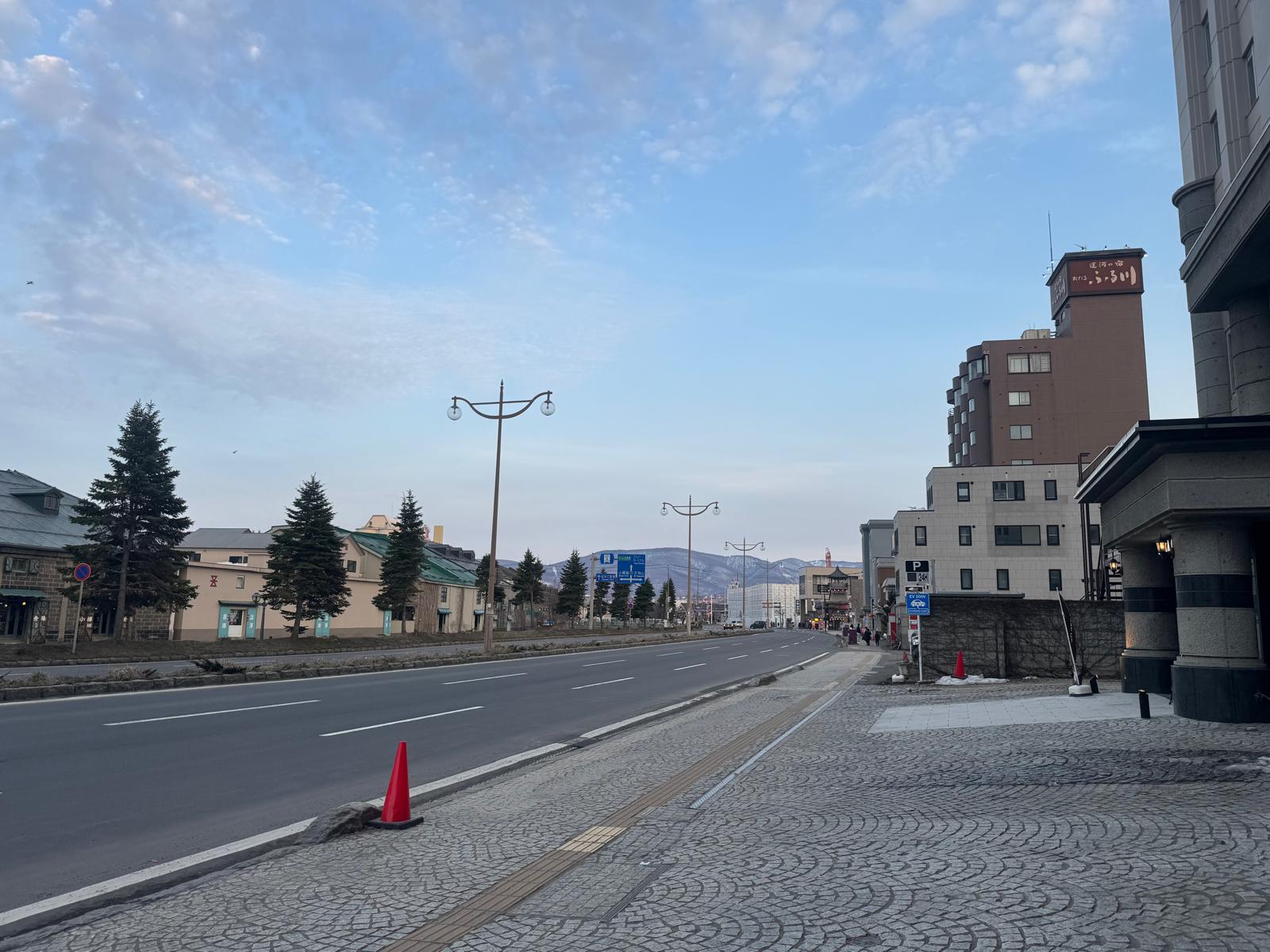
Driving into Otaru–quiet on a Wednesday afternoon in early Spring.

At the somewhat subdued time of year that is winter turning to spring, and when the landscape is neither deeply snowy, nor lush and summery, the small towns and cities can look dull and uninteresting, and yet as we drove into the city, my first impressions of Otaru were of a pleasant kind of town. The air felt open and clean, and there were seagulls squawking, rather than crows. I caught glimpses of small craft bobbing close to shore, and even the steep hills rising up behind the city area had a reassuring feel–no doubt due to having grown up in Wellington, and later living all that time in Dunedin. I love a hilly city.

Otaru has a rich history, and perhaps one day I’ll visit again with more time on my hands. I’ve seen the city referred to as the ‘Venice of the wild north’, due to its famous canal, its thriving glass blowing industry and also its picturesque 19th century European-style buildings.

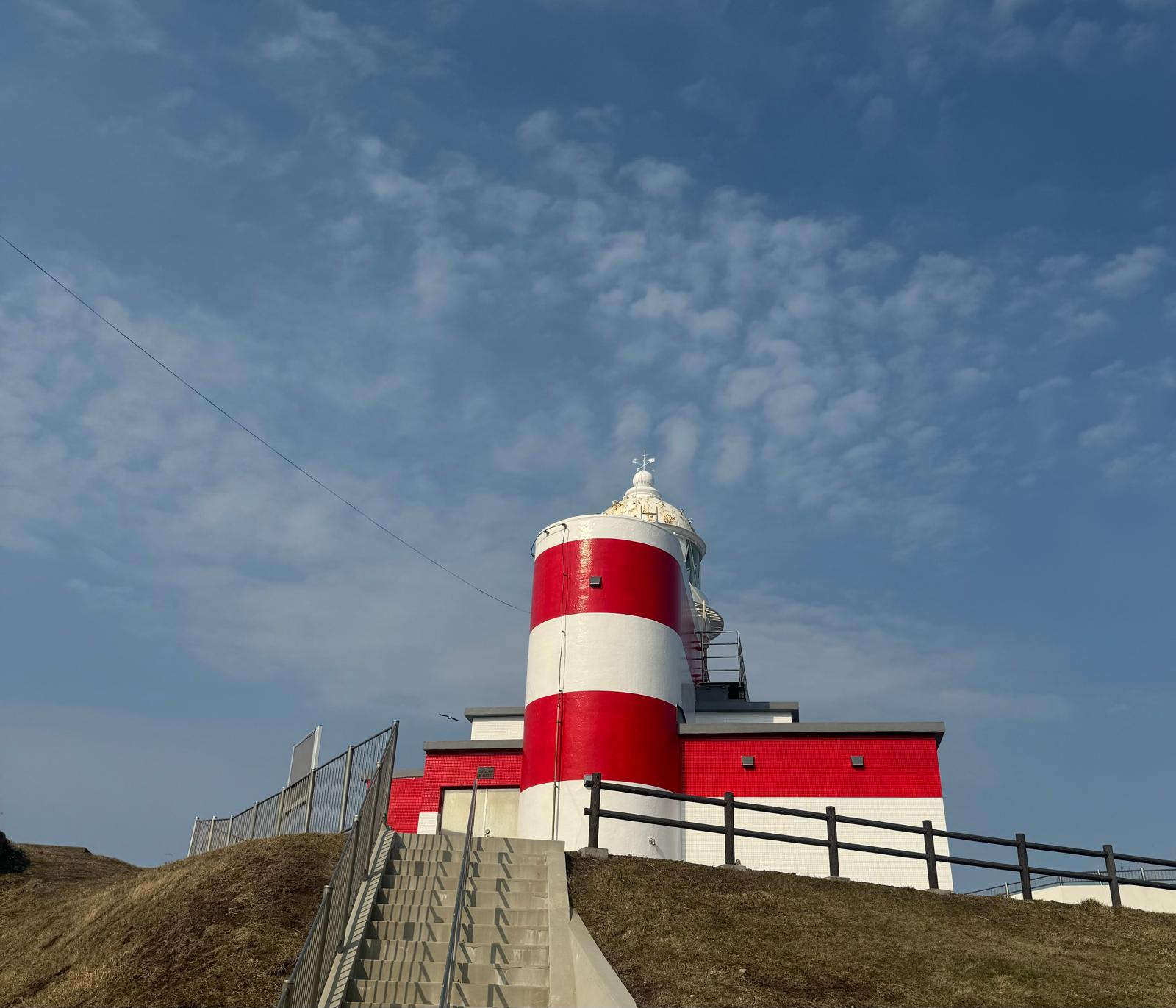
Hiyoriyama lighthouse, Otaru, on a small promontory facing across the Sea of Japan to Russia.

The harbour is situated at the bottom edge of a sweeping upward curve that travels a little to the right, and then stretches up and around to the left, toward Russia. Looking from the sea’s edge toward that curve, you can just make out wind turbines in the distance.

Shukutsu

Shukutusu: View from near the Hiyoriyama lighthouse towards the bay where the city of Otaru is situated.

The Shukutsu area, which encompasses a north-east facing promotory, the Hiyoriyama lighthouse, and an aquarium, originally housed the wealthy tycoons who controlled the herring industry. They built huge mansions where they lived alongside their seasonal workers. Interestingly, much of the herring caught off the Hokkaido coast was destined to be turned into fertiliser, rather than eaten. Over-fishing led to the decline of fish stocks and the herring businesses collapsed in the 1950s.

This collapse, as well as affecting the lives of countless fishing folk, also had a direct effect on the city’s glass-blowers, who, up to that point, made the glass buoys used by the fishing boats. Hokkaido was slow to adopt electrification, so they were already called on to produce glass oil lamps for the outlying areas, and they then turned their skills to producing more delicate items. Otaru is now known for its beautiful glass objects.

Because we basically only had one afternoon to see the local sights (we had to get away early the following day), we decided to (1) visit the city’s two main look-outs, (2) try to get down to the water’s edge so that I could touch the ocean, (3) check in to the hotel, (4) take a walk along the canal, (5) go out for dinner (we’d had the good sense to book a table at a well-reviewed Izakaya), (6) find a place for dessert, (7) walk back to the hotel via the canal, (8) soak in an onsen, and (9) call it a night. I personally felt I’d be quite satisfied if we managed to achieve even 2/3 of the items on the list.

Hiyoriyama lighthouse

Hiyoriyama lighthouse, Otaru, Hokkaido.

So, first of all we drove up to get a closer look at the Hiyoriyama lighthouse, a noticeable red and white striped structure perched at the tip of the promontory.

Looking out across the Sea of Japan.

The views were incredible, and for early April in Hokkaido, it was surprisingly mild and calm; I was only wearing a t-shirt and didn’t feel remotely cold.

Down to the water’s edge

Facing north. We clambered down to the water’s edge so that I could touch the sea.

We then walked down the gravel road we’d just driven up to investigate the sea, as this seemed like the only chance we might have to achieve this.  In Japan, it’s not the custom to just ‘park on the street’, the way it is in New Zealand, and we could see no other place close to the water where we could leave the car while we paid the ocean a quick visit. In fact, it’s not only ‘not the custom’, there are literally no parking spaces on the sides of the roads.

When we drew closer we found that the only area with access to the water was closed off with ropes and ‘no entry’ signs, but there was no-one around so we ducked under the ropes, walked as briskly as we dared across a flat, dusty area, and then scrambled down a steep bank of large stones to the water’s edge. Once we were out of sight of the road, Amiria sat on the rocks while I scrummaged around for interesting things to photograph. The water was crystal clear, but the stones were steep and difficult to balance on, and the small waves kept washing in, so all I saw were a few sea snails, until some blue fish appeared–they seemed as curious about us as we were about them.

One of the ‘interested’ fish that was swimming around near the water’s edge.

The sun was getting lower and we were reminded to get a wriggle on, so we made our way back to the car, then drove to the Cape Observatory for a different view. And of course I took some more photos!

[to be continued]


View from the promontory in Shukutsu–a solitary fisherman down below on the rocks


JAPAN DIARY

十六 – Release of salmon fry into the Ishikari River

Asahibashi Bridge, Asahikawa.

Not for the thinly jacketed

It was bitterly cold on the day that I accompanied my daughter and two grandchildren to observe the release of salmon fry into the Ishikari River, on a stretch of land adjacent to the Asahibashi bridge.

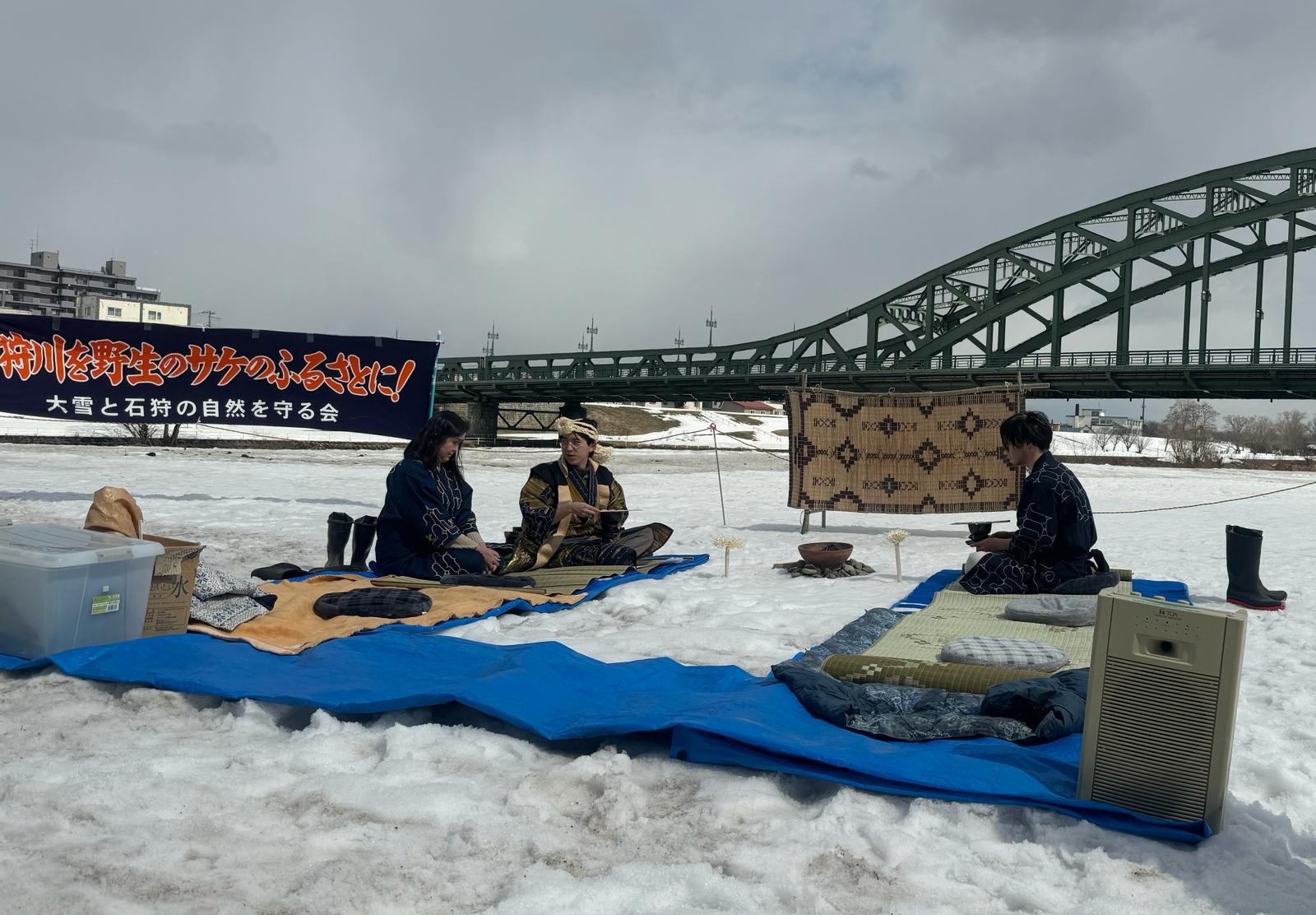
In Spring each year, the local Ainu perform a ceremony to celebrate the life cycle of the salmon, after which,  baby salmon are released into the Ishikari River. This year, this event was celebrated on 31 March, and in our case, the children from local youchien (kindergartens) had been involved in raising the salmon fry from eggs.

What I hadn’t expected was how cold it would be. Down by the edge of the river, the wind was searing along the snowy foreshore like a razor-edged reaper. It scoured the shoreline, tossing the carefully spoken ceremonial chants into the wind.  It was difficult to stand still in a respectful manner, especially for the small children, some of whom were crying miserably.

Local Ainu on the snow-covered foreshore of the Ishikari River.
Part of the ceremony involved the lighting of a small fire.

The small cluster of observers and particpants comprised mainly of the parents and children, a few interested locals, some Asahikawa officials, and the Ainu themselves, who were seated on woven mats between the spectators and the bridge.  There was no shelter.

The children had brought various containers in which to carry the baby fish.

The baby salmon were energetically swimming around in a large pastic tub. We stood in a straggly line, clumping together in small groups to keep warm. Once the ceremonial side of things was completed, and the officials had made their speeches, we stood with our backs to the wind, and made our way to the tub, where each child was given a scoop of babies into their containers. These were gripped tightly in their small mittened hands.

After this we slowly walked down to the river’s edge, with many stops and starts. The track through the snow had been roughly dug, and was a little steep and slippery, so only a small number of children and parents at a time were allowed to carry their precious cargo to the water.

Releasing the tiny fish into the bitterly cold water of the Ishikari River.

At the water’s edge the children first had to dip their containers into the icy river water so that the fish could acclimatise to their new environment. Then they held the cups partly submerged until the tiny fish swam out. Baby salmon released this year will make their way to the sea, a journey that will take about a month, and can be fraught with danger. Those that survive, will return to the river in three to five years’ time, to lay their eggs and restart the life cycle.

After we’d said goodbye to our fish, we made the way back through the snow to the car. The line was long and meandered like a mottled snake, and I was extremely grateful that we’d been standing near the front and were getting away first.

The wild salmon of Hokkaido

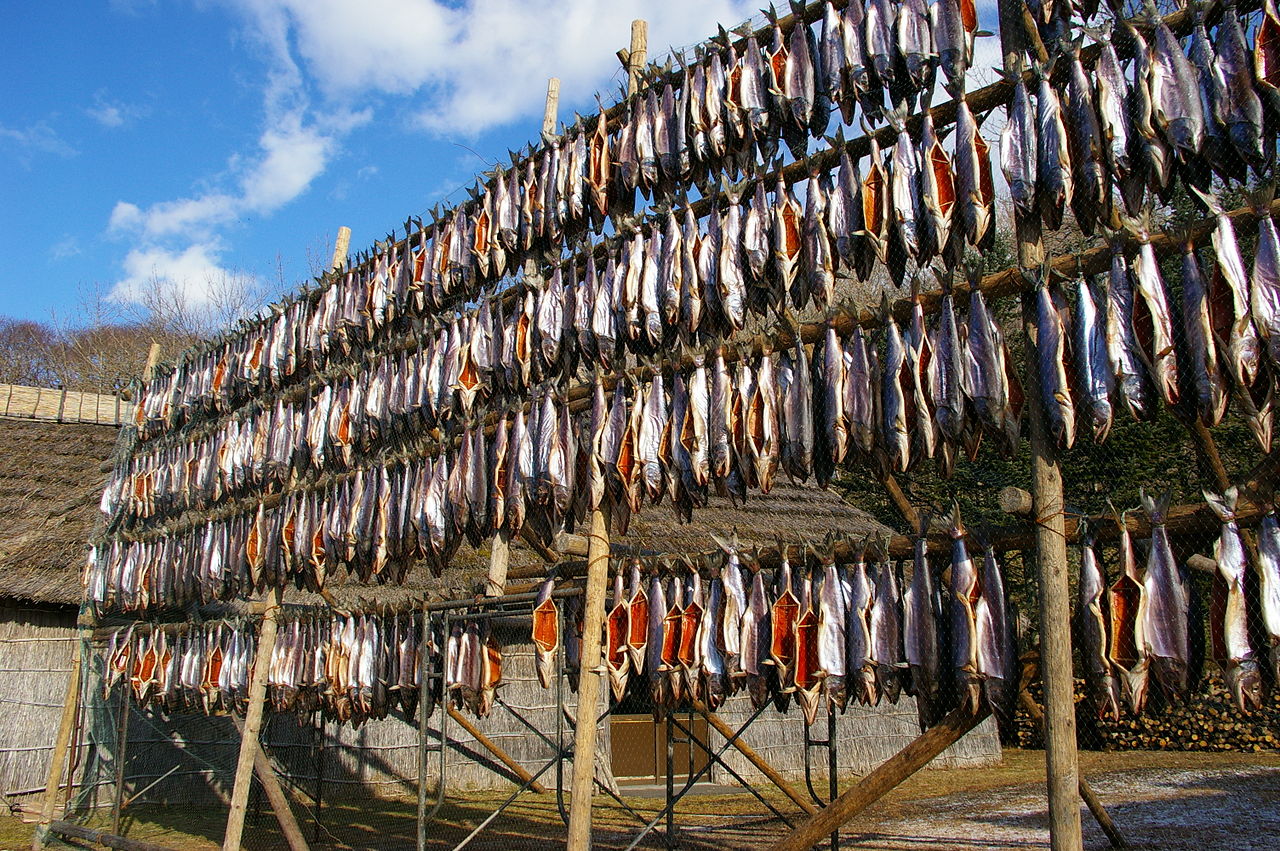
I have read that in in the past, salmon was a critically important food source for Ainu, and that they took great care not to exploit this resource, only catching the number they needed for their own survival. The fish were caught either directly prior to spawning for immediate consumption (fat salmon filled with eggs are unsuitable for preserving), or later on, at which time the fish would be dried.

As we left, I looked back and saw that the local Ainu representatives were packing up their mats and ceremonial gear, and I was relieved to see them pulling on warm jackets.


Traditional Ainu method for drying salmon

‘Salmon dried in the cold wind’, Ainu Museum in Shiraoi, Hokkaido, Japan, December 2008. (Wikipedia Attribution-ShareAlike 2.1 Japan licence)


JAPAN DIARY

十五 – The Ainu of Asahikawa

Ainu carving, Kawamura Maneto Aynu Museum, Asahikawa.

Last week, on a crisp snowy day, I visited the recently relocated Kawamura Kaneto Aynu Museum, which is the repository of cultural artifacts and information relating to the Ainu people of the Asahikawa area.

The Ainu are considered to be the native people of Hokkaido, southern Sakhalin, and the Kuril Islands. They have lived in Yaunmosir (Hokkaido) for more than 15,000 years, and are the major ethnic minority in the Japanese islands, with a distinct and unique culture and way of life.

In the 18th century, there were estimated to be 80,000 Ainu across the three areas, but by 1868, due to factors such as forced assimilation, family separation and the effects of smallpox, this number had declined to around 15,000 in Hokkaido, 2,000 in Sakhalin, and as few as 100 in the Kuril Islands. While official figures estimate the current number of Ainu to be 25,000, unofficial estimates suggest that the total is more likely to be around 200,000 as due to their almost total assimilation into Japanese society, many are unaware of their ancestry.

Immediately prior to the Meiji era (late 19th century) Japan’s northern-most island was known to its southern neighbours as Ezochi, and other than some small Japanese settlements on the southern coastline, was largely ignored. Up until this time, the Yaunmosir Ainu lived peacefully, in harmony with nature. As recorded by the early 20th century Ainu transcriber and translater, Yukie Chiri, in her book, Selected Stories of the Ainu Gods, “The people of Yaunmosir, the Ainu, honoured the natural world as kamuy (gods) and lived abundant lifestyles filled with prayers, singing and dancing: their lives were bright and busy, mixed with laughter, tears, anger and joy”.

In 1869, however, Japan was concerned about a possible Russian invasion, and in order to prepare their northern defenses, they annexed the entire island, at which time the name was changed to Hokkaido. Before long, ethnic Japanese began arriving in the Asahikawa area. The Meiji government had a colonisation policy of land reclamation, with total disregard for Ainu concepts of land ownership. In fact, at that time, many Japanese settlers regarded the Ainu as, “inhuman and the inferior descendants of dogs”.

Sadly, the Ainu story from this point, has unfolded in much the same way as that of other marginalised peoples, where they have suffered the loss of their autonomy, lands, and traditional ways of life. They have endured forcible relocation from their kotan (villages) and have been prohibited from fishing, hunting, and speaking their own native language.

Despite these terrible losses, the Ainu people have survived, and from what I have read and been told, there is a small but strong community in Asahikawa and the surrounding area. The snowy field may be vast and filled with obstacles, but the Kawamura Kaneto Aynu Museum  is a priceless seed sown very deeply at its heart.

Museum history

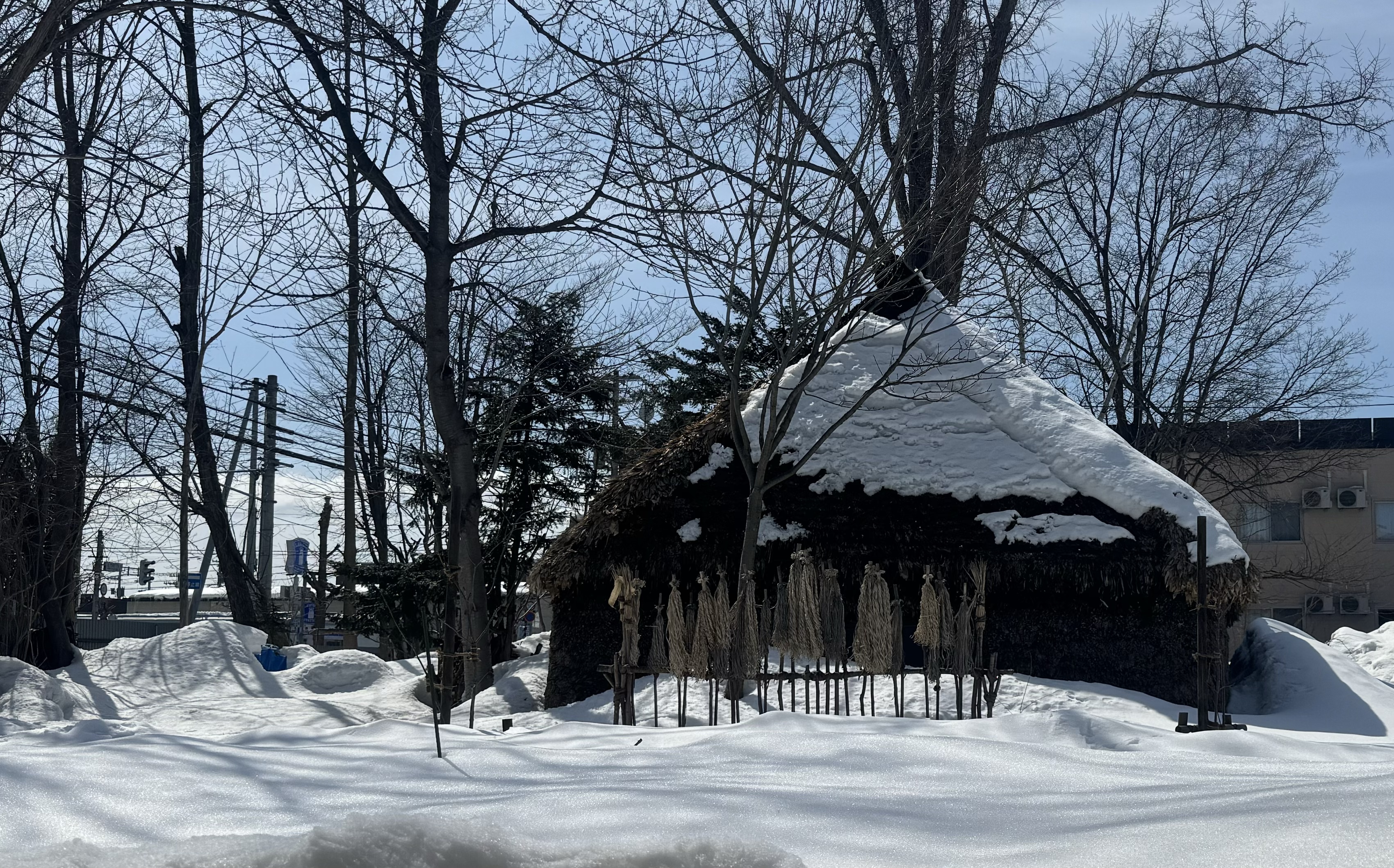
A traditional Ainu dwelling in the grounds of the Kawamura Kaneto Aynu Museum, Asahikawa.

Around the time that Hokkaido was annexed and the Seventh Division of the Japanese Army was established in Asahikawa, an influx of ethnic Japanese visitors came to Chikabumi Kotan, where the local Ainu people then lived. To help the newcomers understand Ainu heritage, their leader, Kawamura Itakishiroma, constructed a traditional Ainu dwelling separate from his own, which he used as a venue to explain the Ainu culture. And thus, the museum was born.

From this time, the role of director of the museum was passed down within the Kawamura family, and they are still strongly involved with preserving Ainu knowledge. Similar to Māori, although on a much smaller scale, the Ainu of Hokkaido, are gradually restoring their mana through the recreation and enactment of traditional ceremonies, and by sharing traditional customs and traditions. The museum as a living tribute to the Ainu way of life is integral to this process.

On the day we visited, we were the only visitors–in fact, the only other person I saw was the woman who collected my 800 yen entry fee. The modest collection of beautiful artefacts provided much food for thought. In many ways, the museum itself feels somewhat dispossessed, or perhaps, displaced, situated as it is, right in the middle of an impersonal cross-hatch of suburban streets. The imagery evoked by the exceptional carvings of bears, fish and birds suggests rugged mountains, fertile plains, thick forests and sparkling streams–memories trapped within the static forms.

I was hoping to see some photographs from the old days, especially of Ainu women with their traditional facial tattoos, or of the children of the times, but there were few on display. Some images can be found online, of course (and the ones I’ve used here are open domain images from Wikimedia Commons). We all know that the early anthropologists were naturally curious about the ways of life of indigenous people, and that they rarely took the feelings of their subjects into account. The brochure I picked up at the museum also had some interesting photographs.

Some more about traditional Ainu culture

The division of roles

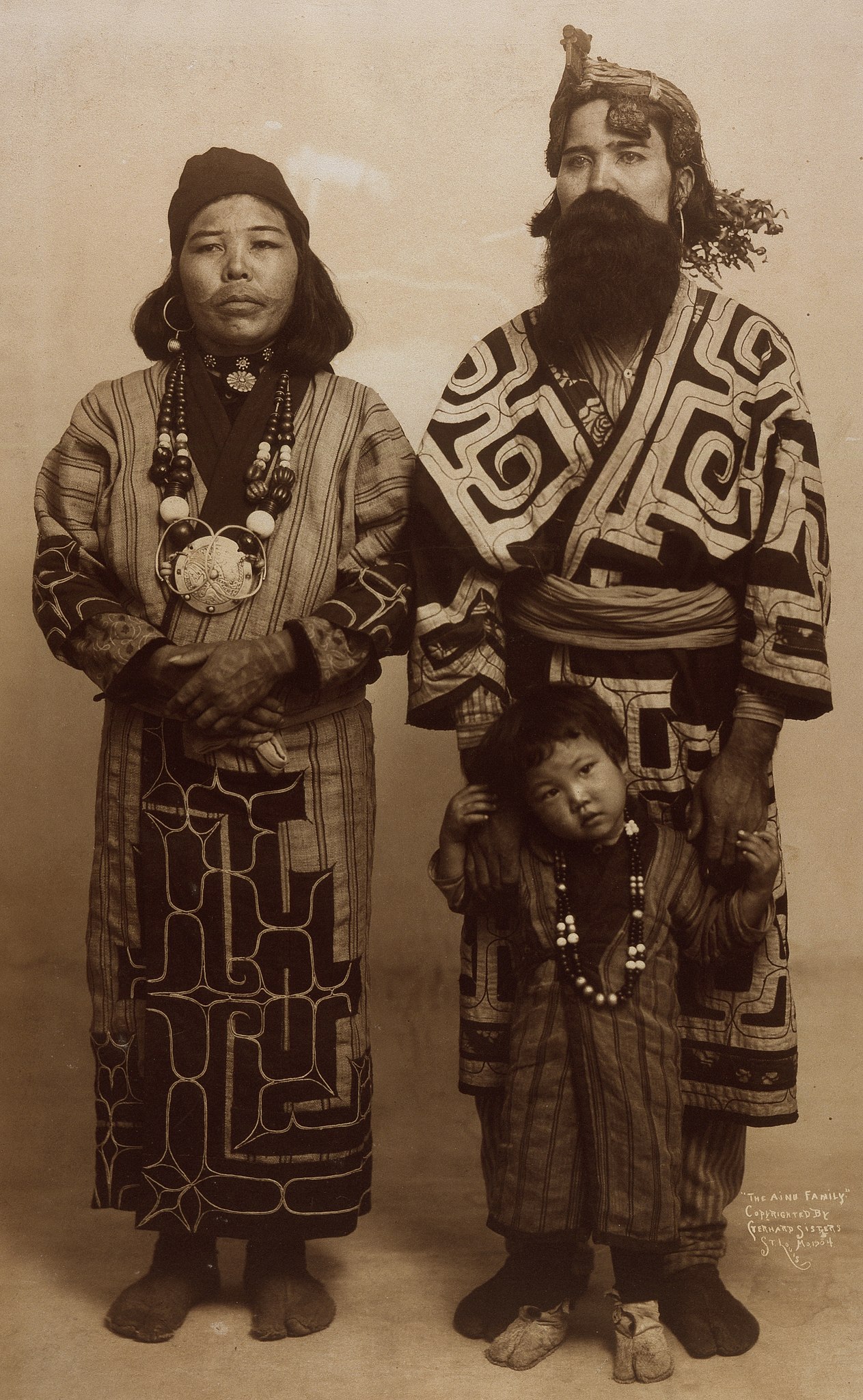
‘The Ainu Family’, a photograph taken during the 1904 World’s Fair, and currently held in the Missouri History Museum. (Wikimedia Commons)

Ainu women had a very hard life, or as the documentation in the Anyu museum puts it, their noses were kept to the grindstone. They gave birth to and raised their children, foraged for edible plants, produced everyday items, wove fabrics, gathered firewood, and occasionally, even carved wood. They didn’t waste a single material, and decorated everyday items with traditional patterns, which have been passed down from mother to daughter. These are often abstract designs that represent objects found in the natural world.

Ainu men engaged mainly in hunting, fishing, trading, and offering prayers to the deities. They were also required to protect their families and villages. The tradition for succession, was that eloquent orators who displayed courage and dignity, and excelled in dexterity, were selected by the people to be village chiefs; hereditary succession was forced on them after annexation.

Bears – Kamuy imoka, a gift from the gods

One of the many carvings of bears in the Kawamura Kaneto Aynu Museum, Asahikawa.

Hokkaido is home to the Ussuri Brown Bear, and these animals were (and are still) extremely important to the Ainu, for their fur, their meat and also because they are believed to be gods in human form–in fact, in the Ainu language there are over 80 words for bear. Kim-un kamuy (the god that is always in the mountains) is the word used most often. According to Ainu tradition, in the world of the gods, gods exist in the same form as humans, but when they visit the world of the humans, they take on the form of animals. People who had been visited by bears, therefore, were considered to be trusted by the gods.

In the older times, cubs born during hibernation were raised with care by human famililes. The mother of the household would breastfeed the bear cub and it would be raised until about two years old, as if it were their own child. Then on a cold winter’s day, when the temperature dropped to around -30 degrees, the little bear’s spirit would be ritually parted from its body, and the spirit would return to the world of the gods, where its ‘real, dear mother’ would be waiting for its return. The iyomante (ritual) would last for three days and three nights, during which the sad parting from the bear cub would be transformed into the power to overcome winter.

In the museum I think I saw more carvings of bears, than of any other creature.

Bear carvings, Kawamura Kaneto Aynu Museum, Asahikawa.

Facial tattooing

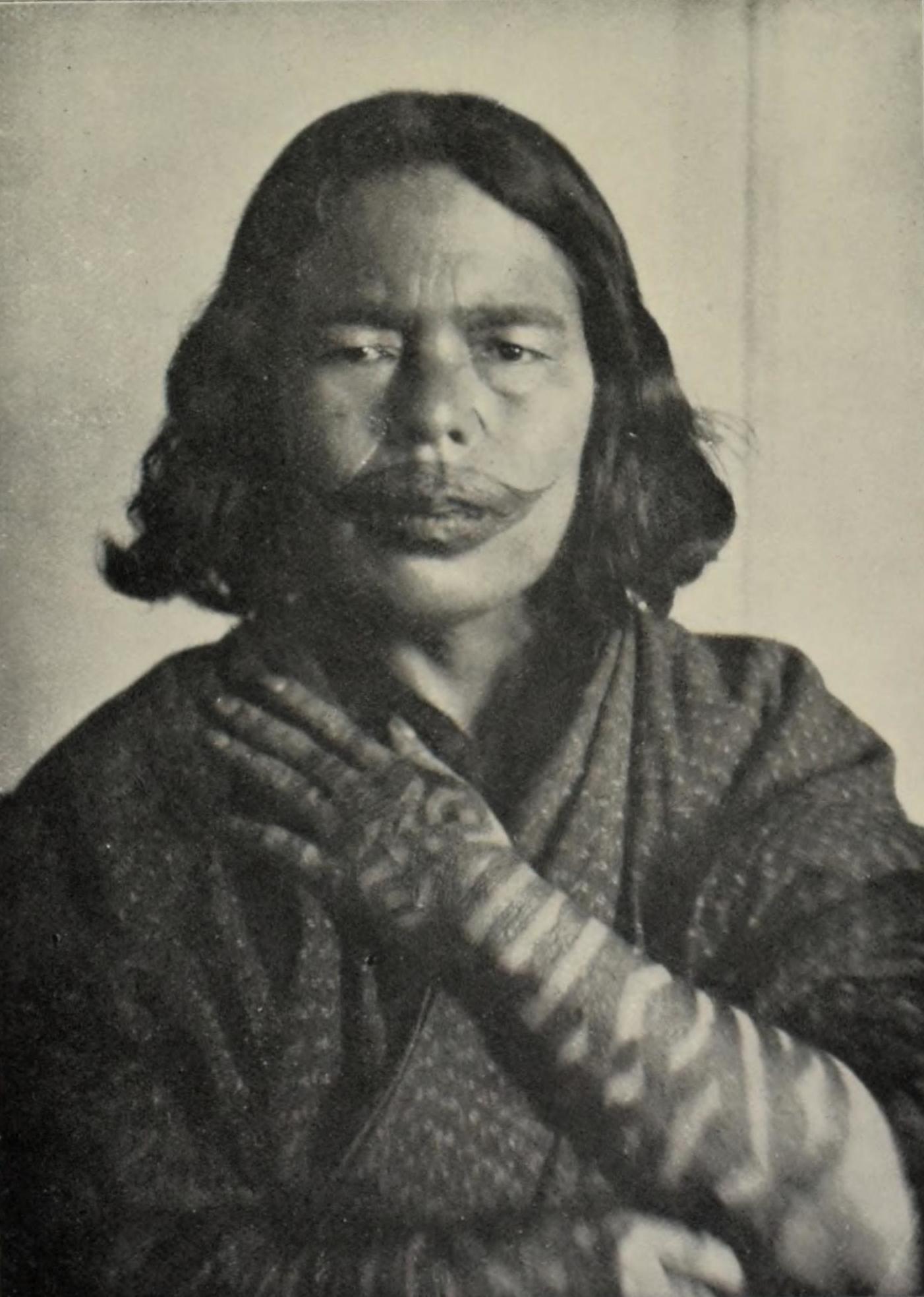
An Ainu woman displaying the traditional facial and forearm tattoos. Sourced from, “The Ainu and their Folkore”, (1901), page 21 (Wikimedia Commons)

Ainu women traditionally underwent facial tattooing, and to a lesser degree, arm and hand tattooing. Only women were tattooed, and only women were the tattooists, and this practice continued down the matrilineal line. Tattooing was prohibited by the Japanese at various times both before and after annexation, but it wasn’t until 1998 that the last fully tattooed Ainu women died. It is unsurprising that the  practice took such a long time to fade out, as being tattooed was traditionally a prerequisite to marriage and to the afterlife.

When I first was shown photographs of an Ainu woman with the traditional tattoo around her lips I was fascinated. To my western, kiwi eyes, this looked so unusual–both alien, and yet, beautiful. If you are interested in reading more about the tradition, and also the different patterns and designs, Lars Krukak’s website, ‘Tattooing among Japan’s Ainu People’ is well worth a visit.

The past and what it means for the present

I suppose that life ‘goes on’; the sheer energy of birth and death has its own momentum. We can look back at the atrocities of the past and see how they are reflected in the terrible things that are still happening, right now, this very moment as I write.

I think about loss of culture and how this can impact future generations, and of the way that the history of Ainu is so very similar to the history of Māori in my own country of Aotearoa. I think about the Middle East and feel dread about how today’s actions are affecting countless children, countless women, countless future generations.

I also like to think (hope?) that for every terrible thing we hear about, there is somewhere, some positive thing occurring, no matter how small the scale, that might be the first tiny seed of change. I wonder how many people have hoped or prayed for the same thing, only to be disappointed.

It does seem to me, however, that the Ainu haven’t given up. They are not merely looking back and dwelling on what they cannot change; they are making their way forward and picking up the pieces of their history. Rebuilding and relearning.

Ainu women in the 1930s (Showa era). Kawamu Kawamura Kaneto Aynu Museum brochure.

Sources

Ainu People, https://en.wikipedia.org/wiki/Ainu_people

Hokkaido, https://en.wikipedia.org/wiki/Hokkaido 

Kawamura Kaneto Ayno Museum, (visited by author, 23 March 2024)
https://www.larskrutak.com/tattooing-among-japans-ainu-people/

Wikimedia Commons (photographs with no licence restrictions)

Yukie Chiri, https://en.wikipedia.org/wiki/Yukie_Chiri

JAPAN DIARY

十四 – Hokkaido in Spring

Snow cloaking trees on the side of the road. On the bus from Asahikawa Airport to the Railway Station.

I’m back in Asahikawa (Yay!), and it feels really good. This is my eighth trip to Japan, and I’m not sure if I’ll make this trip again due to various external factors, so I intend to make the most of this visit.

Napier to Asahikawa

To get to Japan, I first took an afternoon flight from Napier. I had a front seat and was wedged in beside the guy in the above photo. I couldn’t resist capturing the view.

Flying between Napier and Auckland.

After flying in from Auckland to Narita Airport, Tokyo, I was able to take a direct flight to Asahikawa, rather than first having to transfer to Haneda Airport. This was thanks to a new route opened up by Jetstar Japan. Narita and Haneda  airports are quite a distance apart and to travel from one to the other usually requires a couple of train trips, or catching the Limousine Bus.  Having the option of a direct flight from Narita was too tempting to ignore. I was a little worried, however, about my timings. If my Air New Zealand flight ran late, and if Passport Control and Customs at Narita were especially busy, then I would be cutting it fine to get to Terminal 3 in time for my Jetstar flight. As it turned out, I had plenty of time as we arrived early, and the airport wasn’t busy.

The first view of the southern edge of Hokkaido, from the window of my plane.

The flight to Asahikawa took just under two hours and was uneventful. I had purchased a premium booking with a ‘meal’, luggage of up to 30 kg (way more than I needed), and the option to change flights at short notice. The ‘meal’ turned out to be a hot drink and a piece of apple-filled pastry in a celophane wrapper. If I had to rate it, I’d say it was ‘just okay’, but I didn’t really mind, I was just pleased to have connected successfully. The skies were clear and I was afforded a clear view of the spectacular mountainous scenery, especially as we drew closer to Asahikawa.

View of the mountainous terrain as we flew closer to Asahikawa.

Items that are hard to find at home

My main purpose for visiting Japan is to catch up with my daughter, her husband, and my two grandchildren. But I while I’m here I also intend to purchase some bits and pieces that I’ve come across on previous visits, and that I’ve wished I’d purchased at the time.

Mini vacuum cleaner – it’s only 6 cm in diameter!

Japan does particularly well at producing useful items that you didn’t know you wanted until you saw them. I’ve spent a great deal of time in New Zealand looking for exactly the right kitchen or bathroom item, to no avail, and often when I do find a suitable product, it’s either ‘not quite right’, or its seriously over-priced.

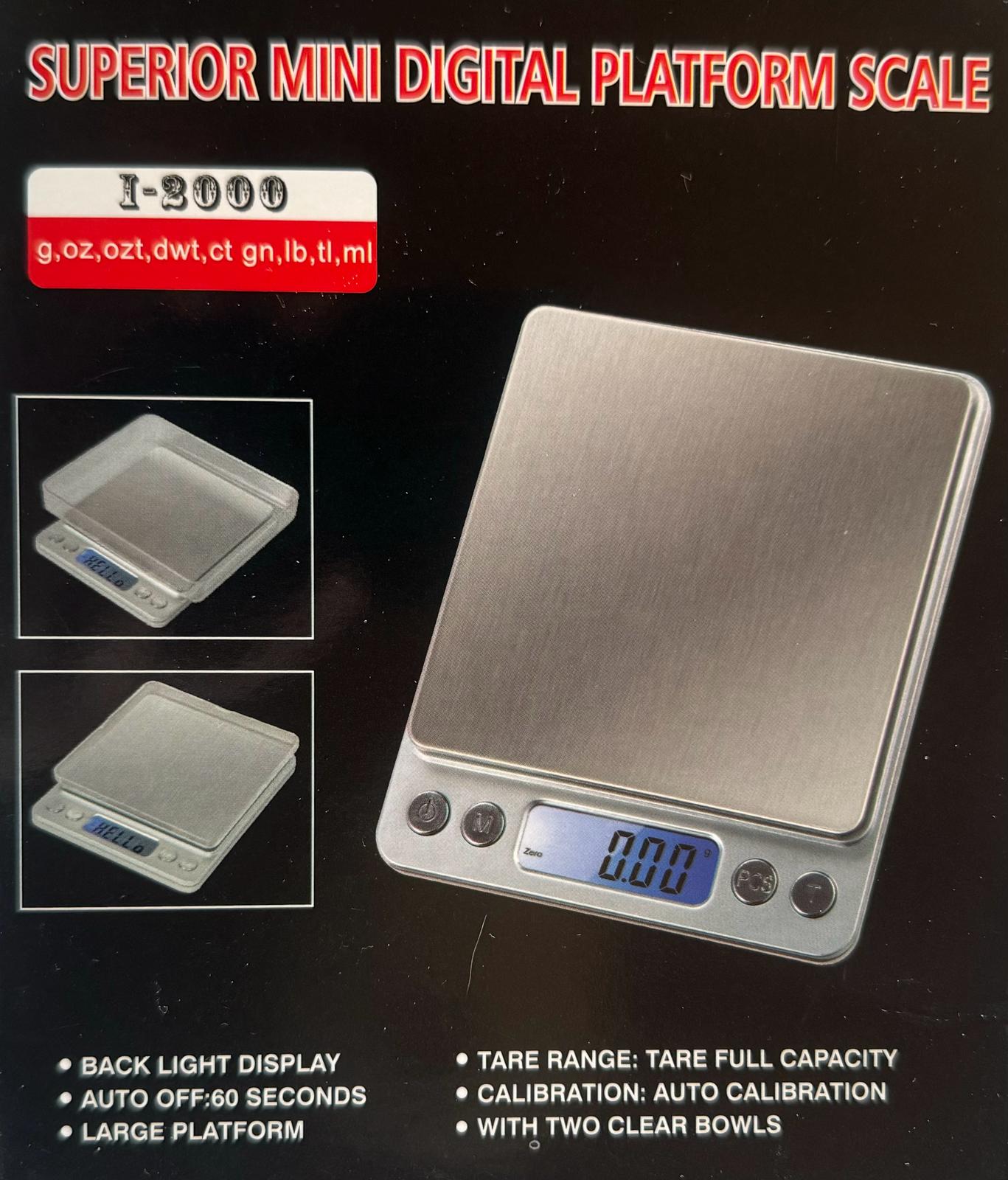
Tiny scales, approx 13 x 11 cm

If you were to look at my list, you’d see a bunch of trivial items: a very small digital kitchen scales (you’ll think I’m weird, but sometimes I’d like to know how much hot chips I’m eating, or just how heavy a date scone is); a cute little mini vacuum cleaner to clean up crumbs (or other small debris) off a table; a second super light-weight feather quilt for those summer nights in New Zealand that are too hot to be covered with anything, but when you just want ‘something’–I purchased one last year and it was perfect; a set or two of versatile shelving and/or containers that can either be stuck, or screwed to tiles or a wall, or attached to a magnetic surface.

These 100% cotton kitchen towels are not only beautifully made, they are very functional.

I always look for  products that have been made in Japan, but many everyday items,  while of Japanese design, are produced elsewhere, most commonly in China, or Korea. Japan produces its own premium items, of course, and for the visitor, these are definitely worth purchasing when you can, due to their superior quality and thoughtful design. Linen,  paper products, writing materials, ceramic items, knives, glassware, cakes and candies, technological wares… the list goes on and on.

Snowy roads and pathways

Returning home after dinner at Jiji and Baba’s.

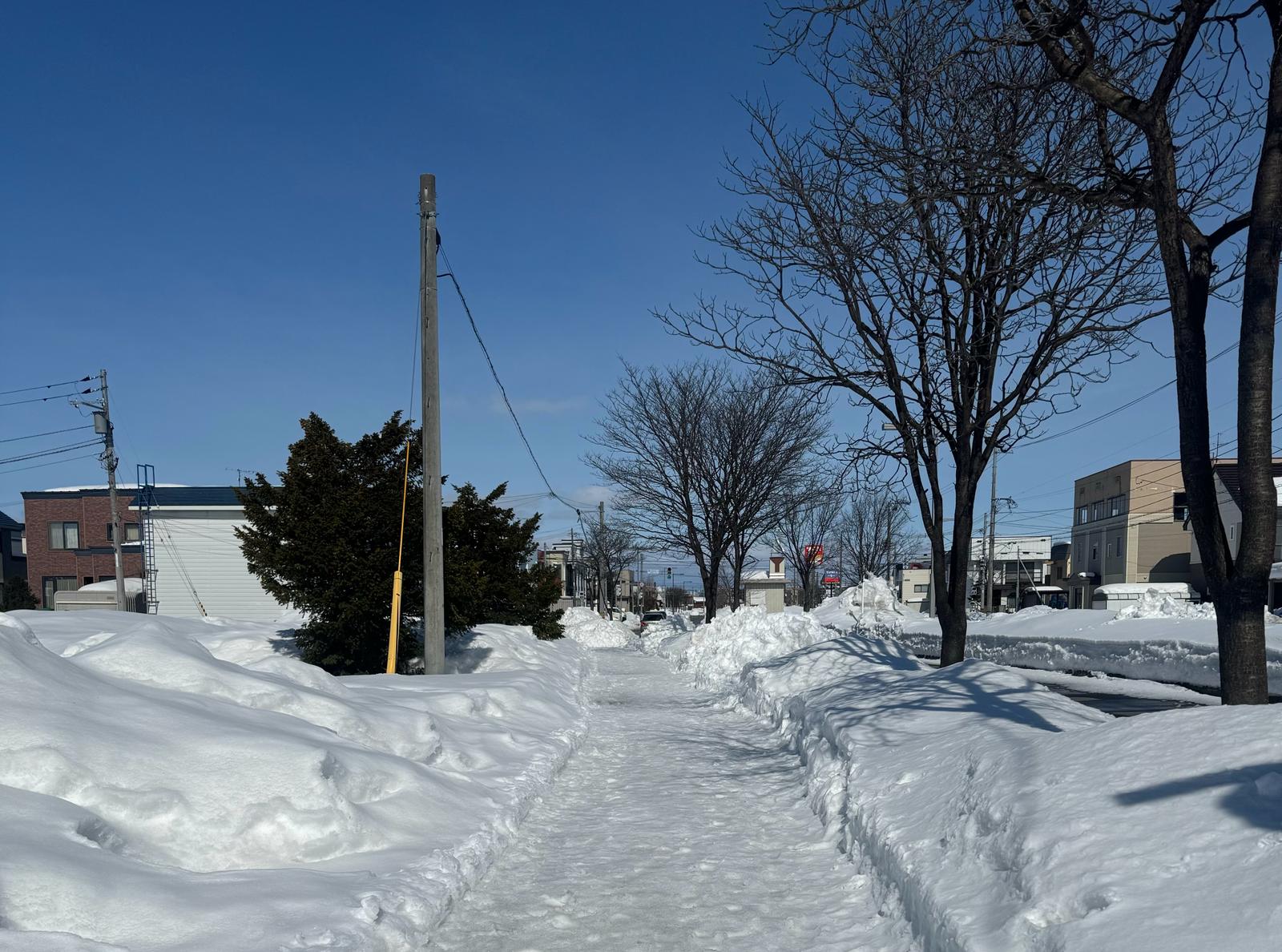
There’s a lot of snow lying around in Asahikawa compared with the last couple of years that I’ve visited. And it’s colder, according to the weather app. I’m glad. I would feel short-changed if there was no snow. It’s very beautiful, even with the heaps of snow discoloured by the muck on the sides of the road. I can ignore those and just focus on the pure white mountains piled up everywhere else.

Running in the snow. The banked up snow will reveal a flat, grass playing field, when melted.

I know that the snow will disappear quickly, with every day that climbs above zero degrees, but so far, the gardens are completely dormant, the plants still sleeping under their white blankets. Out of curiosity I visited the garden section of DCM Homac,  a hardware / DIY chain, to see what they were selling, but as far as outside plants were concerned, all I saw were trees—flowering cherries, dogwoods and magnolias. No perennials yet. And not much else, either.

As I grow older, my body has begun to display issues associated with the wear and tear of a lifetime. I currently have a problem with my right knee (synovial chondromatosis); it isn’t such a big deal, but it does mean that my knee becomes quite painful when walking, or more so if I have to walk up or down stairs, or up or downhill, and this will affect how much I can get out and about. If you’ve followed my blogs in the past, you’ll be aware that I usually like to take long walks—this time I fear my walks will be much shorter, but I’m determined to get out as much as I can. I’m seriously looking forward to the first signs of Spring.

Spring, donuts and nostaglia

A few days ago it was Vernal Equinox Day 春分の日(Shunbun no Hi), a public holiday to mark the end of Winter and the beginning of Spring. This day was originally an event relating to the Shinto religion, but after WWII, and in line with Japan’s post-war constitution, it was repackaged to separate religion and state, becoming a public holiday in 1948. The main thing I noticed were the kids off school, and more people out and about.

Sakura ‘half bloom’ donut – a delicately flavoured delight.

Yesterday I went out to look for a birthday present and ended up  visiting Mister Donut for lunch. I prefer not to eat too many sweet cakes, so chose a ホットドッグ (hottodoggu) to go with my Sakudo blooming donut (Yes, really healthy!) Japan loves seasonal themes when it comes to popular food, and sakura is the flavour for Spring. I couldn’t resist the donut as I was curious about the flavour. I wasn’t disappointed; it was lightly sweet with a delicate floral quality. Perhaps it did taste like the fragrance of sakura. I certainly remember as a child, the sweet smell of the snowy white blossom on our Mt Fuji cherry (Prunus serrultat ‘Shirotae’).

While I was munching away, Michael Jackson’s 1972 song, ‘Ben’, started playing in the background. I used to love that song. What a flashback! I would have been 15, and I still know the words off by heart. It reminded me of riding my bike with my neighbour Lynette, listening to pop songs and being the age where my whole life stretched out ahead of me.

Walking home last Wednesday.
The same path, yesterday (4 days later). The snow isn’t in any hurry to melt.

South Head to Napier

Once I’m back in New Zealand, I will no longer be writing from South Head. In February, we made the move to Napier, in the Hawke’s Bay. So, I’ll be writing about quite different things and posting photographs of quite different scenery.

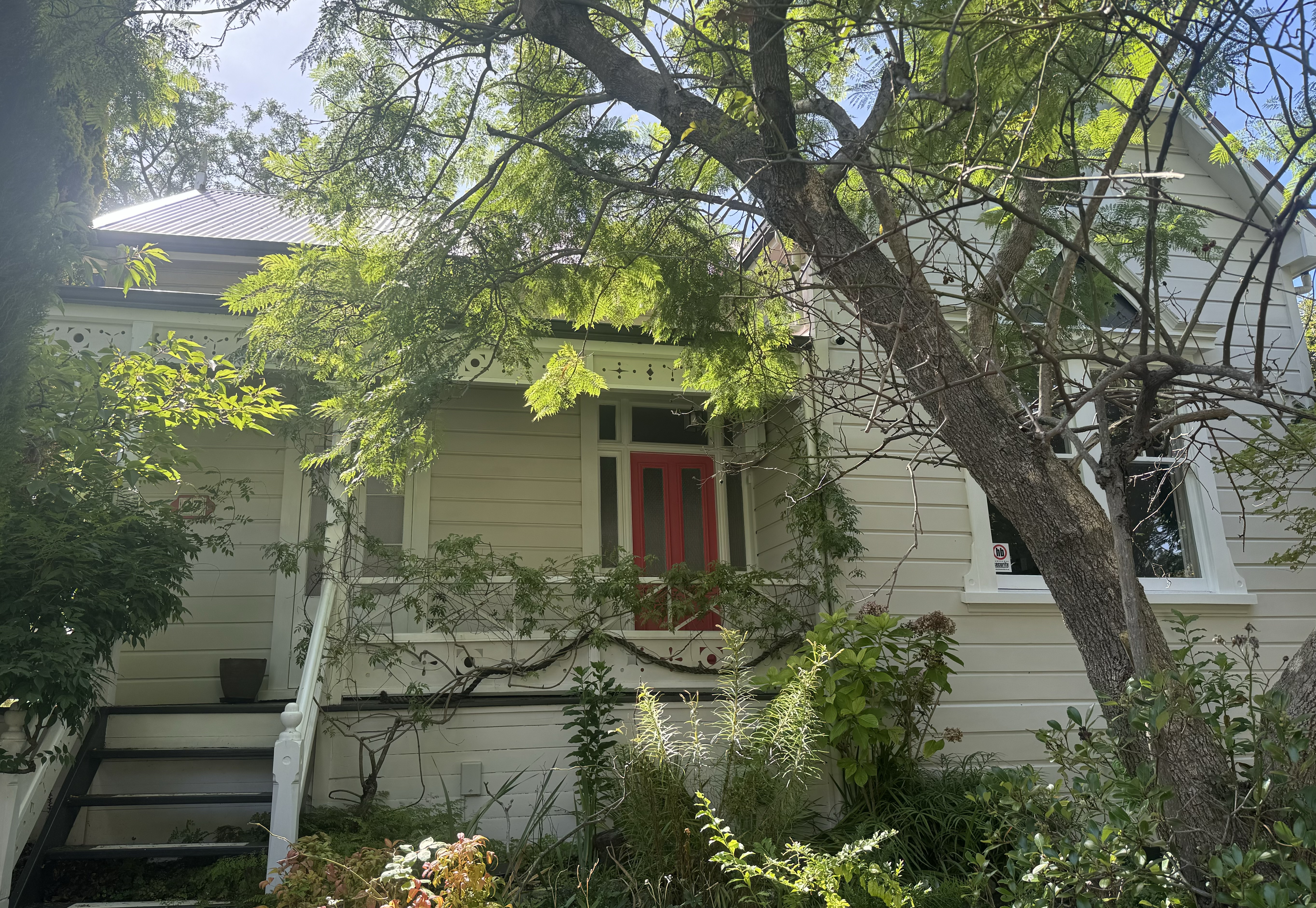
One of the reasons for the move was the amount of physical work on our South Head property. We have been finding it difficult to keep up. Our new house is a charming cottage, built in 1875. It is fashioned entirely from kauri (Agathis australis) a golden timber, native to New Zealand. The property has a much smaller land area and a much more manageable garden. We should also experience a few frosts, so I’ll be able to grow flowers that couldn’t cope with the heat of up north.

A completely different way of life. City dwelling versus country.

The joys of air travel

There’s not much privacy when you’re squashed into a small seat beside a larger person.

JAPAN DIARY

Jū – Heading North

Until I travelled to Japan, I hadn’t realised exactly how far north Asahikawa was. A long way from Aotearoa.

I found my allocated seat and settled in for the two hour flight. Beside me was a young Japanese woman. We had plenty of space, both being of slight build; I often wonder how uncomfortable it must be for taller and larger travellers. As soon as we were airborne I could feel my attention wilting but managed to stay awake for the safety message, conveyed in both Japanese and English. After that, my eyelids were no match for the drone of the engines.

Goodbye Honshu.

A Wintry Patchwork

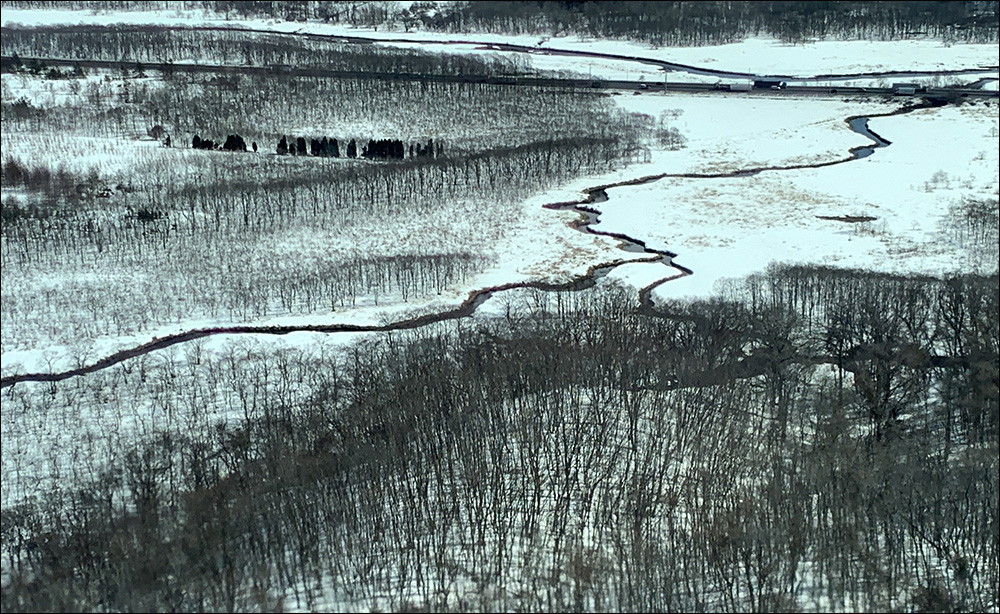
I did wake up at one point over the stretch of ocean that separates Honshu from Hokkaido. I saw steel blue water water, flecked with white caps. Before dozing off again and now over land, I saw  tiny snow-coated fields in subtle shades of soft greys and whites, interrupted by the dull bleakness of hills. A flash of sunlight reflected iridescent threads of water and accentuated the jagged charcoal lines of roads. I stretched my weary legs and wiggled my toes, enjoying the sensation of peacefulness, high above the clouds. My nose twitched at the enticing smell of hot coffee.

Coming in to land at New Chitose, Sapporo, the scene reminded me of an intricate etching.

A smooth landing at Sapporo and there I was with luggage in tow. My only task that of locating the bus stop for my trip to Asahikawa.

Second Breakfast

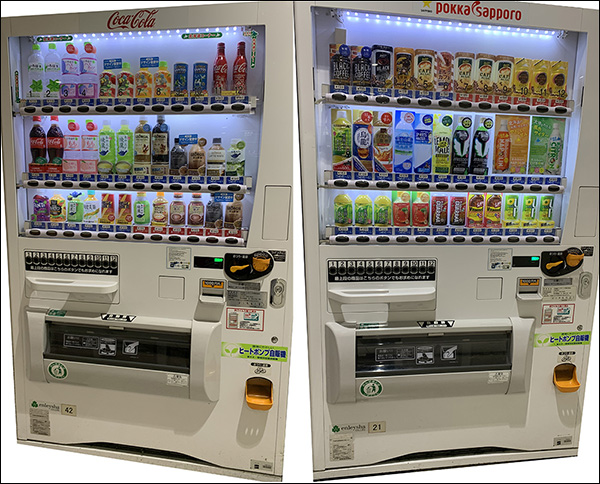
A Japanese vending machine means ‘spoiled for choice’ when it comes to quick beverages. Hot or cold.

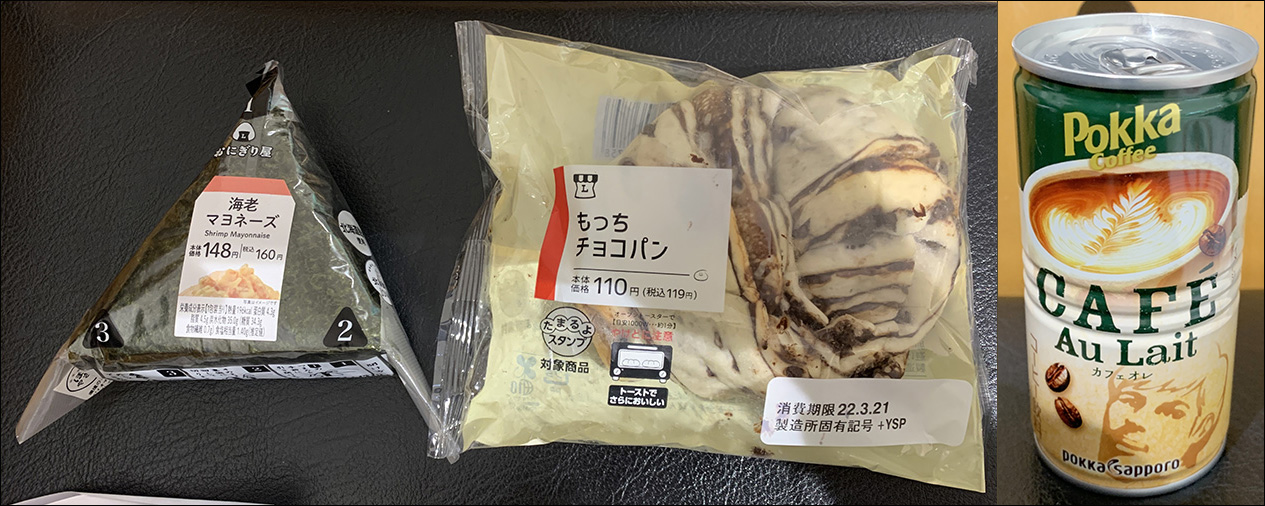
With time in hand, I homed in on a pair of vending machines and picked up a hot coffee. Then visited another konbini to collect my next snack. Ah… onigiri and a chocopan! About NZ$5.00 in total.

Shrimp mayonnaise onigiri, chocopan and a hot vending-machine coffee. Happiness!

(If you’re curious about Japanese breads, check this site out! For those of you who learnt French all those years ago at school, you’ll recognise the word ‘pan’ for bread. (French = pain, pronunciation is the same).


Japanese Diary

Ichi – First Impressions

My flight to Japan was scheduled for the ungodly time of 1.15 on a Thursday morning.  I arrived at the airport well in advance of this and after a less than enthusiastic circuit of the duty free stores, settled myself into the Koru Lounge for a long wait. I was barely hungry and not in the mood to drink more than a 1/2 glass of chardonnay at such an early hour, so I spent most of the time writing notes in a diary and contemplating the six weeks ahead of me.

Asahikawa is  the second-largest city in Hokkaido (the northern-most island of Japan) with a population of around 350,000.  To get there from Auckland you have to first fly to Tokyo, and then on to Sapporo, leaving the island of Honshu behind. After that, you can either take a train or a bus for the remaining 138 km.  Asahikawa‘s latitude is around 43.77N and if you were to head roughly due west for 850 km (over the Sea of Japan), you’d end up in Vladivostock, Russia – that’s how far north it is.

During my flights from Auckland to Sapporo, and on the train journey from Sapporo to Asahikawa, the reality that I was travelling to an entirely foreign country with a completely different season only became apparent in stages. The first indications emerged while I was waiting in the boarding lounge at Auckland airport, where I metamorphosised into a member of the minority culture. But it was just something I noticed – the situation didn’t feel that different.  I could’ve just as easily been on the AUT campus during Orientation Week.

Then there were the suppers and breakfasts served on the Air NZ flight. On both occasions, the ‘Japanese’ option sounded more appetising, which is not to say it actually was appetising (although I have the feeling that it was better than the alternative. ‘Chicken Sausage’ never sounds appealing as a breakfast choice).

Then there was the fact that for every interruption to the films I was watching (and there were announcements at regular intervals) there was a follow-up broadcast in Japanese, timed for about a minute later, just when I’d manage to re-acquaint myself with the plot. (If anyone’s interested, I watched ‘Lion‘ and ‘Manchester by the Sea‘ and enjoyed both.) The Japanese explanations seemed to take a lot longer, and I couldn’t help wondering if I was missing something.

Auckland to Tokyo

The flight from Auckland to Tokyo takes about 10 hours. I expected to notice differences when disembarking and entering Narita airport, but there were English translations everywhere, and announcements in both Japanese and English, and it was a nice surprise to not feel vertically challenged for once. Customs control and baggage checking went smoothly and before I knew it I was free to do my own thing. I made my way from International to Domestic to board my flight to Sapporo. I had a couple of hours to wait but had already gone through the ‘point of no return’ before this dawned on me. So I was stranded in another waiting room, with not much to keep me occupied. I made a note to make sure I picked up some cash before catching the train from Sapporo.

Sapporo airport
The lounge at Narita airport.

Probably the worst aspect of the trip was the size of my suitcase. The large dimensions meant that I couldn’t use the escalators in the airports and railway stations and had to drag it behind me while I hunted around for elevators. I couldn’t even lift it higher than about 15 cm off the ground.

Tokyo to Sapporo

portal
My first view of Sapporo – steam rising from the heated tarmac.

The flight from Narita to Sapporo took an addional 2.5 hours, but thank goodness it was an older style airbus. The cabin was much less stuffy than on the long-distance flight, and I had a window seat so could look out at the snowy terrain unfolding below. The land started out flat then became more hilly, then mountainous. When we flew over the Tsugaru Strait I saw many container vessels and it must’ve been windy as the charcoal-grey water was dotted with the white crests of waves. Then we were on the way down. And as we taxi’ed along the runway at Sapporo, it looked COLD, with grey skies, bleak buildings, and small piles of snow here and there.

Sapporo to Asahikawa

I’d been given detailed instructions on how to get from Sapporo to Asahikawa, including the purchasing of the train tickets,  and finding the correct platforms and lines, so the actual ‘finding my way’ part was reasonably straight-forward. But it had been a long, tiring trip and by the time I was safely seated on the ‘Kamui‘, with my huge bag tucked tightly beside me, I was both tired and hungry.

fleeting view of houses
A fleeting view of houses – I’d only just focus on a group, and then they’d be gone.

The Kamui is a fast train and soon it was whoosing along, out of Sapporo and through the countryside. For most of the journey the terrain was flat, with almost everything covered with a blanket of snow. The houses in the small settlements we passed looked very different from those in New Zealand – they were boxy or angular, coloured with plain earthy tones, or shades of white, or in bright pastels.

train view 03
Similarly, the trees seemed to rush by.

And as we travelled further north, the views reminded me of Finland, with forests of bare tree trunks crowded closely together on low, mounded hills. Unlike Finland, there were occasional glimpses of snowy peaks in the distance, but this was my first impression.


Next episode: Asahikawa