Tag Archives: Haiku

JAPAN DIARY

十九 Overnight Trip to Otaru – Part 3
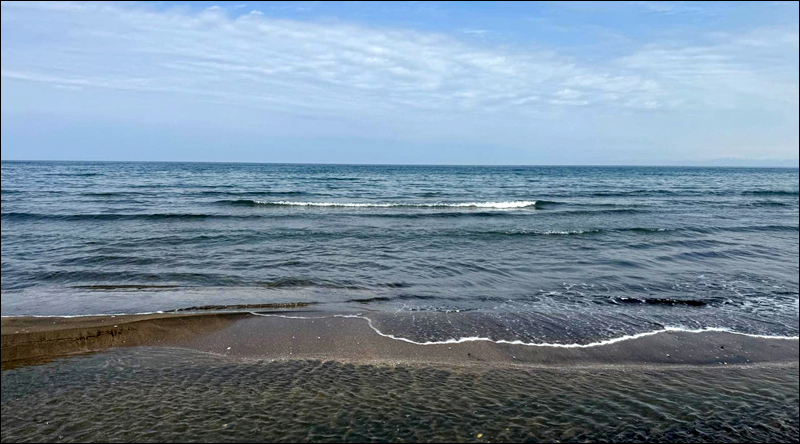
Zenibako Beach, looking out to the north-west. Not so different from a North Island west coast beach.

All good things must come to an end, and so it was with our mini break to Otaru. We’d hoped to be back in Asahikawa by early afternoon, April 04, but had also planned to initially drive back along the coastline so that I could finally walk along a real Japanese beach, and dip my toes in the sea.

Breakfast at Hotel Sonia

We set our alarms for 7.00 am and once we were up and dressed, we met up outside our rooms and headed downstairs for the buffet breakfast. The dining room was moderately busy, with a scattering of Japanese and Chinese travellers, and one other foreign couple–a woman and a man. The former of the two was in the line beside me and was complaining loudly to her companion about the choice of oatmeal. Or apparent lack thereof. Her accent was North American.

A selection of breakfast items

Breakfast was arranged buffet style around the edge of the dining room. The food selection was comprehensive, although there weren’t many items  that I felt able to eat so early in the morning.

When I looked at my choices, they were unexpectedly colourful, in shades of yellow, orange and pink–a couple of crumbed ebi, a slice of tamagoyaki, a small croissant, a slice of cooked salmon, some diced raw salmon, a dollop of mashed tuna, scrambled egg, and a couple of strips of bacon (just in case you can’t tell from the photo!).

I’d somehow managed to avoid anything green, but I did collect some slices of melon and a few grapes after I’d done my best with the main course. The scrambled eggs were difficult to eat as they were very runny. Usually they’re a safe choice no matter where I’ve been.

Alongside Ishikari Bay

Our plan for the morning was to travel up the coast to Zenibako, about 25 km from Otaru, situated at the bottom of Ishikari Bay. Amiria had previously been there in summer, and told me it was a popular resort area.

On the last stages of our journey to Otaru the previous day, there had been a clear view of the bay and despite the distance I’d noticed a very large and solitary terracotta-coloured building dominating one area of the coastline. I was super curious about what it might be and hoped the mystery would be solved when we headed that way.

Hotel Luna Coast

Hotel Luna Coast – a ‘love’ hotel

Zenibako is a coastal settlement with a long stretch of beach, and when we arrived we could not miss the edifice I’d been seeking. It turned out to be the Hotel Luna Coast an ‘adults only’ love hotel (rabu hoteru). It was standing there all by itself, surrounded only by small dwellings. Amiria mentioned that this wasn’t particularly unusual–she said that in Japan there are often tall hotel buildings in coastal areas, but to me it looked completely  incongruous. At just on 10.00 a.m., there was no sign of life. Perhaps the hotel was closed for the off season.

Zenibaku Yacht Harbor, adjacent to a stream that ran down to the water’s edge.

There were no car parks in the area, so we had to drive onto the gravelly edge of the road near to a small stream that ran down to the water’s edge. We hoped it would be okay to leave the car there. It wasn’t that we thought that it would be broken into or stolen (this would never happen in Japan), but we didn’t really wish to  engage in conversation with a local to explain what we were doing.

Bounty from the sea

An Anpanman, trapped in debris adjacent to a stream running into Otane Beach. Photo courtesy of Amiria Paterson.

On our walk down past the stream, Amiria spotted an Anpanman almost completely buried in the flotsam and jetsam that had accumulated on the bank. The sight was a bit sad–someone’s once-loved toy (possibly?), discarded and forgotten.
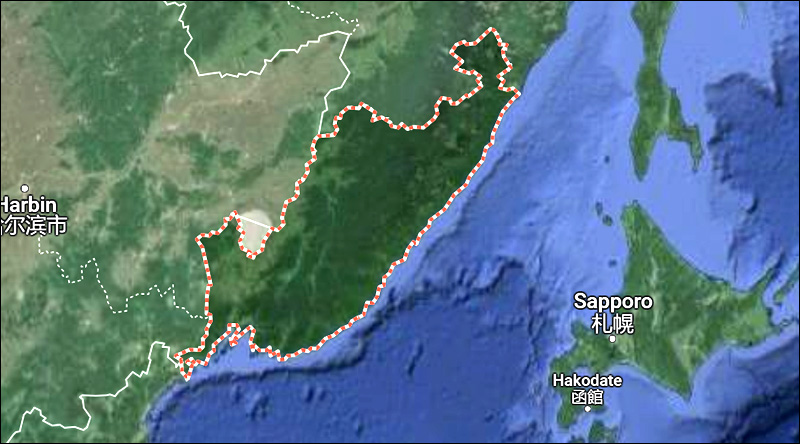
Directly across the Sea of Japan from Hokkaido, is the Russian federal state of Primorsky Krai.

It was a blustery grey-gold-blue kind of day, with the dry grasses, the sand, the sea and the sky all displaying versions of the same colour palette. I looked out across the water and realised that directly across from where we were standing (north-west), was Russia, approximately 600 km across the Sea of Japan. Specifically, Primorsky Krai, a ‘federal subject of Russia’, in the Russian Far East. It was hard to get my head around the fact that it was about as close as Auckland would be from Wellington.

It’s disapponting that trash from the Sea of Japan ends up on a stretch of coastline in such an isolated area, and I was depressed by the state of the foreshore. The grey sand was littered with rubbish, from the tiniest of multi-coloured scraps, to plastic bags of all shapes and sizes, to larger plastic drink bottles, to orange and yellow net floats. I didn’t have the heart to take many photos of the human detritus, so have left this to the imagination.

‘Girl holding Japanese glass net float with mussels on top it’, circa 1950. OSU Special Collections & Archives : Commons, No restrictions, via Wikimedia Commons

I was, however, interested to read that before the transition to plastic or aluminium, Japanese net floats were fashioned from glass and were predominantly green, due to the use of recycled sake bottles.  Clear green globes washed up on the beach would be a far more attractive sight.

Everywhere we looked, rubbish had accumulated on the surface of the beach.

Curious, I inspected a few of the larger plastic items and discovered that those that did have any identifiable writing on them, were all Japanese. I’m not sure whether this fact made me feel better or worse. I’d assumed that the trash had washed up from a range of sources, not just from Japan.

We wandered along the water’s edge for about 30 minutes, searching for interesting shells, or seashore flora and fauna to photograph, but were unrewarded. There wasn’t much else to see or do, and with the wind whisking our hair into our faces and finding its way under the cuffs of our jackets and pants, we were getting cold, so we headed back to the car.
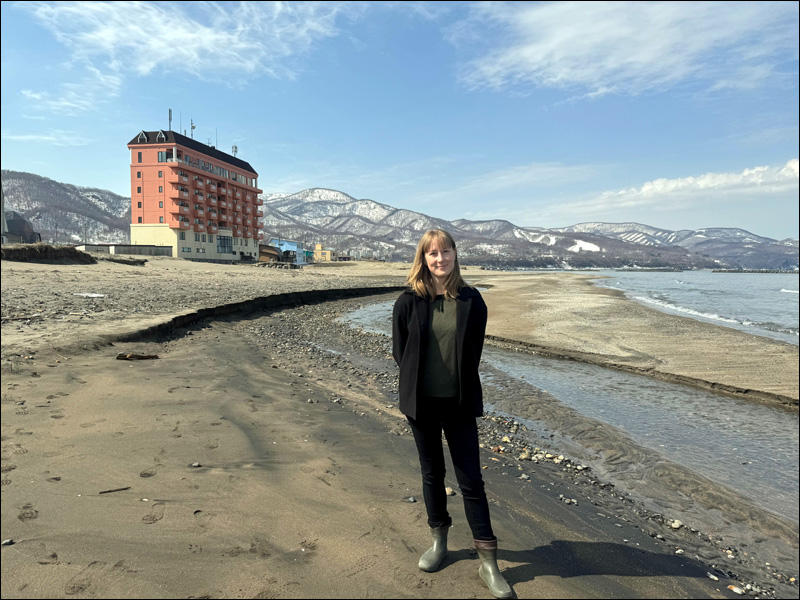
Amiria on Zenibako Beach, with Hotel Luna Coast looming behind her.

I looked back once, to impress upon my memory the overall feel of the place, with the knowledge that it was unlikely that I’d ever stand on that particular shore again. I tried to absorb everything. The feel of the air, the briny smell of the wind, the sharpness of the winter sunlight, the infrequent squawks of the seagulls soaring and diving in the sky overhead.

I’m left with the impression of a vast sweep of barren coastline, curving away in both directions. From the nub of land to the south-east (where Otaru is situated), along and up to the north along Ishikari Bay to Cape Ofuyu. It was April, and in Japanese terms, especially further south, it would clearly be Spring, as that month marks the peak of the Sakura season. Far to the north in Hokkaido, however, it would be another few weeks before the first buds of the cherry blossom began to open.

I decided that although Aotearoa has its own empty swathes of coastline, and although our west coast beaches often have grey or even black sand,  the wintry view from Zenibako beach was quite different from one from home.  Also the fact that the view from Zenibako beach was dominated by the strange apparition that was the hotel. I couldn’t imagine seeing something similar in New Zealand.

In Hokkaido, once Spring truly starts, everything happens in a really short space of time. I’ve observed this many times in Asahikawa. One minute it’s freezing and the next, it’s too warm. The trees sprout buds and new leaves, the rice paddies turn a brilliant green, new growth pushes through the soil to replace the dry grasses, and wild flowers at the edge of the beaches begin to flourish. The Ishikari Bay coastline was merely in a state of waiting for Summer to arrive.

Back to Asahikawa

The tunnels thorugh the hills that separate Asahikawa from the

We didn’t waste time on our way back to Asahikawa, only stopping once on the way for a toilet stop, and to pick up some snacks and a drink. At just after midday, I was glad to see the familiar tunnels that indicated we would soon be back in Asahikawa.


On Zenibako Beach

Plastic scraps dispel
memories of green glass spheres.
Grey pebbles rattle.

Jane Percival – 08/08/24


Next Japan Diary: Karaoke in Sangenjaya – a memory from 2023


Flowers and Fragrance

Contemplating violets

Picking violets always reminds me of Mum. In fact, the feelings I have for some of my favourite flowers and plants, e.g., freesias, sweet peas, roses, jonquils, pinks (Dianthus caryophyllus), pansies, pineapple sage, spearmint, fragrant rhododendrons (‘Fragrantissimum’, and luteum), and the flowering cherry, ‘Mount Fuji’ (Prunus serrulata ‘Shirotae’), can be traced back to the flowers, shrubs and trees we had in our home garden in Upper Hutt. It was Mum who would show me the flowers and talk about them, and one of my earliest memories is of sitting beside her on a hot day, on the lawn beneath the kitchen window. She was weeding the pinks that grew in a border along the edge of the house and encouraged me to lean down low and smell the cute bi-colour flowers. Their fragrance–sweet‑smelling and musky, somewhat similar to the taste of smokers, still transports me back to that day, and to the feelings of security associated with being there with Mum. Of all the flowers I love, I don’t remember sweet peas growing at home, but when we visited Grandma and Grandad in Kilbirnie, Wellington, Mum always pointed them out to me, growing in a brilliant and heady tangle along the fence alongside their gravel driveway.

Two of the roses from my childhood were ‘Crimson Glory’ and ‘Peace’ and I liked them because Mum liked them. There was also a pink standard and a couple of floribunda varieties. A few years before she died, Mum gave me her crystal rose bowl, and I treasure it. Roses don’t seem to grow as well up here in South Head–I’m sure that the summers are too hot and humid, but it gives me a great deal of pleasure to use that vase and I always think of Mum when it’s there, displaying my roses.

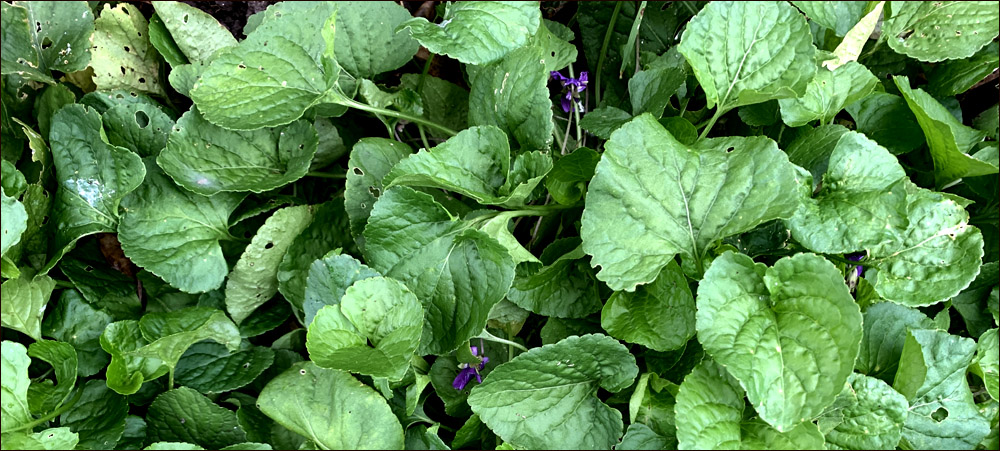
Freshly picked sweet violets (Viola odorata)

Anyway, back to the violets. When I was gathering these somewhat scruffy looking violets earlier today, and when I held them to my nose to inhale their sweet scent, I thought of Mum and the way she’d always ask me to pick some for her when I was tiny. I remember it being an important and difficult task, requiring special attention to part the leaves and look for the flowers, taking care to snap the stalks off as close to the base of the plants as possible. Mum would always put my bunches into a small vase, and place them on the kitchen windowsill, just as I’ve done today. You could smell them when you were working at the bench.

The smell of violets is distinctive. Evoking memories of old ladies’ perfume, and also bringing to mind childhood riverside explorations beside the Hutt River. This river has now been given back its original and much more appropriate name, ‘Te Awa-kairangi’, which means, ‘precious river meandering through the valley’, but I grew up only knowing the unoriginal Pākēkā name.

Te Awa-Kairangi runs close to where I lived as a child, the house situated in a group of streets in a brand new 1950s subdivision named after English poets, and therefore known as ‘Poet’s Block’. In the late 60s and early 70s, I came to know the nearby section of river, intimately. I wasn’t allowed to go there alone until after the stop bank was built, but I had a neighbourhood friend, Sue, and she and I could just walk to the end of our street and squeeze between the wires of a fence, then scamper to the river along a well-trodden path running along the edge of  a horse paddock. In winter, the track would be boggy with long wet swathes of grass so we’d have to wear our gumboots, but in summer, the meadow grass would be tall and we’d be surrounded by the sounds of cicadas and crickets, and the grasses would be alive with small blue butterflies (Zizina otis ssp. Labradus).

In the place I especially liked to explore, there were the crumbling foundations of an old stone house with an overgrown garden, and that’s where my memories took me to today. One day I’d discovered a sheltered dell with a huge patch of violets–it was almost completely hidden by a ring of flowering plum trees. After that, I’d always go there from May/June onwards, to find the first violets. I especially liked the way the small flowers lay hidden under the green leaves, and the fact that you had to search for them.

To me, plants with fragrant flowers are the most precious of all, and yet these days I often overlook my shy violets. I may glance down and see a flash of amethyst beneath the leaves, but I don’t always take the time to stop and gather a few.

I’m glad I did this today.


Whakatikei River

Bare toes on wet rocks
Light reflects in amber pools
Dragonflies hover

15/07/2023

COVID-19 DIARY 05

Day 13 of the Lockdown

Quiet Mount at Night

All Quiet

New Zealand’s total number of Covid-19 cases has now reached 1160, with 54 new cases in the past twenty-four hours. The nation is holding its breath to see if this is the beginning of a leveling-out. Each day we listen to the 1.00 pm update to hear the announcement of our new numbers. It’s a crisis for small businesses, and lonely for those of us parted from family and loved ones. We’re desperately hoping that it will all be worth it.

Having got that off my chest, life goes on as usual.

I’ve had a quiet day, feeling tired and disinterested in venturing out. It’s crazy with such beautiful, autumn weather and the beach so close, but sometimes it’s just too much effort.

Moon over Bay of Plenty

The barometer is dropping with rain promised for tomorrow afternoon. With this in mind, I forced myself out for a walk after tea. Now that daylight savings has reverted, it’s already dark by 7.00 pm and tonight I started by walking to the beach so that I could see my beautiful friend,  おつきさま, otsukisama, shining across the Bay of Plenty. (That was me practicing my Japanese, by the way.)

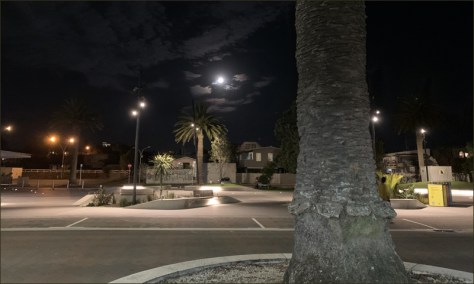
dark night with palm

From the beach I walked north-west along Marine Parade until just parallel with Motuotau Island, then turned back into the town centre. It was calm and mild with a slight breeze. The main street was deserted, but extremely well-lit.

I listen to music when I walk, and this dispels the eeriness of the empty city.  But the lights still shine – fluorescent, neon and LED, their sharp and often brilliant colours reflected in the polished shop windows and on the glossy leaves of the palms.

When I returned home, Dad was asleep on the sofa with the TV blaring. I eased the fridge door open and poured a glass of rosé. I’m sure that my alcohol consumption since being in lock down has counteracted any value gained by walking.


Today’s Haiku… written earlier today.

In a pool of sun
my father lies fast asleep
Walking in the past

Jane Percival (07/04/2020)


おつきさま – an honorific term for the moon

COVID-19 Diary 04

Day 11 of the Lockdown

No Photos This Sunday

New Zealand’s total number of Covid-19 cases has now reached 1039.

It seems that my significant other and I have reversed roles – while he’s been creaming honey and steeping batches of kombucha, I’ve been press-ganged into the role of ‘Apprentice Home Handy Woman’.

As such, I’ve spent the past couple of days learning such new skills as belt-sanding, and countersinking (using a drill press). The saying “Don’t give up your day job”, definitely drifted in and out of my consciousness while I was using the belt sander. The wood we were working with was an ancient piece that Dad had found under the house. Being dry and very rough, it took quite a bit of effort for me to make an impression. My beveled edges were wonky and my sanded top, undulating. Not that it actually mattered as the piece was eventually disguised beneath white paint and sealer.

What we were actually trying to do, was to rebuild a shower box that had been cut apart when Mum became wheelchair-bound, more than seven years ago. With all the hardware stores closed to the likes of us mere DIYers, we were working with whatever bits and pieces of timber and aluminium, Dad could find in the garage. And, the end of a roll of duct tape. If only I’d taken some photos!

Anyone who has had the perseverance to read my very haphazard blog over the years, will know that I always include photos… but alas, not tonight. In fact, the reason I’ve been tardy with writing is because I haven’t had the time to take any. Perhaps I’ll make up for it tomorrow.

But if anyone is interested in how we’re coping with the lockdown, I’d say that here in Mount Maunganui, things are fine.

It’s quiet, and my life is very regulated – but then this was the case before our lives were restricted. Spending time here keeping my father company has a particular routine that I would not dare to change. I’m content to fit in with him, and I guess I mustn’t have high expectations (as far as excitement or variety is concerned) as I’m perfectly happy the way things are.

My sister in law is in Japan, also spending time with her elderly parents. We both decided to write a haiku, and here is mine…

Beyond my window
karoro fight over scraps.
Scavenger brigade.

Jane Percival, 05 April 2020


And the Heavens Opened

rain 01
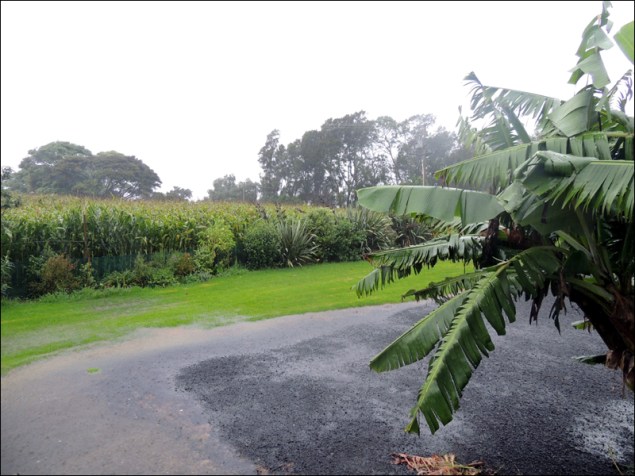
Pools of water collect on the driveway, then run onto the grass by the maize field. Gaining momentum, the water changes direction and flows west into the back paddock.

Rain!

When I arose this morning, the rain that had been coming down steadily all night was like a bead curtain, each string of droplets falling vertically from the leaden grey sky.

Troubled Sleep

Last night had to have been the worst night I’ve experienced this summer, humidity-wise. As I lay on my bed, the covers pushed off onto the floor, I struggled to find a cool patch in the damp mugginess. My hair clung to my head and a patina of moisture coated every patch of exposed skin (in other words, my whole body was dripping).  Around 3.30 am, a loud crash roused me from a weird dream about insects. I’d been half aware, earlier, of a few flashes of brightness through my tightly-closed eyelids as I’d tossed and turned, but I’d put that down to my Apple Watch’s display turning on when I moved my arm. For the next hour, an impressive thunder storm rattled the windows and cast brilliant white light into the room. At 4.15 am I detached myself from the damp bed to check the data on our newly-acquired weather station. The results were no surprise: Outside: 22.3 C / 100 % humidity; Inside: 27.6 C / 93% humidity.

I switched on RNZ’s All Night Programme, hungry for an update on how Tonga was faring under the onslaught of Cyclone Gita. The broadcast was broken by static and I imagined having to endure the rain without shelter. In the darkness of a stormy night. With young children or elderly parents. With ferocious winds and terrifying noises. How frightening that would be.

grass rain 02
A lake of water on the grass

If you can’t beat ’em, join ’em!

When I looked out from the back porch and saw that glistening curtain of rain, I felt an overwhelming urge to shower outside. So I grabbed soap and shampoo and found a position behind the garage (very private there, especially on such a day) and washed and rinsed myself off out there with only the sparrows and one stray hen for company. A large gush of water was overflowing from the corner of the roof, the guttering unable to cope with the torrent, so I stood directly beneath it to rinse off my hair. It felt good to be out there in the wetness. The water was barely cooler than the air temperature.

Taking Stock

71 mm of rain has fallen in the last 24 hours, and of this, 22.5 mm fell in the hour I chose for my outdoor shower. Now it’s getting on for 8.00 pm and the rain has mostly stopped; water is sinking into the grass and draining away.  Outside, the cicadas and crickets are once again making a racket. Let’s hope it’s sunny tomorrow.


letterboxes 02

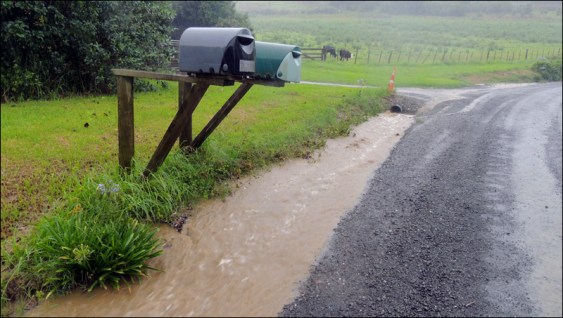
Tan water flows by
bearing the earth in its grasp
Cows munch undisturbed

Jane Percival, February 2018


Flotsam and Jetsam

Yasawa Haiku

shells_02
Shells and coral, collected from the beach

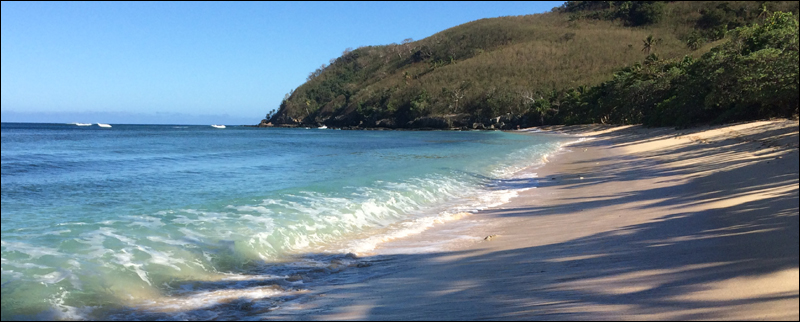
I’ve spent the past week in the Yasawa Islands, Fiji, escaping from the wintry blast that has been afflicting South Head.

I’d originally planned to take my laptop and work on a couple of stories while we were away, but in the end, decided to leave work behind.

I was certain I’d write something while I was there, but I have to admit that I struggled for inspiration, only managing a handful of haiku.

Hermit crab

Tiny hermit crab
scoots along glimmering sand.
It sees me and stops.

iridescent waves...

Iridescent waves
paint a clean line in the sand.
Caramel to cream.

OLYMPUS DIGITAL CAMERA

I see the sun’s rays
push against the comb-like palms.
Grey stripes on the sand.

stripes

Poetry and Inspiration

Reacquainting myself with an old friend

I was enjoying reading I. K. Paterson-Harkness’s recent blog on Haiku and thought I’d post something of my own. My interest in poetry and the actual writing of poetry has been rekindled lately, to the extent that I’ve purchased a couple of books to get me back in the mode (or is it in the mood?).

books

One was Six Centuries of English Poetry Tennyson to Chaucer: Typical Selections from the Great Poets, (1892) by James Baldwin, and the other, Above the River: The Complete Poems, by (author) Professor James Wright.

I chose the first book to reacquaint myself with some of the works and the styles of the classic poets, some of whom I read decades ago, and others of whom I’m sorely ignorant.  And as is often the way for me, I heard one of James Wright’s poems being read last week on National Radio and liked it so much that it spurred me to purchase more of his work.

Lying in a Hammock at William Duffy’s Farm in
Pine Island, Minnesota

Over my head, I see the bronze butterfly,
Asleep on the black trunk,
Blowing like a leaf in green shadow.
Down the ravine behind the empty house,
The cowbells follow one another
Into the distances of the afternoon.
To my right,
In a field of sunlight between two pines,
The droppings of last year’s horses
Blaze up into golden stones.
I lean back, as the evening darkens and comes on.
A chicken hawk floats over, looking for home.
I have wasted my life.

(James Wright)

Poetic Forms

Paul B. Janeczko, A Kick in the Head

Another book I’ve loved for years is Paul B. Janeczko’s, A Kick in the Head: An Everyday Guide to Poetic Forms (2005).  This book lists 29 different poetic forms and provides examples for each. I’d recommend it if you are interested in the challenge of some of the more complex styles.  The illustrations are neat, too.

Haiku from a Distant Summer

Here’s my Haiku offering… something I wrote way back in 1995 when I was living in St Leonards, Dunedin.

Dry parched hills
reflected
in the eyes of our cats
amber, gold and brown.

Cicadas
rapid fluting melody
I catch my breath
as they fly

Flax seeds
ripening broom pods
exploding
thistledown
caught on the breeze

Arid creek
quiet noise
sunlight dulled by
brackish pool
eucalyptus

Jane Percival
(March 1995)